


A theoretical approach to predicting the success of genetic manipulation of malaria mosquitoes in malaria control
- PMID: 12057019
- PMCID: PMC111501
- DOI: 10.1186/1475-2875-1-3
A theoretical approach to predicting the success of genetic manipulation of malaria mosquitoes in malaria control
Abstract
Background: Mosquitoes that have been genetically modified to better encapsulate the malaria parasite Plasmodium falciparum are being considered as a possible tool in the control of malaria. Hopes for this have been raised with the identification of genes involved in the encapsulation response and with advances in the tools required to transform mosquitoes. However, we have only very little understanding of the conditions that would allow such genes to spread in natural populations.
Methods: We present here a theoretical model that combines population genetical and epidemiological processes, thereby allowing one to predict not only these conditions (intensity of transmission, evolutionary cost of resistance, tools used to drive the genes) but also the impact of the spread of refractoriness on the prevalence of the disease.
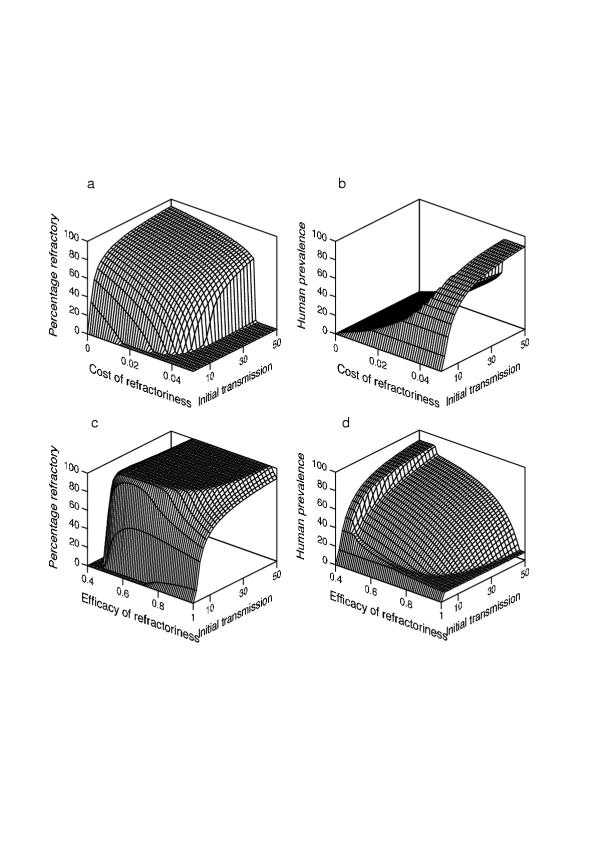
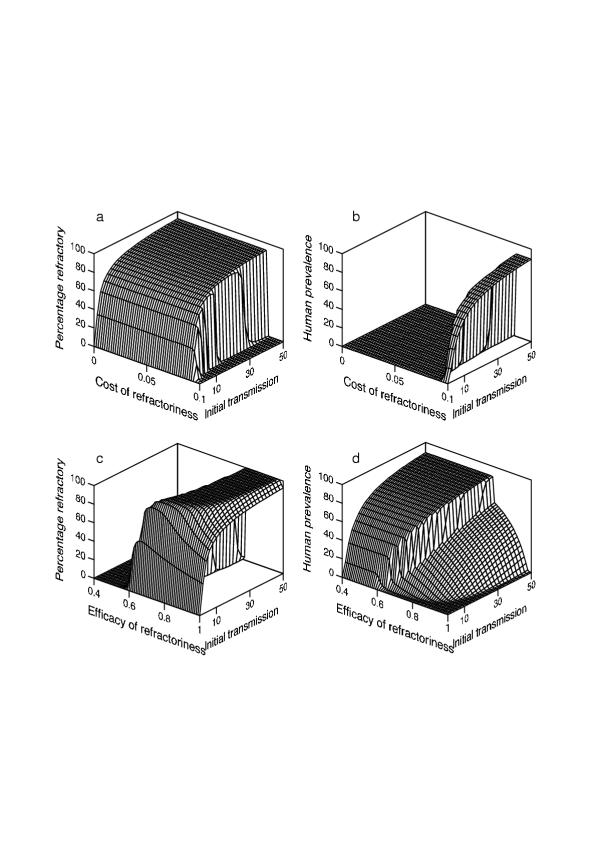
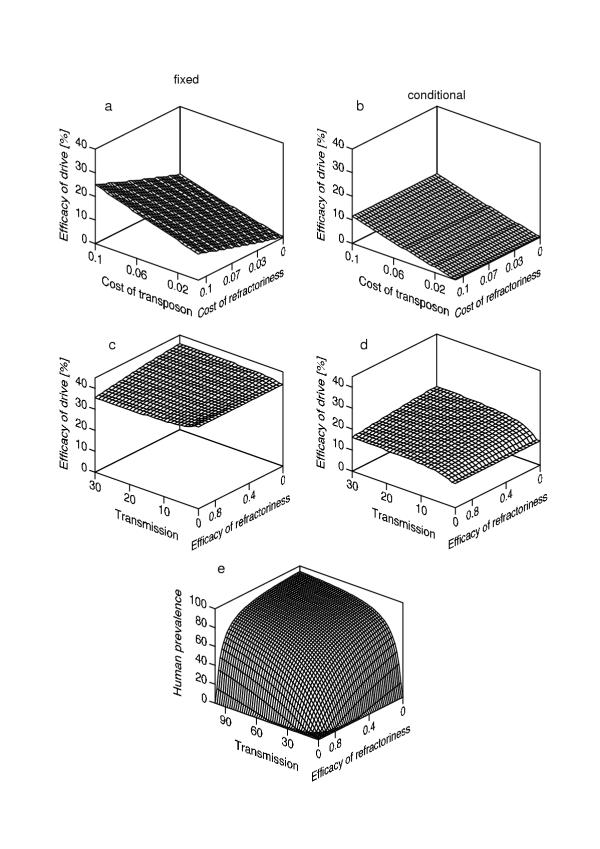
Results: The main conclusions are 1) that efficient transposons will generally be able to drive genes that confer refractoriness through populations even if there is a substantial (evolutionary) cost of refractoriness, but 2) that this will decrease malaria prevalence in the human population substantially only if refractoriness is close to 100% effective.
Conclusions: If refractoriness is less than 100% effective (because of, for example, environmentally induced variation in the effectiveness of the mosquito's immune response), control programmes based on genetic manipulation of mosquitoes will have very little impact on the epidemiology of malaria, at least in areas with intense transmission.
Figures
References
-
- WHO The World Health Report 1996. Geneva, World Health Organization. 1996.
-
- Manfredi C. Can the resurgence of malaria be partially attributed to structural adjustment programmes? Parassitologia. 1999;41:389–390. - PubMed
-
- Collins FH, Sakai RK, Vernick KD, Paskewitz S, Seeley DC, Miller LH, Collins WE, Campbell CC, Gwadz RW. Genetic selection of a Plasmodium-refractory strain of the malaria vector Anopheles gambiae. Science. 1986;234:607–610. - PubMed
-
- Dimopoulos G, Casavant TL, Chang S, Scheetz T, Roberts C, Donohue M, Schultz J, Benes V, Bork P, Ansorge W, Bento Soares M, Kafatos FC. Anopheles gambiae pilot gene discovery project: identification of mosquito innate immunity genes from expressed sequence tags generated from immune-competent cell lines. Proc Nat Acad Sci USA. 2000;97:6619–6624. doi: 10.1073/pnas.97.12.6619. - DOI - PMC - PubMed
-
- Paskewitz SM, Brown MR, Lea AO, Collins FH. Ultrastructure of the encapsulation of Plasmodium cynomolgi (B strain) on the midgut of a refractory strain of Anopheles gambiae. J Parasitol. 1988;74:432–439. - PubMed
Publication types
MeSH terms
Substances
LinkOut - more resources
Full Text Sources
Other Literature Sources
Medical
