


Gene expression profiling of mouse bladder inflammatory responses to LPS, substance P, and antigen-stimulation
- PMID: 12057914
- PMCID: PMC1850812
- DOI: 10.1016/S0002-9440(10)61159-5
Gene expression profiling of mouse bladder inflammatory responses to LPS, substance P, and antigen-stimulation
Abstract
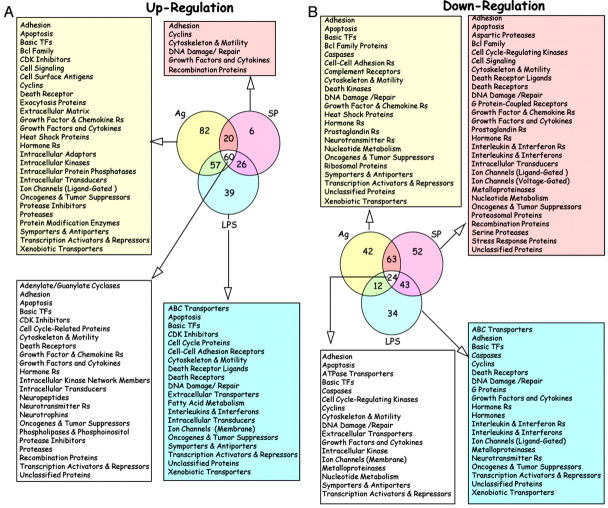
Inflammatory bladder disorders such as interstitial cystitis (IC) deserve attention since a major problem of the disease is diagnosis. IC affects millions of women and is characterized by severe pain, increased frequency of micturition, and chronic inflammation. Characterizing the molecular fingerprint (gene profile) of IC will help elucidate the mechanisms involved and suggest further approaches for therapeutic intervention. Therefore, in the present study we used established animal models of cystitis to determine the time course of bladder inflammatory responses to antigen, Escherichia coli lipopolysaccharide (LPS), and substance P (SP) by morphological analysis and cDNA microarrays. The specific aim of the present study was to compare bladder inflammatory responses to antigen, LPS, and SP by morphological analysis and cDNA microarray profiling to determine whether bladder responses to inflammation elicit a specific universal gene expression response regardless of the stimulating agent. During acute bladder inflammation, there was a predominant infiltrate of polymorphonuclear neutrophils into the bladder. Time-course studies identified early, intermediate, and late genes that were commonly up-regulated by all three stimuli. These genes included: phosphodiesterase 1C, cAMP-dependent protein kinase, iNOS, beta-NGF, proenkephalin B and orphanin, corticotrophin-releasing factor (CRF) R, estrogen R, PAI2, and protease inhibitor 17, NFkB p105, c-fos, fos-B, basic transcription factors, and cytoskeleton and motility proteins. Another cluster indicated genes that were commonly down-regulated by all three stimuli and included HSF2, NF-kappa B p65, ICE, IGF-II and FGF-7, MMP2, MMP14, and presenilin 2. Furthermore, we determined gene profiles that identify the transition between acute and chronic inflammation. During chronic inflammation, the urinary bladder presented a predominance of monocyte/macrophage infiltrate and a concomitant increase in the expression of the following genes: 5-HT 1c, 5-HTR7, beta 2 adrenergic receptor, c-Fgr, collagen 10 alpha 1, mast cell factor, melanocyte-specific gene 2, neural cell adhesion molecule 2, potassium inwardly-rectifying channel, prostaglandin F receptor, and RXR-beta cis-11-retinoic acid receptor. We conclude that microarray analysis of genes expressed in the bladder during experimental inflammation may be predictive of outcome. Further characterization of the inflammation-induced gene expression profiles obtained here may identify novel biomarkers and shed light into the etiology of cystitis.
Figures

References
-
- Lavelle JP, Apodaca G, Meyers SA, Ruiz WG, Zeidel ML: Disruption of guinea pig urinary bladder permeability barrier in noninfectious cystitis. Am J Physiol 1998, 274:F205-F214 - PubMed
-
- Bullock AD, Becich MJ, Klutke CG, Ratliff TL: Experimental autoimmune cystitis: a potential murine model for ulcerative interstitial cystitis. J Urol 1992, 148:1951-1956 - PubMed
-
- Elbadawi A: Interstitial cystitis: a critique of current concepts with a new proposal for pathologic diagnosis and pathogenesis. Urology 1997, 49:14-40 - PubMed
-
- Granum RS, Theoharides TC: The role of mast cells in cystitis. Urol Clin North Am 1994, 21:41-50 - PubMed
-
- Okragly AJ, Niles AL, Saban R, Schmidt D, Hoffman RL, Warner TF, Moon TD, Uehling DT, Haak-Frendscho M: Elevated tryptase, NGF, NT-3, and GDNF levels in the urine of interstitial cystitis and bladder cancer patients. J Urol 1999, 161:438-441 - PubMed
Publication types
MeSH terms
Substances
Grants and funding
LinkOut - more resources
Full Text Sources
Molecular Biology Databases
Miscellaneous
