Review
doi: 10.1136/gut.51.suppl_1.i29.
Role of the brain and sensory pathways in gastrointestinal sensory disorders in humans
Affiliations
- PMID: 12077061
- PMCID: PMC1867728
- DOI: 10.1136/gut.51.suppl_1.i29
Item in Clipboard
Review
Role of the brain and sensory pathways in gastrointestinal sensory disorders in humans
Gut.
2002 Jul.
Abstract
Several features of the irritable bowel syndrome (IBS) suggest involvement of the emotional limbic system in the brain. Abnormalities which upregulate afferent (sensory) signal intensity anywhere in this system, from the gastrointestinal tract to the brain, could induce hypersensitivity, leading to the pain and discomfort that characterise IBS and other functional disorders. Functional gastrointestinal disorders are likely to be heterogeneous given the complexity of the afferent system, and a number of different perturbations are possible. Intestinal hypersensitivity to pain and discomfort and associated reflex alterations in motility might explain the symptoms of functional bowel diseases.
Figures
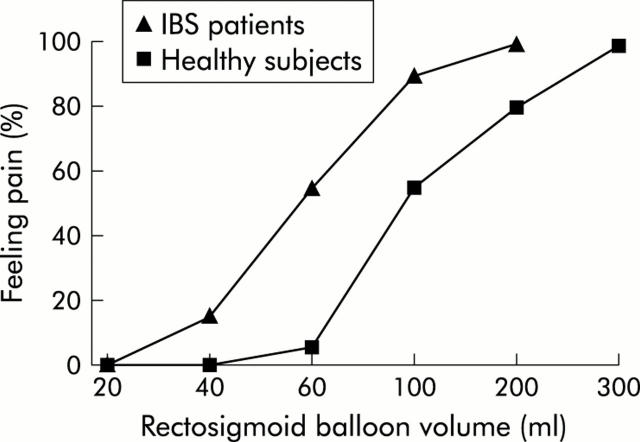
Comparison of hypersensitivity in patients with irritable bowel syndrome (IBS) and healthy subjects.
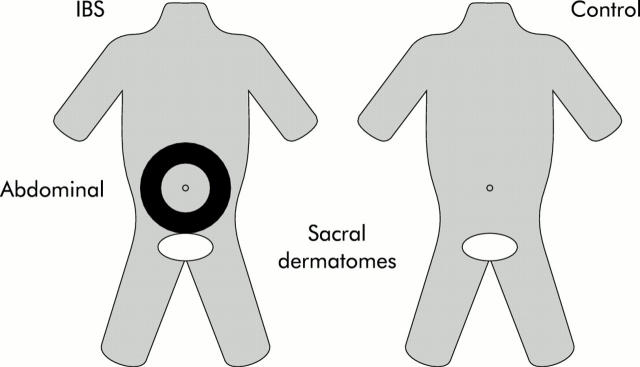
Sensation of pain induced by rectal distension is more widespread in patients with irritable bowel syndrome (IBS) compared with healthy (control) subjects.
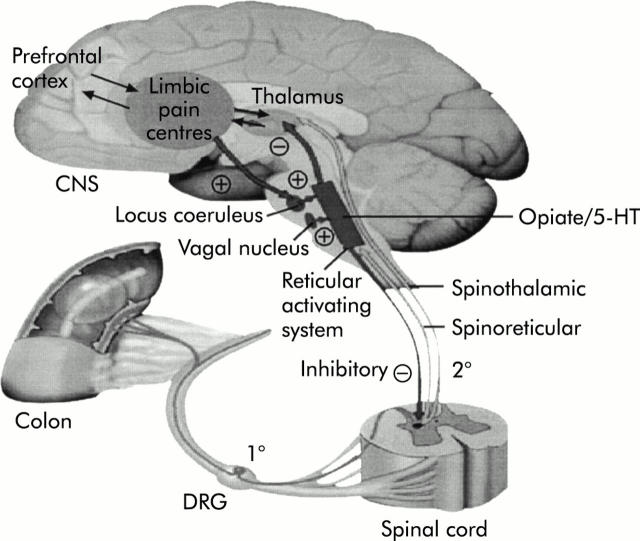
Pathways involved in pain control. CNS, central nervous system; DRG, dorsal root ganglia.
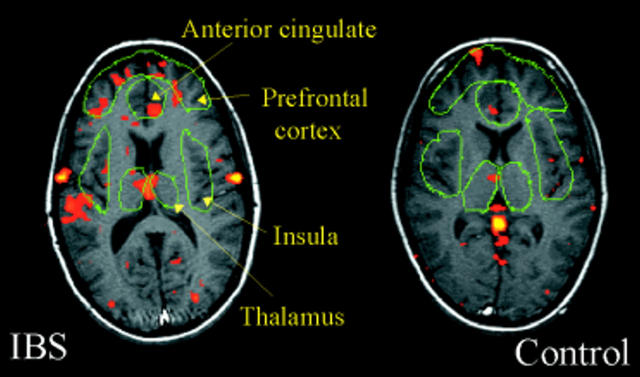
Activation of the anterior cingulate cortex insula and thalamus following rectal distension in patients with irritable bowel syndrome (IBS) and healthy volunteers. The red spots show areas of high activation.
References
Publication types
MeSH terms
LinkOut - more resources
Full Text Sources
Other Literature Sources
Medical