


Randomized controlled trial of a treatment for anorexia and bulimia nervosa
- PMID: 12082182
- PMCID: PMC123167
- DOI: 10.1073/pnas.142284799
Randomized controlled trial of a treatment for anorexia and bulimia nervosa
Abstract
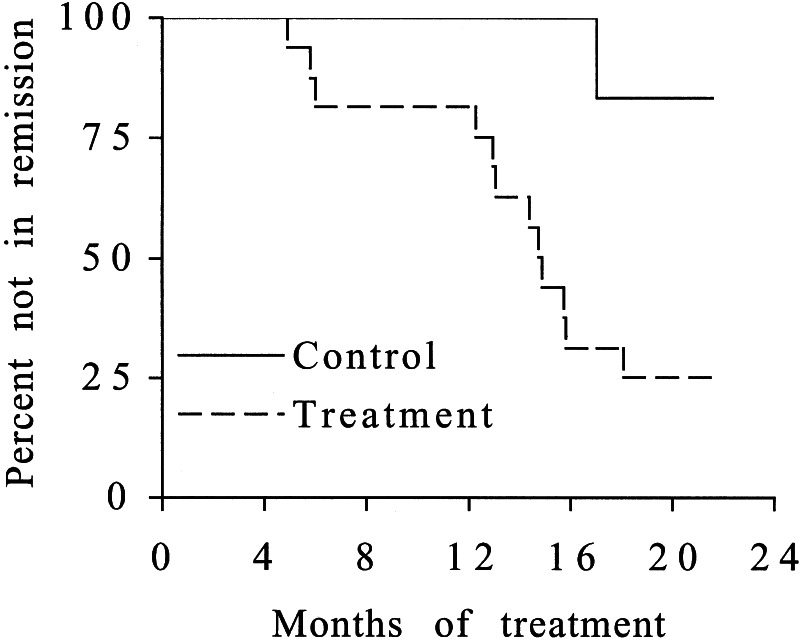
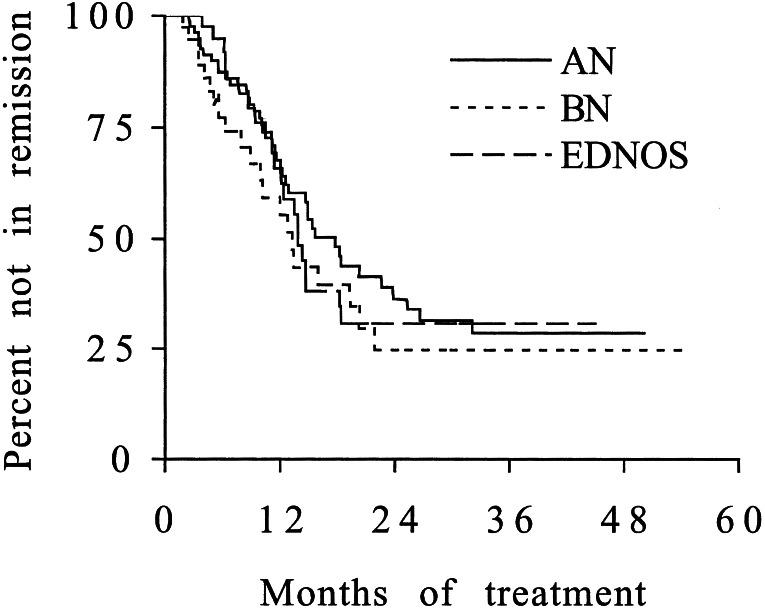
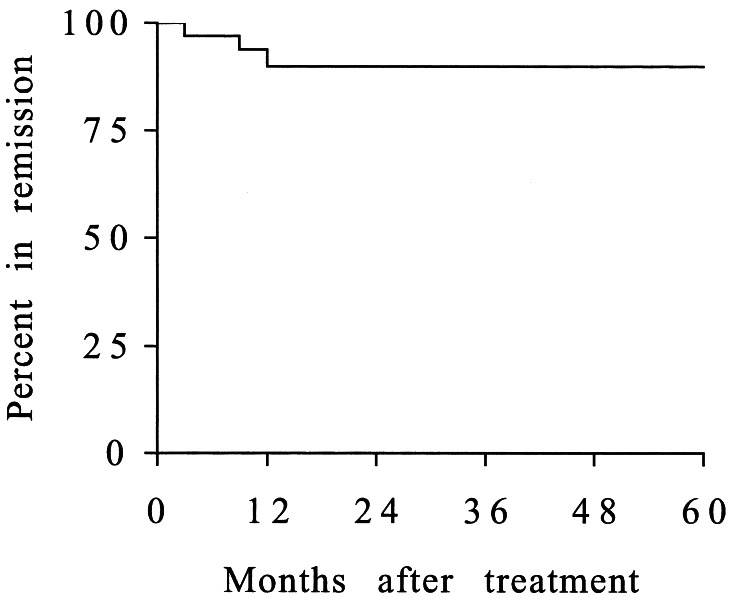
Evidence for the effectiveness of existing treatments of patients with eating disorders is weak. Here we describe and evaluate a method of treatment in a randomized controlled trial. Sixteen patients, randomly selected out of a group composed of 19 patients with anorexia nervosa and 13 with bulimia nervosa, were trained to eat and recognize satiety by using computer support. They rested in a warm room after eating, and their physical activity was restricted. The patients in the control group (n = 16) received no treatment. Remission was defined by normal body weight (anorexia), cessation of binge eating and purging (bulimia), a normal psychiatric profile, normal laboratory test values, normal eating behavior, and resumption of social activities. Fourteen patients went into remission after a median of 14.4 months (range 4.9-26.5) of treatment, but only one patient went into remission while waiting for treatment (P = 0.0057). Relapse is considered a major problem in patients who have been treated to remission. We therefore report results on a total of 168 patients who have entered our treatment program. The estimated rate of remission was 75%, and estimated time to remission was 14.7 months (quartile range 9.6 > or = 32). Six patients (7%) of 83 who were treated to remission relapsed, but the others (93%) have remained in remission for 12 months (quartile range 6-36). Because the risk of relapse is maximal in the first year after remission, we suggest that most patients treated with this method recover.
Figures

References
-
- Lewinsohn P M, Striegel-Moore R H, Seeley J R. J Am Acad Child Adolesc Psychiatry. 2000;39:1284–1292. - PubMed
-
- Steinhausen H-C. In: Risks and Outcomes in Developmental Psychopathology. Steinhausen C-H, Verhulst F, editors. Oxford, U.K.: Oxford Univ. Press; 1999. pp. 210–230.
-
- Keel P K, Mitchell J E, Miller K B, Davis T L, Crow S J. Arch Gen Psychiatry. 1999;56:63–69. - PubMed
-
- Pike K M. Clin Psychol Rev. 1998;18:447–475. - PubMed
-
- Ben-Tovim D I, Walker K, Gilchrist P, Freeman R, Kalucy R, Esterman A. Lancet. 2001;357:1254–1257. - PubMed
Publication types
MeSH terms
LinkOut - more resources
Full Text Sources
Other Literature Sources
Medical
