


Differences between Staphylococcus aureus isolates from medical and nonmedical hospital personnel
- PMID: 12089282
- PMCID: PMC120551
- DOI: 10.1128/JCM.40.7.2594-2597.2002
Differences between Staphylococcus aureus isolates from medical and nonmedical hospital personnel
Abstract
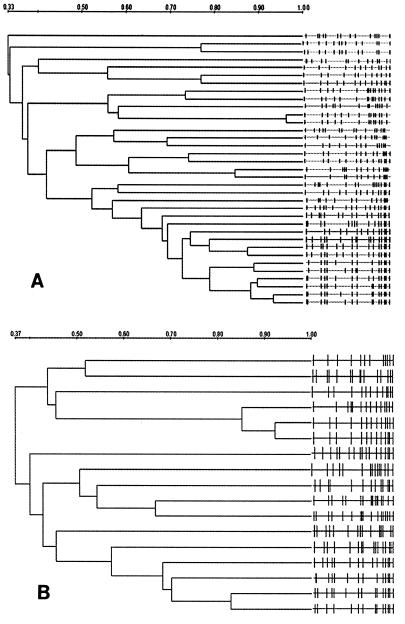
It is unclear whether the levels of Staphylococcus aureus colonization of hospital personnel with patient exposure are increased or whether personnel become colonized with more antibiotic-resistant strains. Differences in nasal and hand carriage of S. aureus between medical and nonmedical hospital personnel were examined. No differences in nasal carriage between the two groups were found; however, there was a trend that suggested differences in the rates of hand carriage of S. aureus (18% of nonmedical personnel and 10% of medical personnel). Medical personnel were colonized with more antibiotic-resistant isolates than nonmedical personnel (mean, 2.8 versus 2.1 isolates [P < 0.03]), and the strain profiles indicated that they tended to be more clonal in origin, suggesting that exposure to hospital isolates alters the colonization profile.
Figures
References
-
- Ahmed, A. O., A. van Belkum, A. H. Fahal, A. E. Elnor, E. S. Abougroun, M. F. VandenBergh, E. E. Zijlstra, and H. A. Verbrugh. 1998. Nasal carriage of Staphylococcus aureus and epidemiology of surgical-site infections in a Sudanese university hospital. J. Clin. Microbiol. 36:3614-3618. - PMC - PubMed
-
- Aires De Sousa, M., I. Santos Sanches, M. L. Ferro, and H. De Lencastre. 2000. Epidemiological study of staphylococcal colonization and cross-infection in two West African hospitals. Microb. Drug Resist. 6:133-141. - PubMed
-
- Archibald, L., L. Phillips, D. Monnet, J. E. McGowan, F. Tenover, and R. Gaynes. 1997. Antimicrobial resistance in isolates from inpatients and outpatients in the United States: increasing importance of the intensive care unit. Clin. Infect. Dis. 24:211-215. - PubMed
-
- Diekema, D. J., M. A. Pfaller, F. J. Schmitz, J. Smayevsky, J. Bell, R. N. Jones, and M. Beach. 2001. Survey of infections due to Staphylococcus species: frequency of occurrence and antimicrobial susceptibility of isolates collected in the United States, Canada, Latin America, Europe, and the Western Pacific region for the SENTRY Antimicrobial Surveillance Program, 1997-1999. Clin. Infect. Dis. 32(Suppl. 2):S114-S132. - PubMed
Publication types
MeSH terms
Grants and funding
LinkOut - more resources
Full Text Sources
