


Aluminium and phosphate uptake by Phragmites australis: the role of Fe, Mn and Al root plaques
- PMID: 12096805
- PMCID: PMC4233879
- DOI: 10.1093/aob/mcf067
Aluminium and phosphate uptake by Phragmites australis: the role of Fe, Mn and Al root plaques
Abstract
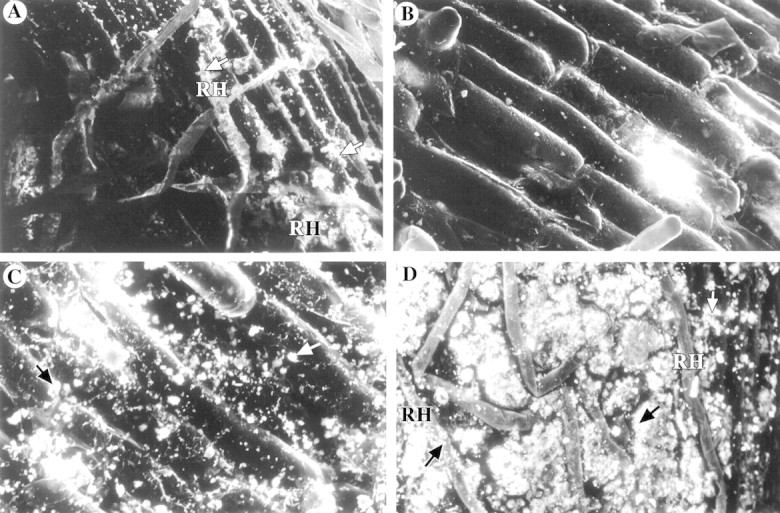
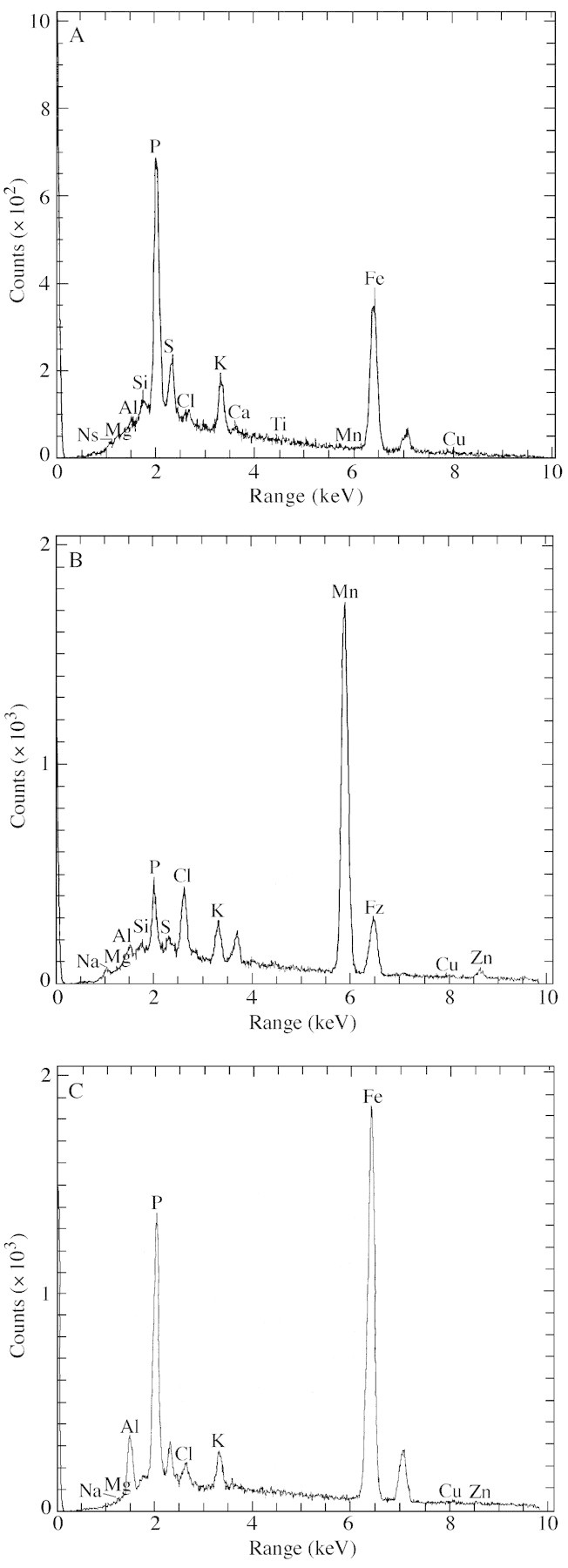
Aluminium, a potentially phytotoxic metal, is an important constituent of many mine water discharges but has largely been neglected in the literature. The behaviour of this element in the rhizosphere of the wetland plant Phragmites australis was investigated in the laboratory in the presence and absence of Mn and Fe root plaques. Electron microscopy and chemical extraction techniques were utilized to determine the physico-chemical properties of the plaques and any association of Al. Both Mn and Fe plaques occurred as amorphous coatings on root surfaces with uneven distributions. Al was not adsorbed onto the surface of either plaque type but formed a separate phosphate deposit closely resembling the Fe and Mn plaques. Phosphorus was also found to be adsorbed to the surface of the Fe plaques (but not the Mn plaques). Both mechanisms were found to immobilize P at the root surface but this did not significantly reduce the concentration of P in aerial plant tissues that was sufficient to ensure adequate growth.
Figures
References
-
- AnderssonM.1988. Toxicity and tolerance of aluminium in vascular plants: A literature review. Water, Air and Soil Pollution 39: 439–462.
-
- BachaRE, Hossner LR.1977. Characteristics of coatings formed on rice roots as affected by iron and manganese additions. Soil Science Society of America Journal 41: 931–935.
-
- BanksD, Younger PL, Arnesen RT, Iversen ER, Banks SB. 1997. Mine‐water chemistry: the good the bad and the ugly. Environmental Geology 32: 157–174.
-
- BattyLC, Baker AJM, Curtis CD, Wheeler BD.2000. The effect of pH and plaque on the uptake of Cu and Mn in P. australis (Cav.) Trin ex. Steudel. Annals of Botany 86: 647–653.
-
- BoultS.1996. Fluvial metal transport near sources of acid mine‐ drainage: relationships of soluble, suspended and deposited metal. Mineralogical Magazine 60: 325–335.
