


Protein-solvent preferential interactions, protein hydration, and the modulation of biochemical reactions by solvent components
- PMID: 12097640
- PMCID: PMC124992
- DOI: 10.1073/pnas.122225399
Protein-solvent preferential interactions, protein hydration, and the modulation of biochemical reactions by solvent components
Abstract
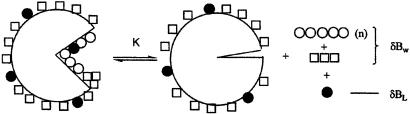
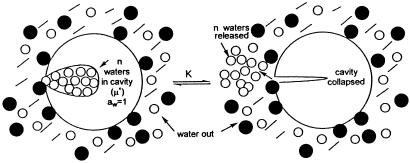
Solvent additives (cosolvents, osmolytes) modulate biochemical reactions if, during the course of the reaction, there is a change in preferential interactions of solvent components with the reacting system. Preferential interactions can be expressed in terms of preferential binding of the cosolvent or its preferential exclusion (preferential hydration). The driving force is the perturbation by the protein of the chemical potential of the cosolvent. It is shown that the measured change of the amount of water in contact with protein during the course of the reaction modulated by an osmolyte is a change in preferential hydration that is strictly a measure of the cosolvent chemical potential perturbation by the protein in the ternary water-protein-cosolvent system. It is not equal to the change in water of hydration, because water of hydration is a reflection strictly of protein-water forces in a binary system. There is no direct relation between water of preferential hydration and water of hydration.
Figures
References
-
- Wyman J., Jr Adv Protein Chem. 1948;4:407–531. - PubMed
-
- Wyman J., Jr Adv Protein Chem. 1964;19:223–286. - PubMed
-
- Wyman J, Gill S J. Binding and Linkage. Functional Chemistry of Biological Macromolecules. Mill Valley, CA: University Science Books; 1990.
-
- Kirkwood J G, Goldberg R J. J Chem Phys. 1950;18:54–57.
-
- Stockmayer W H. J Chem Phys. 1950;18:58–61.
MeSH terms
Substances
LinkOut - more resources
Full Text Sources
Other Literature Sources
