


The UV (Ribotoxic) stress response of human keratinocytes involves the unexpected uncoupling of the Ras-extracellular signal-regulated kinase signaling cascade from the activated epidermal growth factor receptor
- PMID: 12101233
- PMCID: PMC133934
- DOI: 10.1128/MCB.22.15.5380-5394.2002
The UV (Ribotoxic) stress response of human keratinocytes involves the unexpected uncoupling of the Ras-extracellular signal-regulated kinase signaling cascade from the activated epidermal growth factor receptor
Abstract
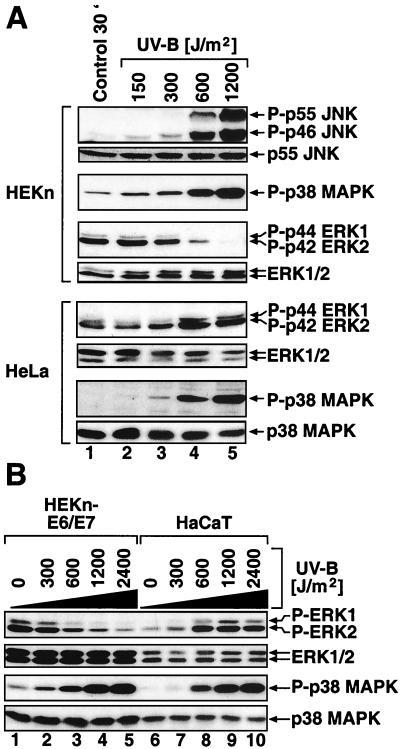
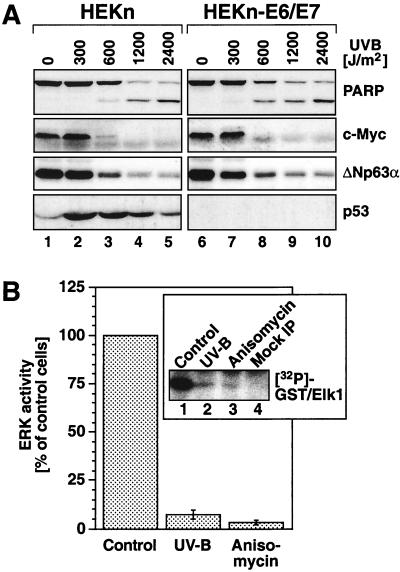
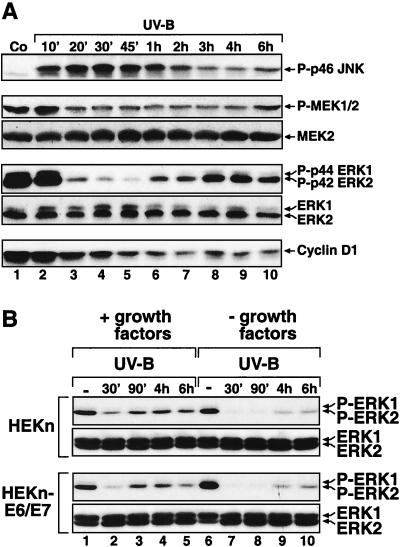
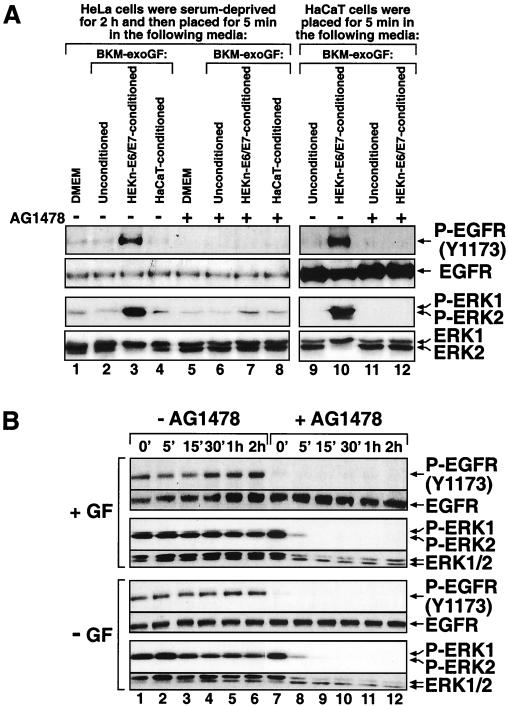
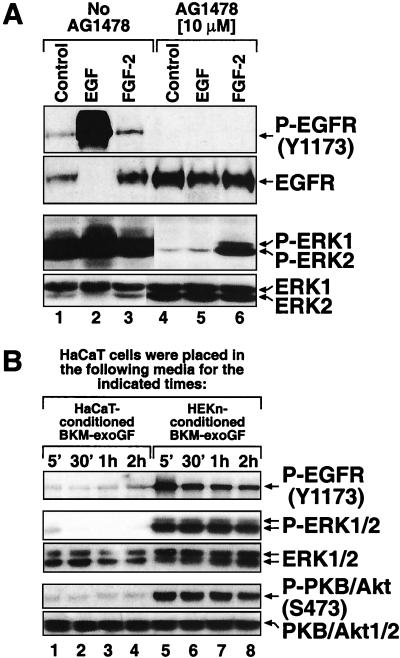
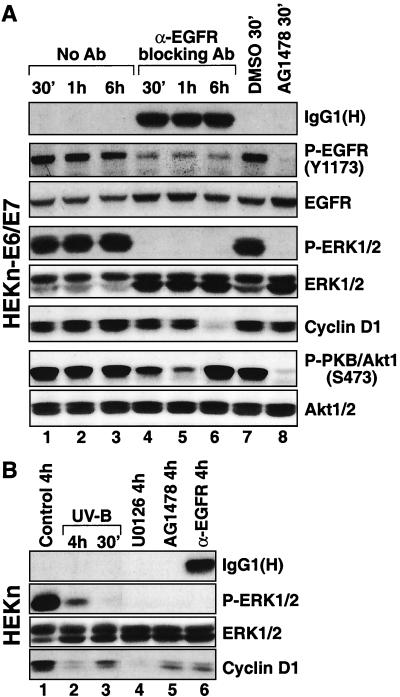
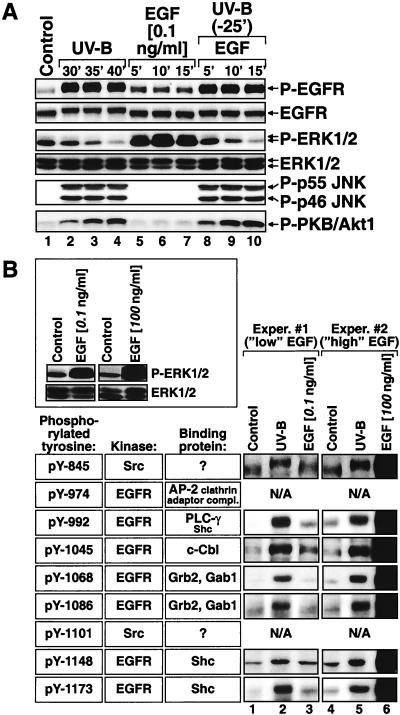
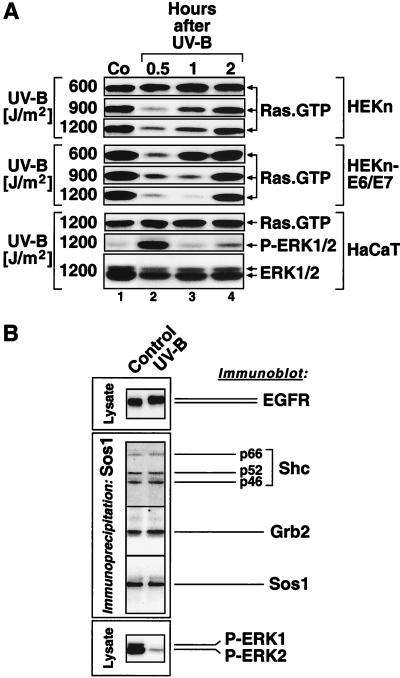
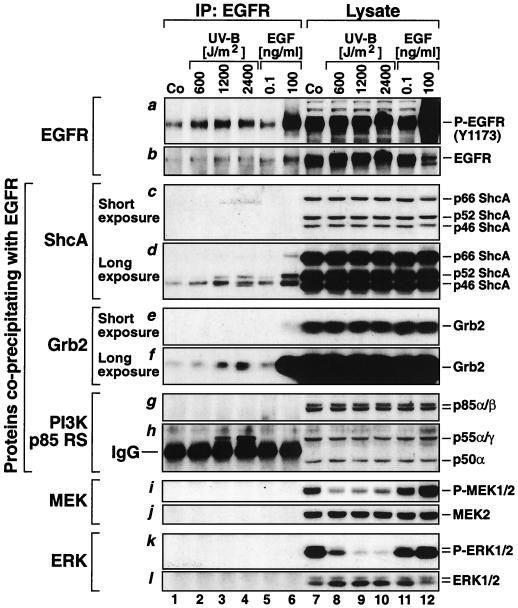
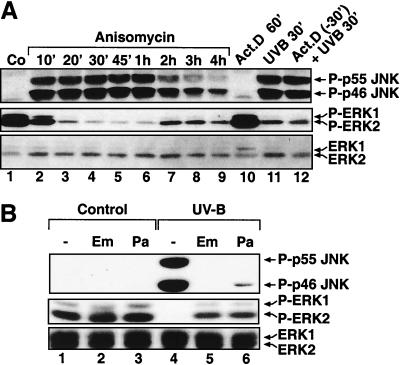
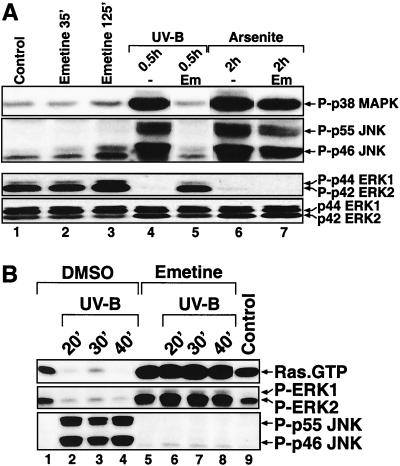
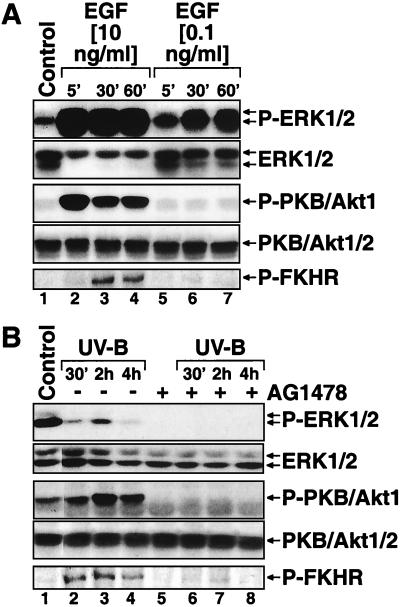
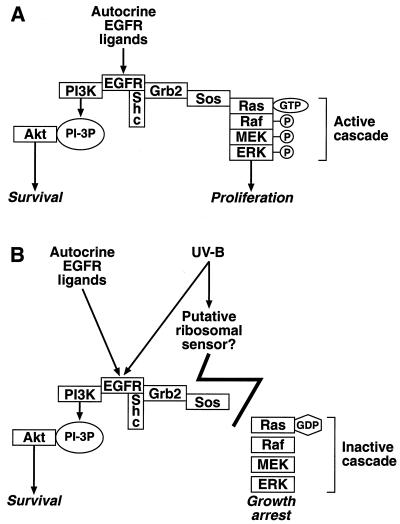
In mammals, UVB radiation is of biological relevance primarily for the cells of the epidermis. We report here the existence of a UVB response that is specific for proliferating human epidermal keratinocytes. Unlike other cell types that also display a UVB response, keratinocytes respond to UVB irradiation with a transient but potent downregulation of the Ras-extracellular signal-regulated kinase (ERK) signaling cascade. The downregulation of ERK precedes a profound decrease in the steady-state levels of cyclin D1, a mediator of the proliferative action of ERK. Keratinocytes exhibit high constitutive activity of the Ras-ERK signaling cascade even in culture medium lacking supplemental growth factors. The increased activity of Ras and phosphorylation of ERK in these cells are maintained by the autocrine production of secreted molecules that activate the epidermal growth factor receptor (EGFR). Irradiation of keratinocytes increases the phosphorylation of EGFR on tyrosine residues Y845, Y992, Y1045, Y1068, Y1086, Y1148, and Y1173 above the basal levels and leads to the increased recruitment of the adaptor proteins Grb2 and ShcA and of a p55 form of the regulatory subunit of the phosphatidylinositide 3-kinase to the UVB-activated EGFR. Paradoxically, however, UVB causes, at the same time, the inactivation of Ras and a subsequent dephosphorylation of ERK. By contrast, the signaling pathway leading from the activated EGFR to the phosphorylation of PKB/Akt1 is potentiated by UVB. The UVB response of keratinocytes appeared to be a manifestation of the more general ribotoxic stress response inasmuch as the transduction of the UVB-generated inhibitory signal to Ras and ERK required the presence of active ribosomes at the time of irradiation.
Figures
References
-
- Albanell, J., J. Codony-Servat, F. Rojo, J. M. Del Campo, S. Sauleda, J. Anido, G. Raspall, J. Giralt, J. Rosello, R. I. Nicholson, J. Mendelsohn, and J. Baselga. 2001. Activated extracellular signal-regulated kinases: association with epidermal growth factor receptor/transforming growth factor alpha expression in head and neck squamous carcinoma and inhibition by anti-epidermal growth factor receptor treatments. Cancer Res. 61:6500-6510. - PubMed
-
- Assoian, R. K., and M. A. Schwartz. 2001. Coordinate signaling by integrins and receptor tyrosine kinases in the regulation of G1 phase cell-cycle progression. Curr. Opin. Genet. Dev. 11:48-53. - PubMed
-
- Balmanno, K., and S. J. Cook. 1999. Sustained MAP kinase activation is required for the expression of cyclin D1, p21Cip1 and a subset of AP-1 proteins in CCL39 cells. Oncogene 18:3085-3097. - PubMed
Publication types
MeSH terms
Substances
Grants and funding
LinkOut - more resources
Full Text Sources
Research Materials
Miscellaneous
