


Efficacy of dye-stained enteral formula in detecting pulmonary aspiration
- PMID: 12114370
- PMCID: PMC2396146
- DOI: 10.1378/chest.122.1.276
Efficacy of dye-stained enteral formula in detecting pulmonary aspiration
Abstract
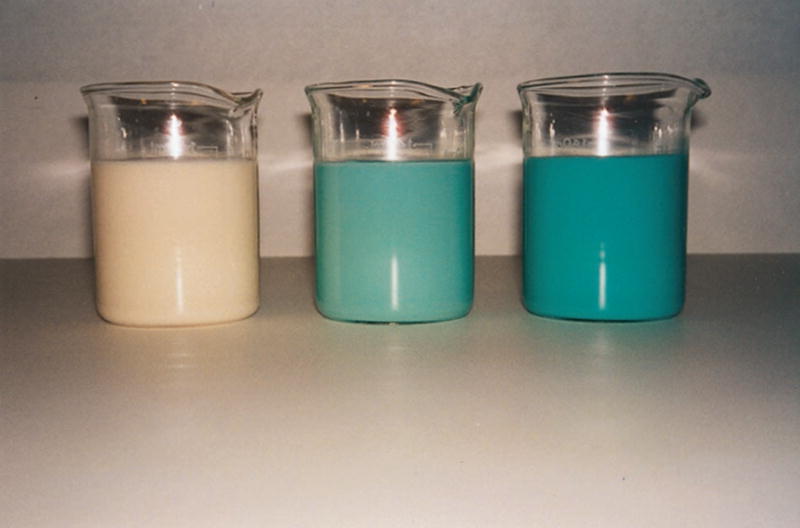
Study objective: To determine the extent to which a mixture of human gastric juice and enteral formula stained with two concentrations of FD&C Blue No. 1 food dye (0.8 and 1.5 mL/L) is visible in suctioned tracheobronchial secretions following three forced small-volume pulmonary aspirations over a 6-h period in an animal model.
Design: Experimental 2 x 3 repeated measures.
Setting: Animal laboratory and an acute care hospital.
Participants: Ninety New Zealand white rabbits weighing approximately 3 kg each, and 90 acutely ill adults who furnished gastric juice.
Interventions: A mixture of human gastric juice and enteral formula stained with 0.8 or 1.5 mL of dye per liter was instilled intratracheally over a 30-min period into anesthetized intubated animals at baseline, 2 h, and 4 h. A total of 0.4 mL/kg of the mixture was instilled at each session. Ninety minutes after each instillation, suctioned secretions were examined for visible dye and blood.
Measurements and results: Dye was visible in 46.3% of the secretions (125 of 270). The concentration of dye had no significant effect on dye visibility. Blood that was present in 114 of 270 of the secretions (42.2%) interfered with dye visibility in all but two secretions. For reasons unknown, even in the absence of blood, dye visibility decreased from 90.2% (55 of 61 secretions) after the first aspiration event to only 61% (25 of 41 secretions) after the third aspiration event.
Conclusions: Findings from this animal model study do not support the use of the dye method to detect repeated small-volume aspirations. For clinicians who choose to use the dye method in selected situations, it appears that a dye concentration of 0.8 mL/L may be as effective in detecting aspiration as a 1.5 mL/L concentration.
Figures
References
-
- Guenter P, Silkroski M. Tube feeding: practical guidelines and nursing protocols. Gaithersburg, MD: Aspen Publishers; 2001. p. 113.
-
- Klodell CT, Carroll M, Carrillo EH, et al. Routine intragastric feeding following traumatic brain injury is safe and well tolerated. Am J Surg. 2000;179:168–171. - PubMed
-
- Rombeau J, Rolandelli R. Clinical nutrition: enteral and tube feeding. 3. Philadelphia, PA: WB Saunders; 1997. p. 560.
-
- Smeltzer SC, Bare BG. Brunner and Suddarth’s textbook of medical-surgical nursing. Philadelphia, PA: JB Lippincott; 2000. p. 487.
-
- Liu D, McIntyre R, Watters J. Pulmonary aspiration in critically ill patients receiving enteral feedings [abstract] Clin Invest Med. 1993;22(suppl):B19.
Publication types
MeSH terms
Substances
Grants and funding
LinkOut - more resources
Full Text Sources
