


Identification, analysis, and utilization of conserved ortholog set markers for comparative genomics in higher plants
- PMID: 12119367
- PMCID: PMC150699
- DOI: 10.1105/tpc.010479
Identification, analysis, and utilization of conserved ortholog set markers for comparative genomics in higher plants
Abstract
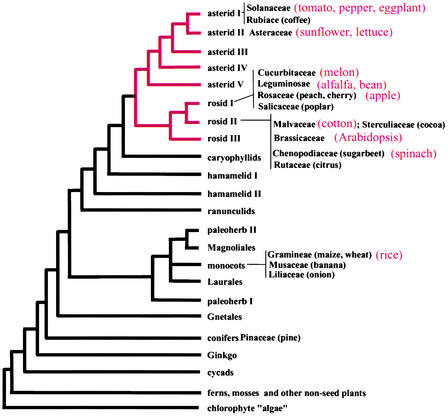
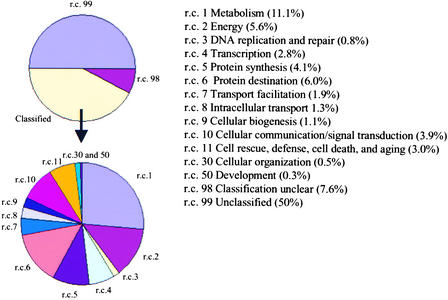
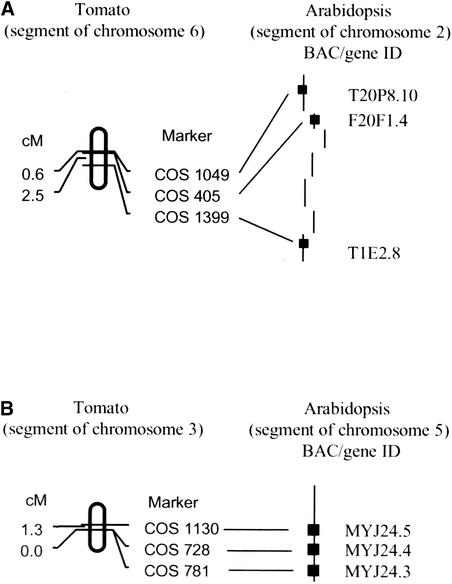
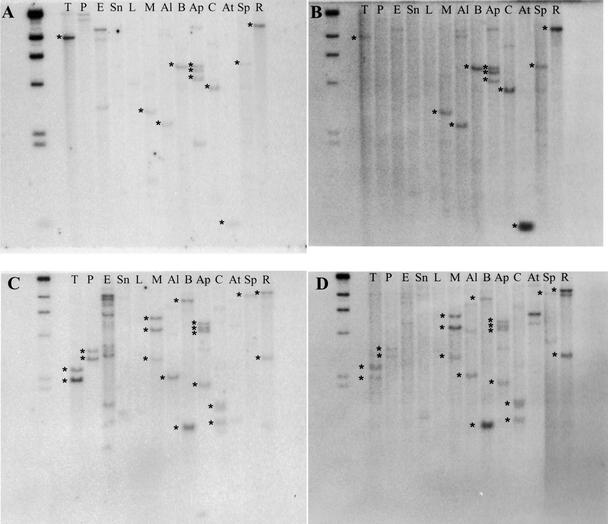
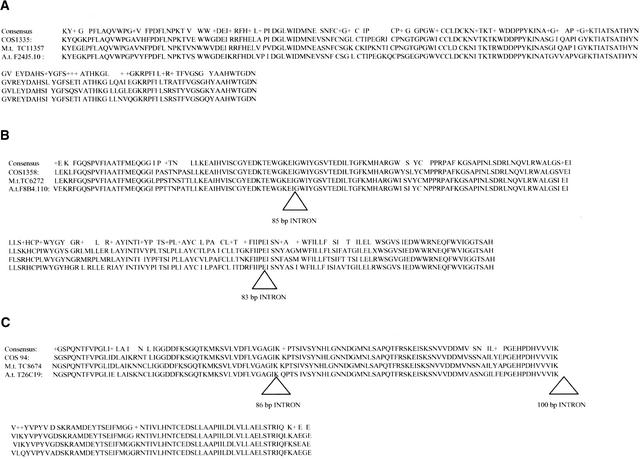
We have screened a large tomato EST database against the Arabidopsis genomic sequence and report here the identification of a set of 1025 genes (referred to as a conserved ortholog set, or COS markers) that are single or low copy in both genomes (as determined by computational screens and DNA gel blot hybridization) and that have remained relatively stable in sequence since the early radiation of dicotyledonous plants. These genes were annotated, and a large portion could be assigned to putative functional categories associated with basic metabolic processes, such as energy-generating processes and the biosynthesis and degradation of cellular building blocks. We further demonstrate, through computational screens (e.g., against a Medicago truncatula database) and direct hybridization on genomic DNA of diverse plant species, that these COS markers also are conserved in the genomes of other plant families. Finally, we show that this gene set can be used for comparative mapping studies between highly divergent genomes such as those of tomato and Arabidopsis. This set of COS markers, identified computationally and experimentally, may further studies on comparative genomes and phylogenetics and elucidate the nature of genes conserved throughout plant evolution.
Figures
References
-
- Adam, D. (2000). Now for the hard ones. Nature 408, 792–793. - PubMed
-
- Boutin, S.R., Young, N.D., Olson, T., Yu, Z.-H., Shoemaker, R.C., and Vallejos, C. (1995). Genome conservation among three legume genera detected with DNA markers. Genome 38, 928–937. - PubMed
-
- Chase, M.W., Soltis, D.E., Olmstead, R.G., Morgan, D., Les, D.H., Mishler, B.D., Duvall, M.R., Price, R.A., Hills, H.G., and Qiu, Y.-L. (1993). Phylogenetics of seed plants: An analysis of nucleotide sequences from the plastid gene rbcL. Ann. Mo. Bot. Gard. 80, 528–580.
-
- Feinberg, A.P., and Vogelstein, B. (1983). A technique for radiolabelling DNA restriction fragments to a high specific activity. Anal. Biochem. 132, 6–13. - PubMed
Publication types
MeSH terms
Substances
LinkOut - more resources
Full Text Sources
Other Literature Sources
Research Materials
