


Identification of cultured isolates of clinically important yeast species using fluorescent fragment length analysis of the amplified internally transcribed rRNA spacer 2 region (ITS2)
- PMID: 12139769
- PMCID: PMC117793
- DOI: 10.1186/1471-2180-2-21
Identification of cultured isolates of clinically important yeast species using fluorescent fragment length analysis of the amplified internally transcribed rRNA spacer 2 region (ITS2)
Abstract
Background: The number of patients candidate to yeast infection has increased during the last years. Also the variety of species of clinical importance has increased. Correct species identification is often important for efficient therapy, but is based on phenotypic features and is sometimes time-consuming and depends largely on the expertise of technicians. Therefore, we evaluated the feasability of PCR-based amplification of the Internally Transcribed Spacer region 2, followed by fragment size analysis on the ABI Prism 310 for the identification of clinically important yeasts.
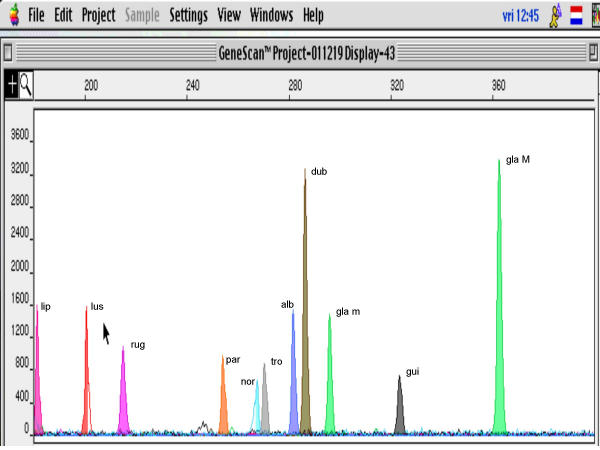
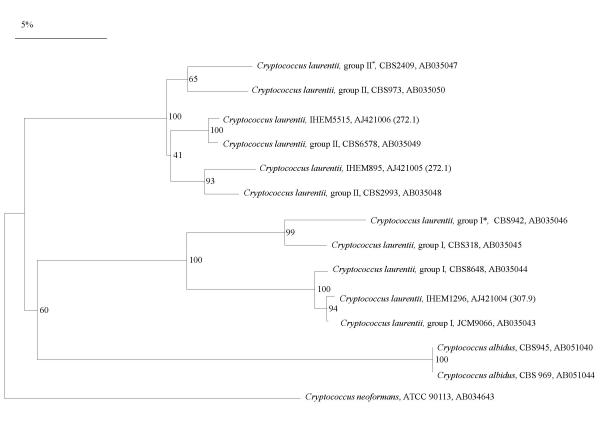
Results: A rapid DNA-extraction method, based on simple boiling freezing was introduced. Of the 25 species tested, 22 could be identified unambiguously by scoring the length of the ITS2-region. No distinction could be made between the species T. asteroides and T. inkin and between T. mucoides and T. ovoides. The two varieties of Cryptococcus neoformans (var. neoformans and var. gattii) could be differentiated from each other due to a one bp length difference of the ITS2 fragment. The three C. laurentii isolates were split in two groups according to their ITS2-fragment lengths, in correspondence with the phylogenetic groups described previously. Since the obtained fragment lenghts compared well to those described previously, an internationally usable library of ITS2 fragment lengths can be constructed.
Conclusions: The existing ITS2 size based library enables identification of most of the clinically important yeast species, within 6 hours starting from a single colony, can be easily updated when new species are described. Data can be exchanged between laboratories.
Figures
References
-
- Pfaller MA, Messer SA, Houston A, Rangel-Frausto S, Wiblin T, Blumberg HM, Edwards JA, Jarvis W, Martin MA, Neu HC, Saiman L, Patterson JE, Dibb JC, Roldan CM, Rinaldi MG, Wenzel RP. National epidemiology of mycoses survey: a multicenter study of strain variation and antifungal susceptibility among isolates of Candida species. Diagn Microbiol Infect Dis. 1998;31:289–296. doi: 10.1016/S0732-8893(97)00245-9. - DOI - PubMed
MeSH terms
Substances
LinkOut - more resources
Full Text Sources
