


Transfer of microorganisms, including Listeria monocytogenes, from various materials to beef
- PMID: 12147503
- PMCID: PMC124046
- DOI: 10.1128/AEM.68.8.4015-4024.2002
Transfer of microorganisms, including Listeria monocytogenes, from various materials to beef
Abstract
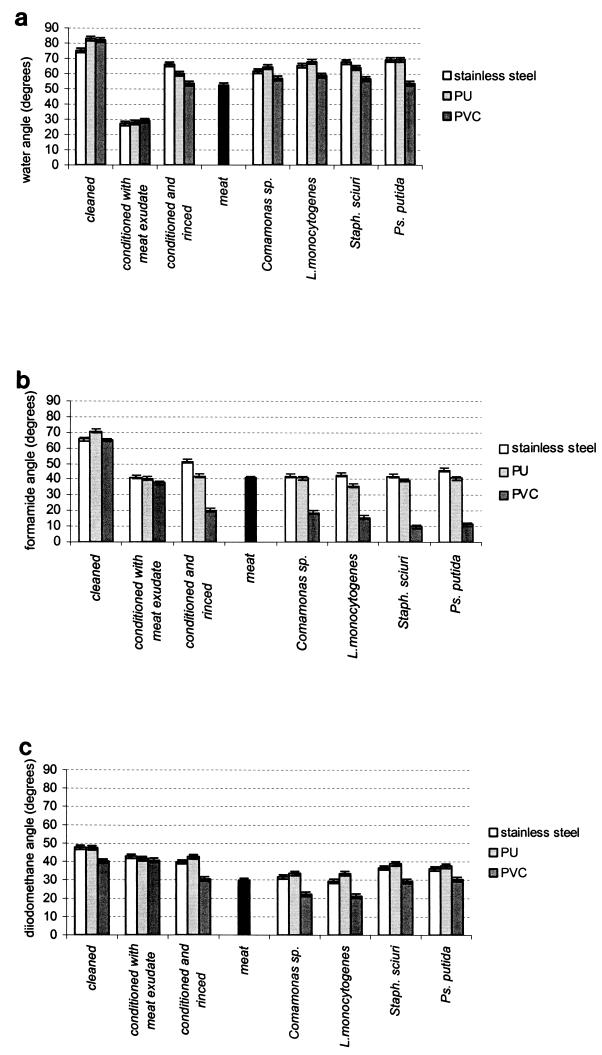
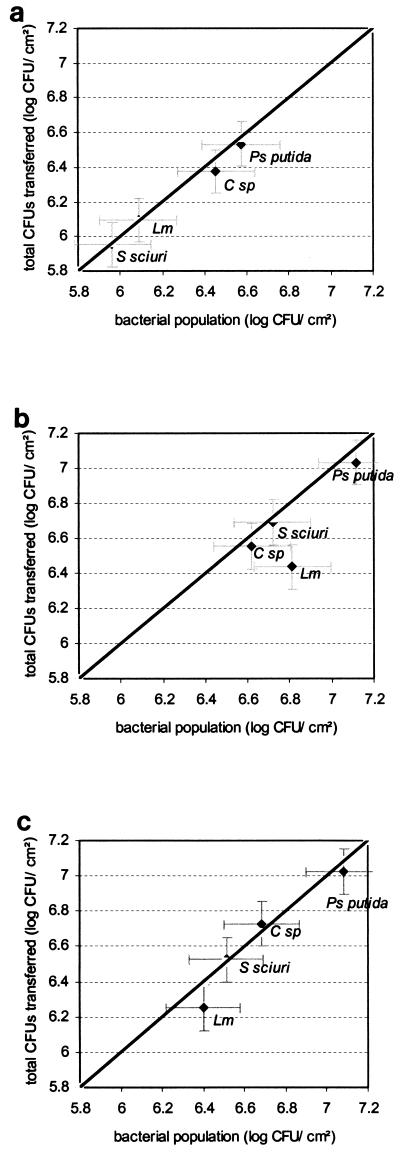
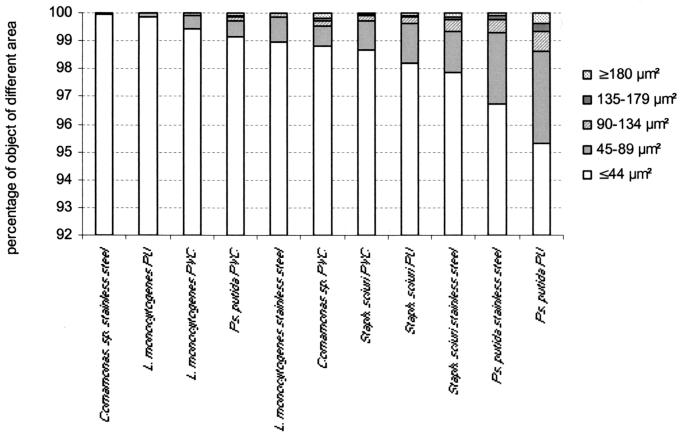
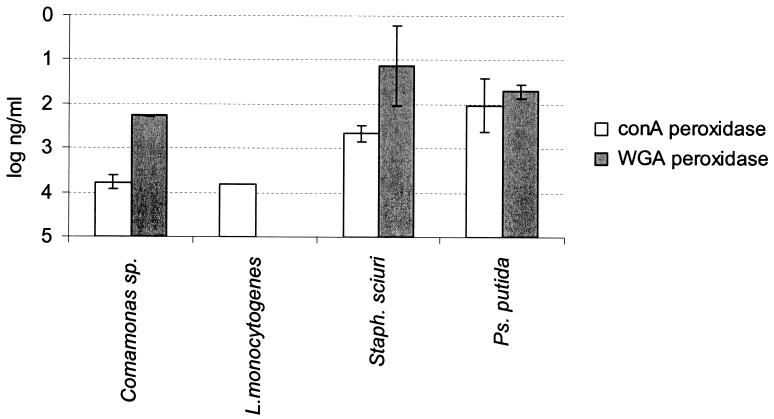
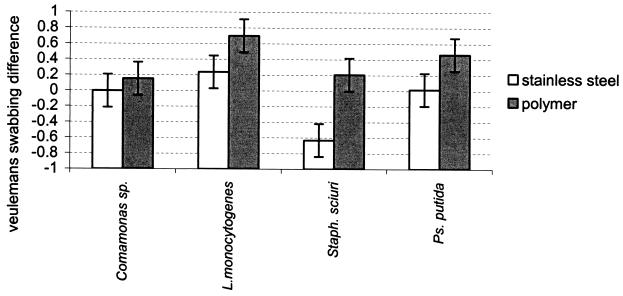
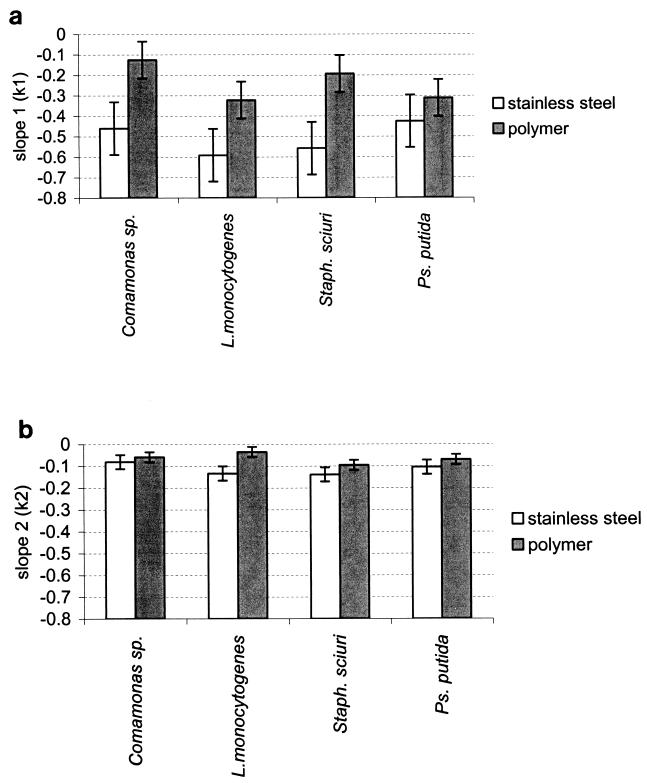
The quantity of microorganisms that may be transferred to a food that comes into contact with a contaminated surface depends on the density of microorganisms on the surface and on the attachment strengths of the microorganisms on the materials. We made repeated contacts between pieces of meat and various surfaces (stainless steel and conveyor belt materials [polyvinyl chloride and polyurethane]), which were conditioned with meat exudate and then were contaminated with Listeria monocytogenes, Staphylococcus sciuri, Pseudomonas putida, or Comamonas sp. Attachment strengths were assessed by the slopes of the two-phase curves obtained by plotting the logarithm of the number of microorganisms transferred against the order number of the contact. These curves were also used to estimate the microbial population on the surface by using the equation of A. Veulemans, E. Jacqmain, and D. Jacqmain (Rev. Ferment. Ind. Aliment. 25:58-65, 1970). The biofilms were characterized according to their physicochemical surface properties and structures. Their exopolysaccharide-producing capacities were assessed from biofilms grown on polystyrene. The L. monocytogenes biofilms attached more strongly to polymers than did the other strains, and attachment strength proved to be weaker on stainless steel than on the two polymers. However, in most cases, it was the population of the biofilms that had the strongest influence on the total number of CFU detached. Although attachment strengths were weaker on stainless steel, this material, carrying a smaller population of bacteria, had a weaker contaminating capacity. In most cases the equation of Veulemans et al. revealed more bacteria than did swabbing the biofilms, and it provided a better assessment of the contaminating potential of the polymeric materials studied here.
Figures
References
-
- Allison, D. G., and I. W. Sutherland. 1987. The role of exopolysaccharides in adhesion of freshwater bacteria. J. Gen. Microbiol. 133:1319-1327.
-
- Assanta, M. A., D. Roy, and D. Montpetit. 1998. Adhesion of Aeromonas hydrophila to water distribution system pipes after different contact times. J. Food Prot. 61:1321-1329. - PubMed
-
- Bell, R. G. 1997. Distribution and sources of microbial contamination on beef carcasses. J. Appl. Microbiol. 82:292-300. - PubMed
-
- Bizzaro, S., L. Deneuve, and J. L. Vendeuvre. 1990. Etude de la contamination microbienne des surfaces en entreprise. Viandes Prod. Carnes 11:220.
-
- Borch, E., M. L. Kant-Muermans, and Y. Blixt. 1996. Bacterial spoilage of meat and cured meat products. Int. J. Food Microbiol. 33:103-120. - PubMed
MeSH terms
Substances
LinkOut - more resources
Full Text Sources
