


Improvement of Drosophila acetylcholinesterase stability by elimination of a free cysteine
- PMID: 12149129
- PMCID: PMC117796
- DOI: 10.1186/1471-2091-3-21
Improvement of Drosophila acetylcholinesterase stability by elimination of a free cysteine
Abstract
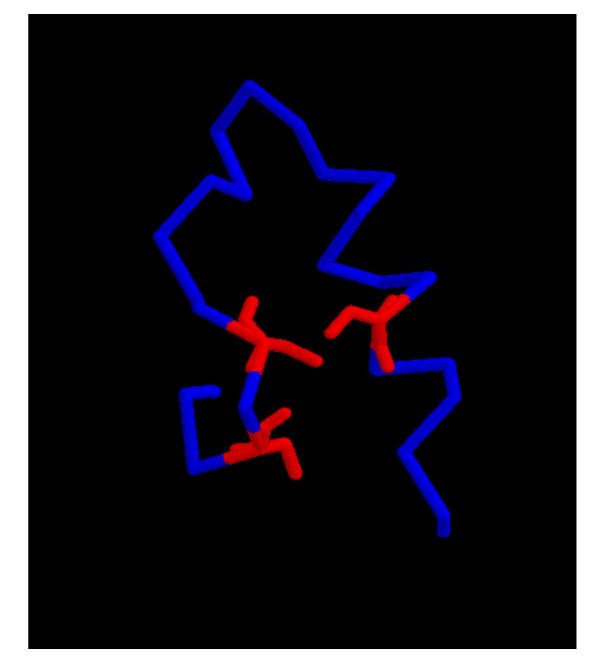
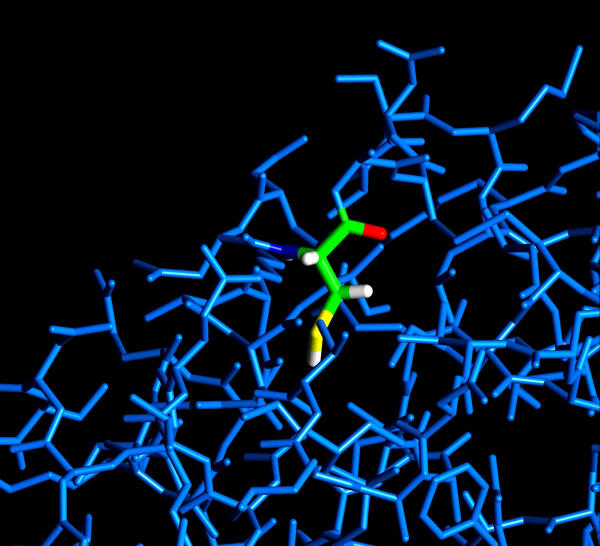
Background: Acetylcholinesterase is irreversibly inhibited by organophosphate and carbamate insecticides allowing its use for residue detection with biosensors. Drosophila acetylcholinesterase is the most sensitive enzyme known and has been improved by in vitro mutagenesis. However, it is not sufficiently stable for extensive utilization. It is a homodimer in which both subunits contain 8 cysteine residues. Six are involved in conserved intramolecular disulfide bridges and one is involved in an interchain disulfide bridge. The 8th cysteine is not conserved and is present at position 290 as a free thiol pointing toward the center of the protein.
Results: The free cysteine has been mutated to valine and the resulting protein has been assayed for stability using various denaturing agents: temperature, urea, acetonitrile, freezing, proteases and spontaneous-denaturation at room temperature. It was found that the C290V mutation rendered the protein 1.1 to 2.7 fold more stable depending on the denaturing agent.
Conclusion: It seems that stabilization resulting from the cysteine to valine mutation originates from a decrease of thiol-disulfide interchanges and from an increase in the hydrophobicity of the buried side chain.
Figures
References
-
- Marty JL, Sode K, Karube I. Biosensor for detection of organophosphate and carbamate insecticides. Electroanalysis. 1992;4:801–803.
-
- Bachmann TT, Leca B, Vilatte F, Marty J-L, Fournier D, Schmid R. Improved multianalyte detection of organophosphates and carbamates with disposable multielectrode biosensors using recombinant mutants of Drosophila acetylcholinesterase and artificial neural networks. Biosens Bioelectron. 2000;15:193–201. doi: 10.1016/S0956-5663(00)00055-5. - DOI - PubMed
Publication types
MeSH terms
Substances
LinkOut - more resources
Full Text Sources
Other Literature Sources
Molecular Biology Databases
Research Materials
