


Psychosocial stress and cardiovascular disease: pathophysiological links
- PMID: 12165968
- PMCID: PMC2979339
- DOI: 10.1080/08964280209596039
Psychosocial stress and cardiovascular disease: pathophysiological links
Abstract
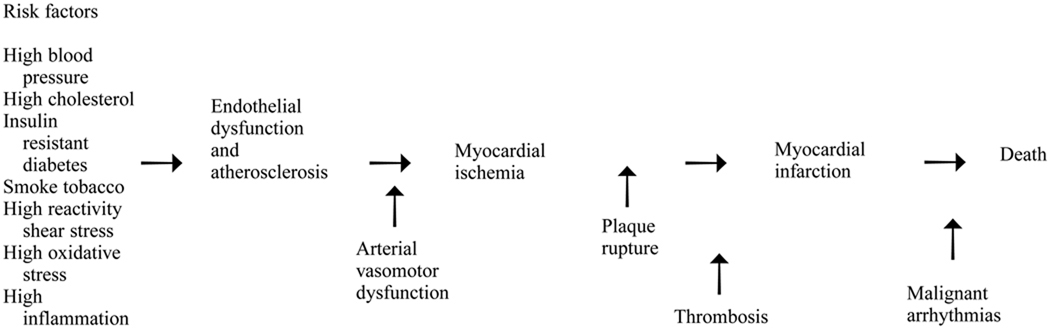
The remarkable decline in cardiovascular disease (CVD) experienced in developed countries over the last 40 years appears to have abated. Currently, many CVD patients continue to show cardiac events despite optimal treatment of traditional risk factors. This evidence suggests that additional interventions, particularly those aimed at nontraditional factors, might be useful for continuing the decline. Psychosocial stress is a newly recognized (nontraditional) risk factor that appears to contribute to all recognized mechanisms underlying cardiac events, specifically, (a) clustering of traditional cardiovascular risk factors, (b) endothelial dysfunction, (c) myocardial ischemia, (d) plaque rupture, (e) thrombosis, and (f) malignant arrhythmias. A better understanding of the behavioral and physiologic associations between psychosocial stress and CVD will assist researchers in identifying effective approaches for reducing or reversing the damaging effects of stress and may lead to further reductions of CVD morbidity and mortality.
Figures
References
-
- Sytkowski PA, Kannel WB, Agostino RB. Changes in risk factors and the decline in mortality from cardiovascular disease. The Framingham Heart Study. N Engl J Med. 1990;322:1635–1641. - PubMed
-
- Rosamond WD, Chambless LE, Folsom AR, et al. Trends in the incidence of myocardial infarction and in mortality due to coronary heart disease, 1987–1994. N Engl J Med. 1998;339:861–867. - PubMed
-
- Levy D, Thom TJ. Death rates from coronary disease—progress and a puzzling paradox. N Engl J Med. 1998;229:915–917. - PubMed
-
- Haskell WL, Alderman EL, Fair JM, et al. Effects of intensive multiple risk factor reduction on coronary atherosclerosis and clinical cardiac events in men and women with coronary artery disease: The Stanford Coronary Risk Intervention Project (SCRIP) Circulation. 1994;89:975–990. - PubMed
-
- Frasure–Smith N. In-hospital symptoms of psychological stress as predictors of long-term outcome after acute myocardial infarction in men. Am J Cardiol. 1991;67:121–127. - PubMed
Publication types
MeSH terms
Grants and funding
LinkOut - more resources
Full Text Sources
Medical
