


Hysteroscopy: an analysis of 2-years' experience
- PMID: 12166754
- PMCID: PMC3043435
Hysteroscopy: an analysis of 2-years' experience
Abstract
Background: Over the years, hysteroscopy has been increasingly performed for various gynecological disorders. In this study, we present a review of hysteroscopic procedures performed over a 2-year period analyzing the complications associated with it.
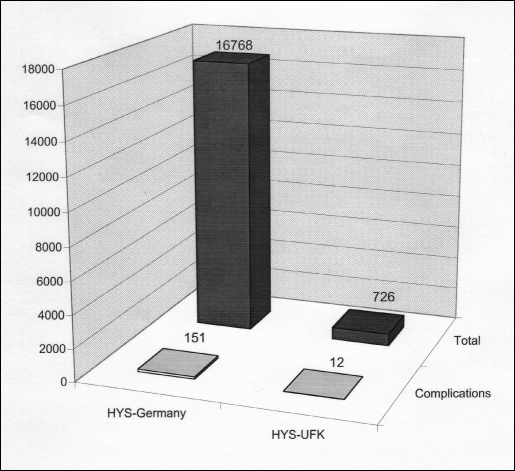
Methods: Seven hundred twenty-six hysteroscopic procedures performed at the Department of Gynecology and Obstetrics, University of Kiel over a period of 2 years were reviewed retrospectively using the GynReg database in the department. Indications, intraoperative diagnoses, and complications were particularly highlighted.
Results: The most common indications for the procedure were abnormal vaginal bleeding, endometrial ablation, polypectomy, and myomectomy. The most common findings were uterine polyps, submucous myoma, and hyperplastic endometrium. The complication rate was 1.65% of total hysteroscopies. False passage and uterine perforation were the most common acute complications. No late complications occurred.
Conclusions: Correlating our data with that found elsewhere, we find hysteroscopy to be a safe, minimally invasive procedure with a very low rate of complications.
Figures

References
-
- Taylor PJ. Hysteroscopy: where have we been, where are we going? J Reprod Med. 1993;38(10):757–62 - PubMed
-
- Lindemann HJ, Gallinat A. Physikalische und physiologische Grundlagen der CO2 Hysteroskopie. Geburtshilfe und Frauenheilkunde. 1976;36:729. - PubMed
-
- Sowter MC, Singla AA, Lethaby A. Pre-operative endometrial thinning agents before hysteroscopic surgery for heavy menstrual bleeding. Cochrane Database Syst Re. 2000;2:CD001124. - PubMed
-
- Wood C, Maher P. Minimally invasive gynaecological surgery. Aust Fam Physician. 1992;21(6):772–773, 777-779, 782 - PubMed
-
- Molloy D, Crosdale S. National trends in gynaecological endoscopic surgery. Aust N Z J Obstet Gynaecol. 1996;36(1):27–31 - PubMed
Publication types
MeSH terms
LinkOut - more resources
Full Text Sources