Fatigue is associated with high circulating leptin levels in chronic hepatitis C
- PMID: 12171970
- PMCID: PMC1773339
- DOI: 10.1136/gut.51.3.434
Fatigue is associated with high circulating leptin levels in chronic hepatitis C
Abstract
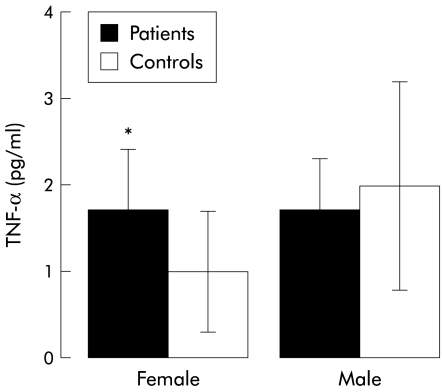
Background and aims: Fatigue is a frequent and disabling symptom reported by patients with chronic hepatitis C (CHC). Its mechanism is poorly understood. Recent attention has focused on the role of leptin and energy expenditure in CHC. Our aims were to analyse fatigue in CHC and to determine its relationship with disease activity, resting energy expenditure (REE), circulating leptin, and tumour necrosis factor alpha (TNF-alpha).
Methods: Seventy eight CHC patients, 22 healthy controls, and 13 primary biliary cirrhosis (PBC) patients underwent measurements of REE, body composition, leptin, and TNF-alpha. All subjects completed the fatigue impact scale (FIS) questionnaire. A liver biopsy and viral load measurements were performed in all patients.
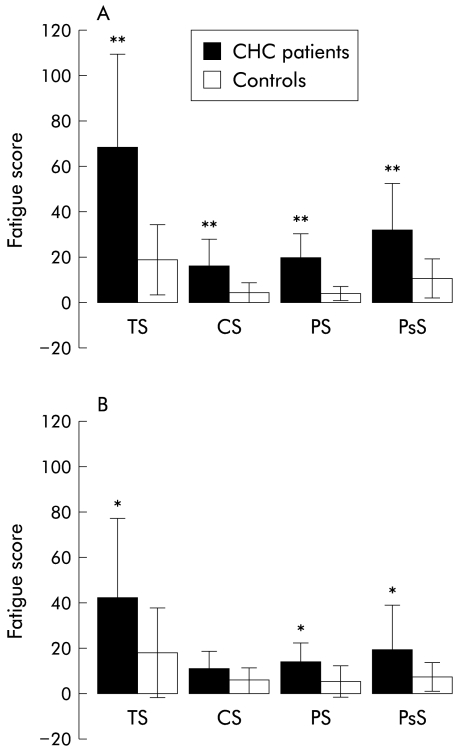
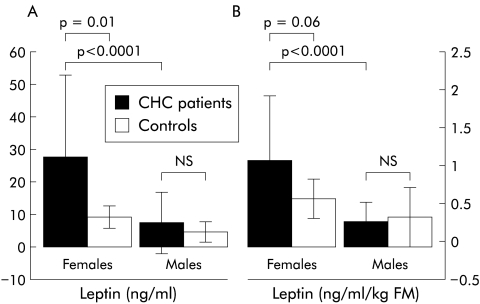
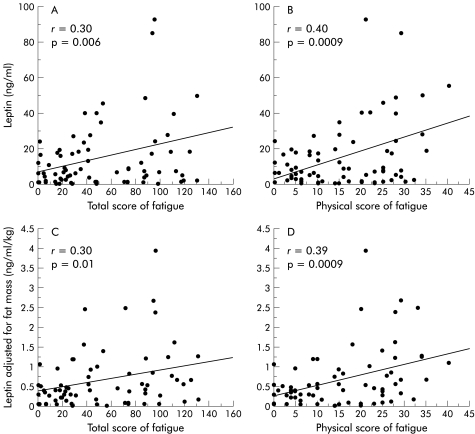
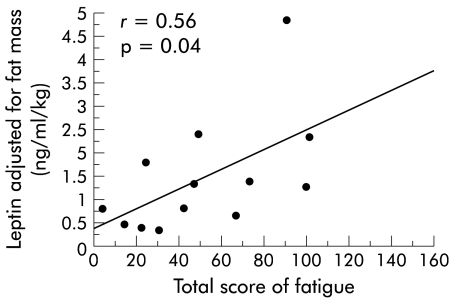
Results: Thirty eight of 78 CHC patients considered fatigue the worst or initial symptom of their disease. The fatigue score of patients was significantly higher than that of controls (53.2 (40.1) v 17.7 (16.9); p<0.0001) and was more pronounced in females (p=0.003). Leptin was increased significantly in CHC patients compared with controls (15.4 (20.7) v 6.4 (4.1) ng/ml; p<0.05). In CHC patients, the fatigue score correlated significantly with leptin corrected for fat mass (r=0.30, p=0.01). This correlation increased when the physical domain of fatigue was included (r=0.39, p=0.0009). Furthermore, a similar positive correlation was found in PBC patients (r=0.56, p=0.04). No correlation was found between fatigue and age, REE, liver function tests, viral load, or the METAVIR score in CHC patients.
Conclusions: Fatigue is present in CHC patients and is more pronounced in females. The FIS questionnaire is clinically relevant and may be useful for future therapeutic trials aimed at reducing fatigue. Fatigue may be partly mediated by leptin.
Figures
Comment in
-
Fatigue is associated with high circulating leptin levels in chronic hepatitis C.Gut. 2003 Jun;52(6):915. doi: 10.1136/gut.52.6.915. Gut. 2003. PMID: 12740359 Free PMC article. No abstract available.
References
-
- Gumber SC, Chopra S. Hepatitis C: a multifaceted disease. Review of extrahepatic manifestations. Ann Intern Med 1995;123:615–20. - PubMed
-
- Fisk JD, Pontrefact A, Ritvo PF, et al. Measuring the functional impact of fatigue: initial validation of the fatigue impact scale. Can J Neurol Sci 1994;21:9–14. - PubMed
-
- Huet PM, Deslauriers J, Tran A, et al. Impact of fatigue on the quality of life of patients with primary biliary cirrhosis. Am J Gastroenterol 2000;95:760–7. - PubMed
-
- Goh J, Coughlan B, Quinn J, et al. Fatigue does not correlate with the degree of hepatitis or the presence of autoimmune disorders in chronic hepatitis C infection. Eur J Gastroenterol Hepatol 1999;11:833–8. - PubMed
-
- Swain MG, Maric M. Defective corticotropin-releasing hormone mediated neuroendocrine and behavioral responses in cholestatic rats: implications for cholestatic liver disease-related sickness behaviors. Hepatology 1995;22:1560–4. - PubMed
MeSH terms
Substances
LinkOut - more resources
Full Text Sources
Medical