Comparative Study
. 2002 Aug 1;188(3):249-59.
doi: 10.1007/s00232-001-0189-8.

Extracellular adenine nucleotides regulate Na+/H+ exchanger NHE3 activity in A6-NHE3 transfectants by a cAMP/PKA-dependent mechanism

Affiliations
Comparative Study

Extracellular adenine nucleotides regulate Na+/H+ exchanger NHE3 activity in A6-NHE3 transfectants by a cAMP/PKA-dependent mechanism

A Bagorda et al. J Membr Biol. .

Abstract

As potential autocrine or paracrine factors, extracellular nucleotides are known to be important regulators of renal ion transporters by activating cell surface receptors and intracellular signaling pathways. We investigated the influence of extracellular adenine nucleotides on Na+/H+ exchanger isoform 3 (NHE3) activity in A6-NHE3 cells. This is a polarized cell line obtained by stable transfection of A6 cells with the cDNA encoding the rat isoform of NHE3, which is expressed on the apical membrane. Basolateral addition of the P2Y(1) agonist, 2-MeSADP, induced an inhibition of NHE3 activity, which was prevented by preincubation with selective P2Y(1) antagonists, MRS 2179 (N6-methyl-2'-deoxyadenosine-3',5'-bisphosphate) and MRS 2286 (2-[2-(2-chloro-6-methylamino-purin-9-yl)-ethyl]-propane-1,3-bisoxy(diammoniumphosphate)). NHE3 activity was also significantly inhibited by ATP and ATP-gamma-S but not by UTP. 2-MeSADP induced a P2Y(1) antagonist-sensitive increase in both [Ca2+]i and cAMP production. Pre-incubation with a PKC inhibitor, Calphostin C, or the calcium chelator BAPTA-AM, had no effect on the 2-MeSADP-dependent inhibition of NHE3 activity, whereas this inhibition was reversed by either incubation with the PKA inhibitor H89 or by mutation of two PKA target serines (S552 and S605) on NHE3. Pre-incubation of the A6-NHE3 cells with the synthetic peptide, Ht31, which prevents the binding between AKAPs and the regulatory PKA subunits RII, also prevented the 2-MeSADP-induced inhibition of NHE3. We conclude that only the cAMP/PKA pathway is involved in the inhibition of NHE3 activity.


Figures
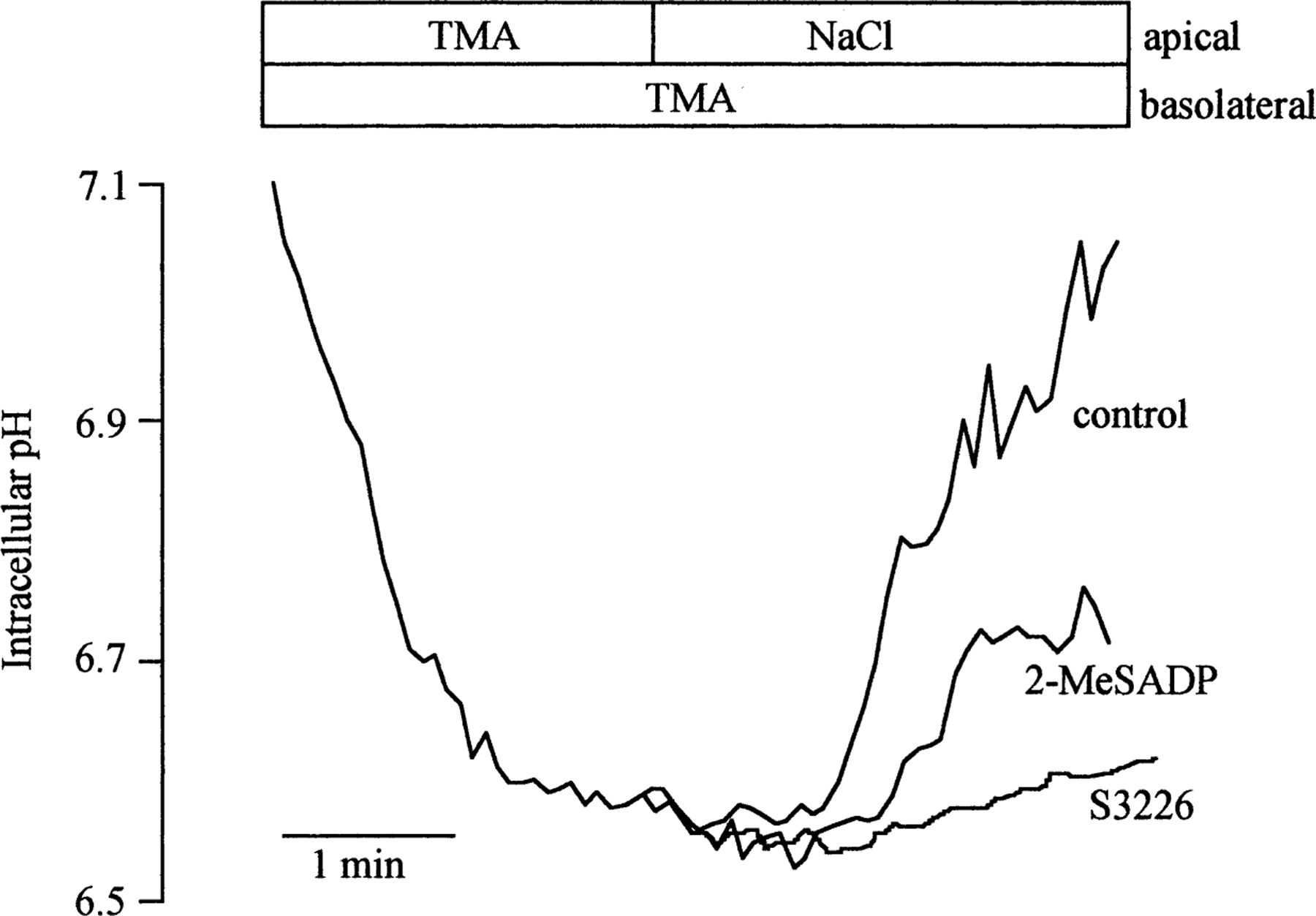
Fig. 1.
Fig. 1.
Representative traces depicting the effect of 2-MeSADP on NHE3 exchange activity in A6-NHE3 monolayers. NHE3 activity was assayed as the initial rate of apical Na+-dependent pHi recovery after intracellular acidification via superfusion with NH4+ medium followed by Na+-free tetramethylammonium (TMA) Ringer before (control) and after 10 minutes of pre-incubation with either 10 nm 2-MeSADP or 10 µm of the NHE3-specific inhibitor, S3326 (see Methods). The ordinate is the pHi corresponding to the nigericin calibration performed as described in Methods.
Fig. 2.
Fig. 2.
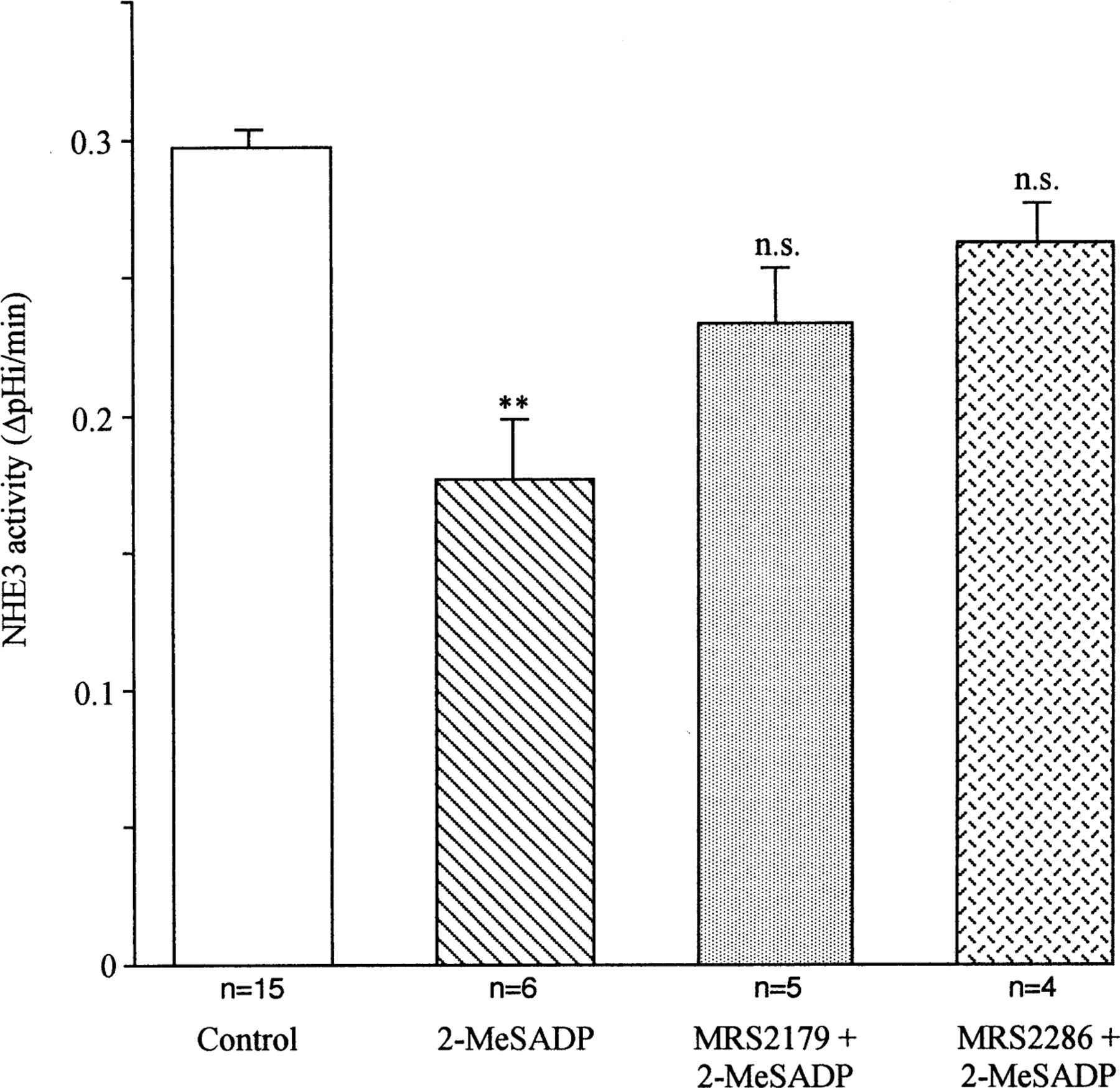
Effect of the P2Y1-selective antagonists MRS 2179 and MRS 2286 on 2-MeSADP-mediated inhibition of the NHE3. The P2Y1-selective antagonist MRS 2179 (1 µm) or MRS 2286 (1 µm) was added to the basolateral side of the monolayer 5 min before stimulation with 2-MeSADP (100 nm). Data were analyzed with one-way ANOVA test; ** indicates significant difference (P<0.01) compared to the control value.
Fig. 3.
Fig. 3.
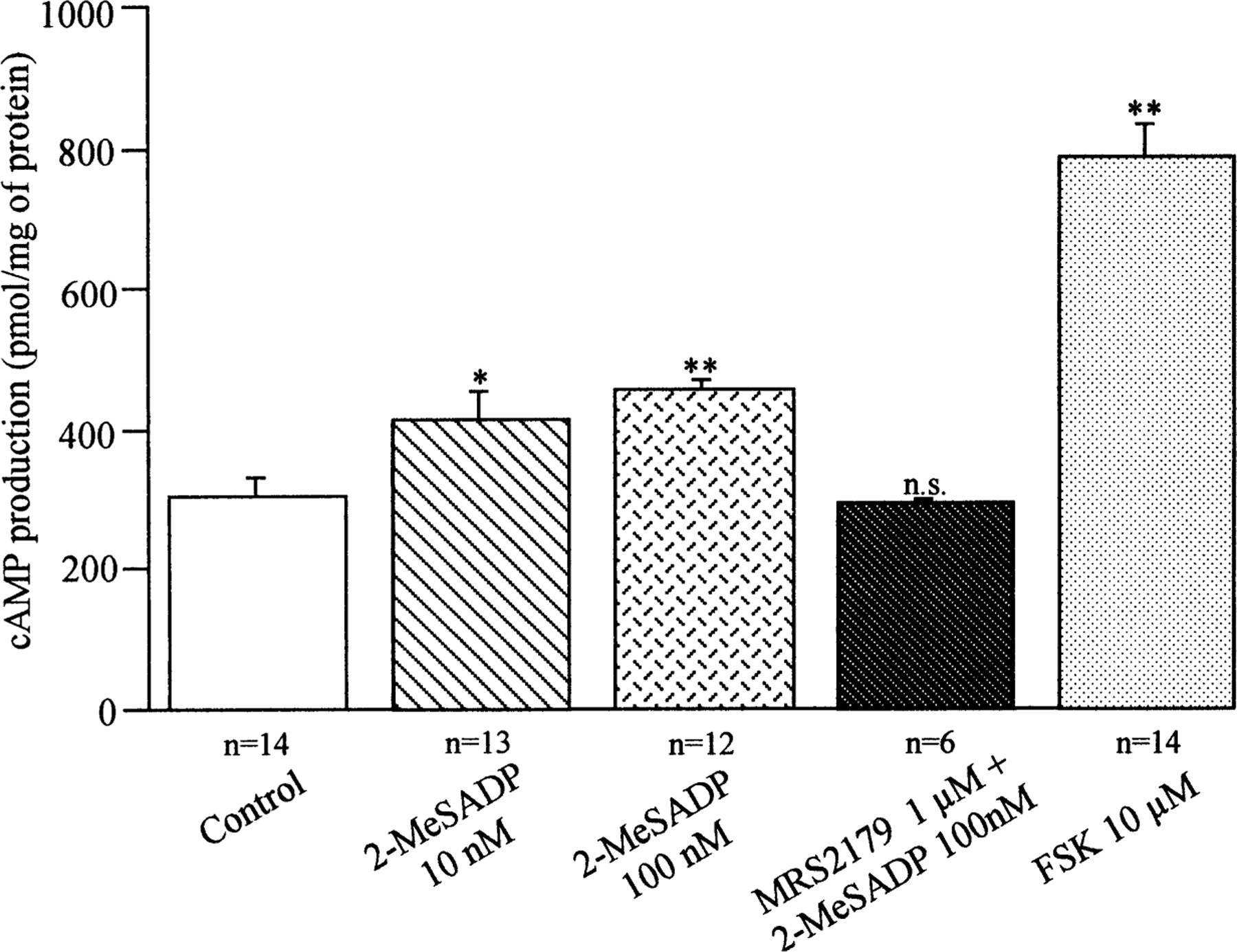
Effect of 2-MeSADP and the P2Y1 antagonist MRS 2179 on cAMP production. The level of intracellular cAMP in A6-NHE3 cells was measured after cells were incubated for 10 min with the indicated 2-MeSADP concentrations or a pre-incubation with 1 µm MRS 2179 for 5 min before the addition of 100 nm 2-Me-SADP. Incubation with Forskolin (FSK) was used as a positive control. Data were analyzed with one-way ANOVA test; ** (P<0.01), * (P<0.05) indicate significant difference compared to the value for control cAMP production.
Fig. 4.
Fig. 4.
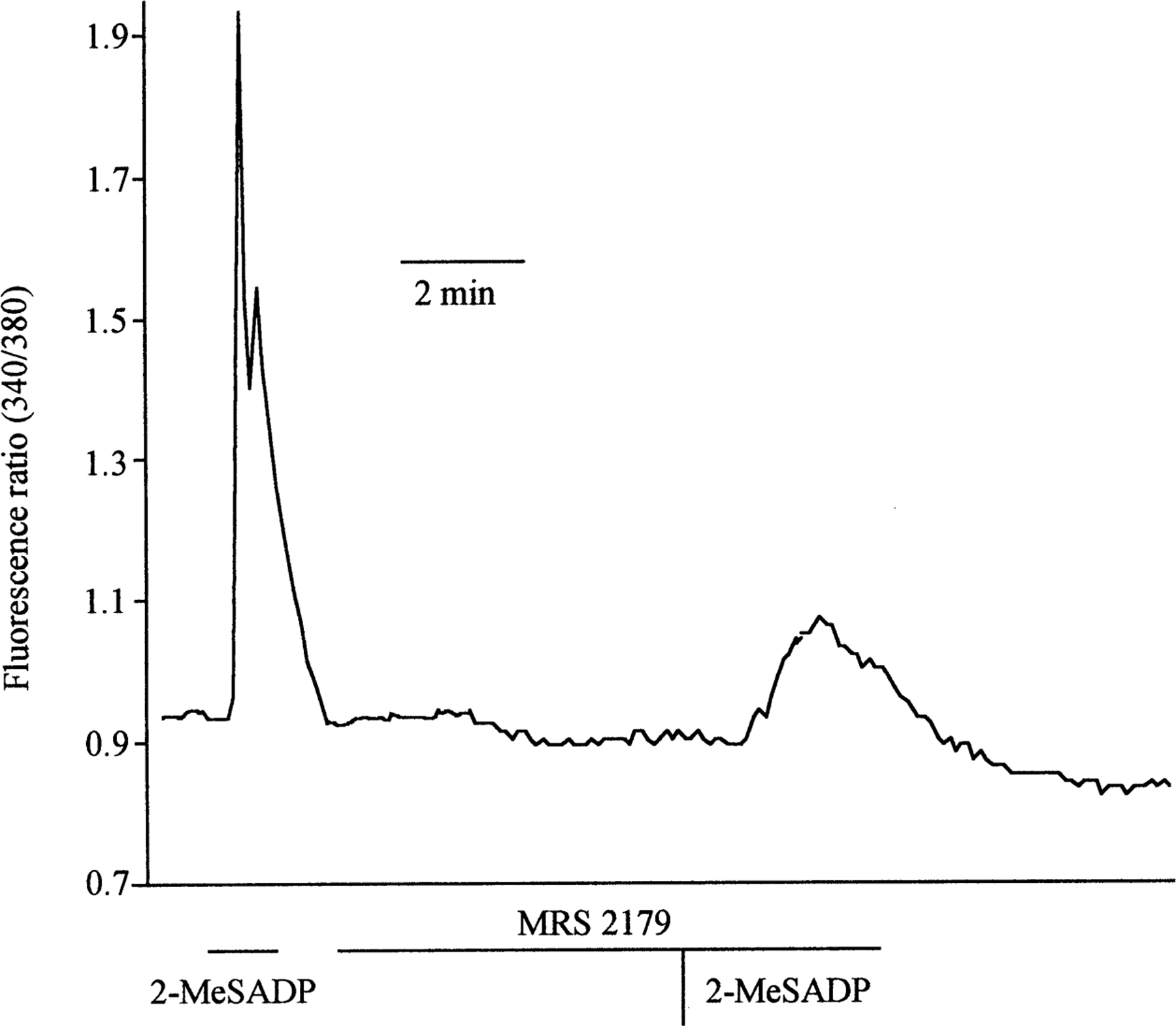
Representative trace showing 2-Me-SADP-dependent cytosolic calcium increase (fluorescence ratio): effect of the P2Y1 antagonist, MRS 2179. Cells were continuously perfused with Ringer solutions. At indicated times, cells were perfused with Ringer containing 100 nm 2-MeSADP, Ringer containing 1 µm MRS 2179 or both.
Fig. 5.
Fig. 5.
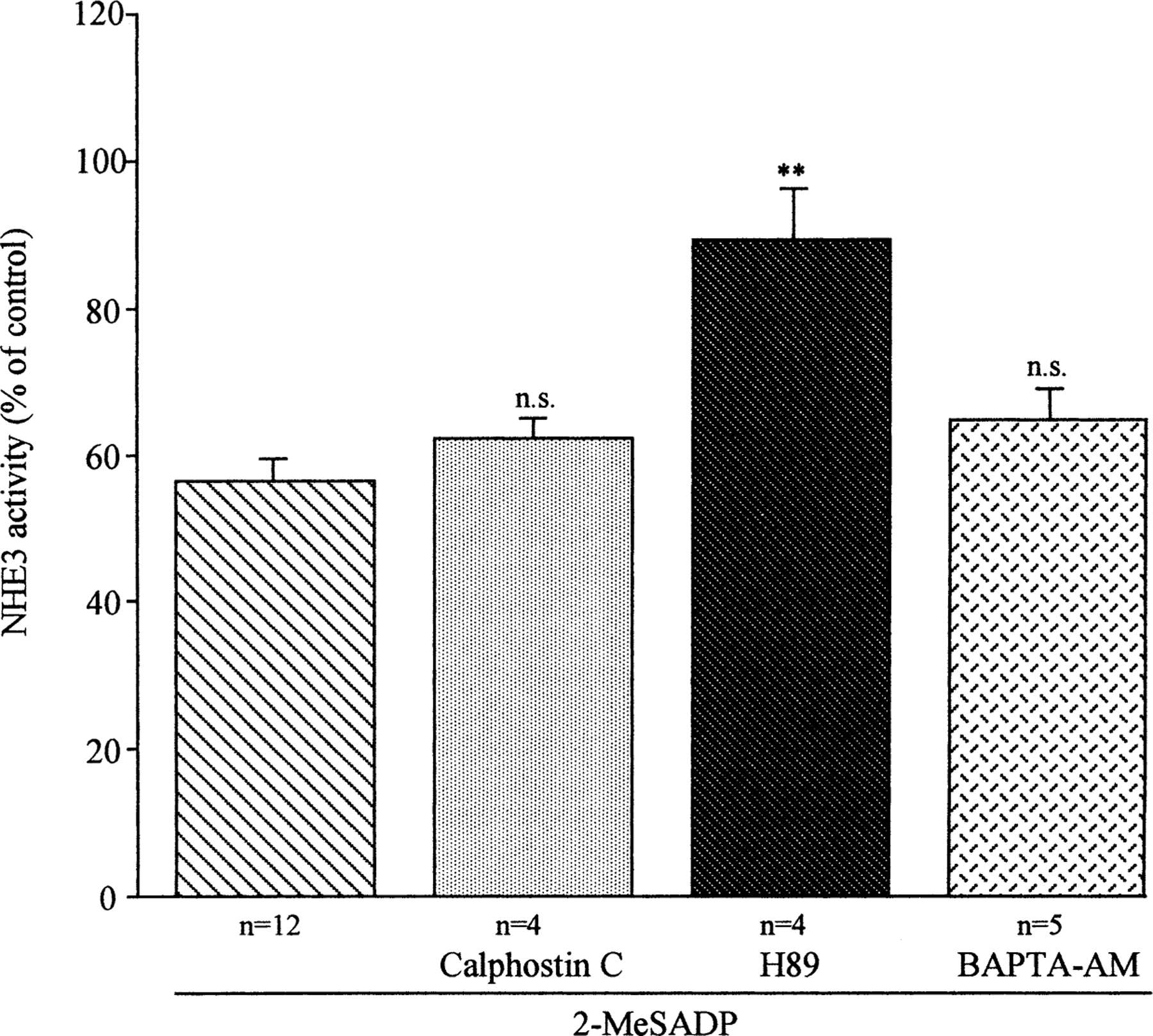
Effect of the pharmacological activation/inhibition of several regulatory pathways on 2-MeSADP-dependent regulation of NHE3 activity. Measurements of initial rate of pHi recovery, induced by superfusion of Na+ medium to acid-loaded cells first in the absence (control) and then in the presence of the indicated agents, were performed as described in Fig. 1. Cell monolayers were exposed to 100 nm basolateral 2-MeSADP minus or plus indicated agents at both the apical and basolateral side at the following concentrations: Calphostin C (10 nm), H89 (1 µm), and BAPTA-AM (20 µm). Values were analyzed with one-way ANOVA test; ** indicates significant difference (P<0.01) compared to the average of pHi recovery in presence of only 2-MeSADP.
Fig. 6.
Fig. 6.
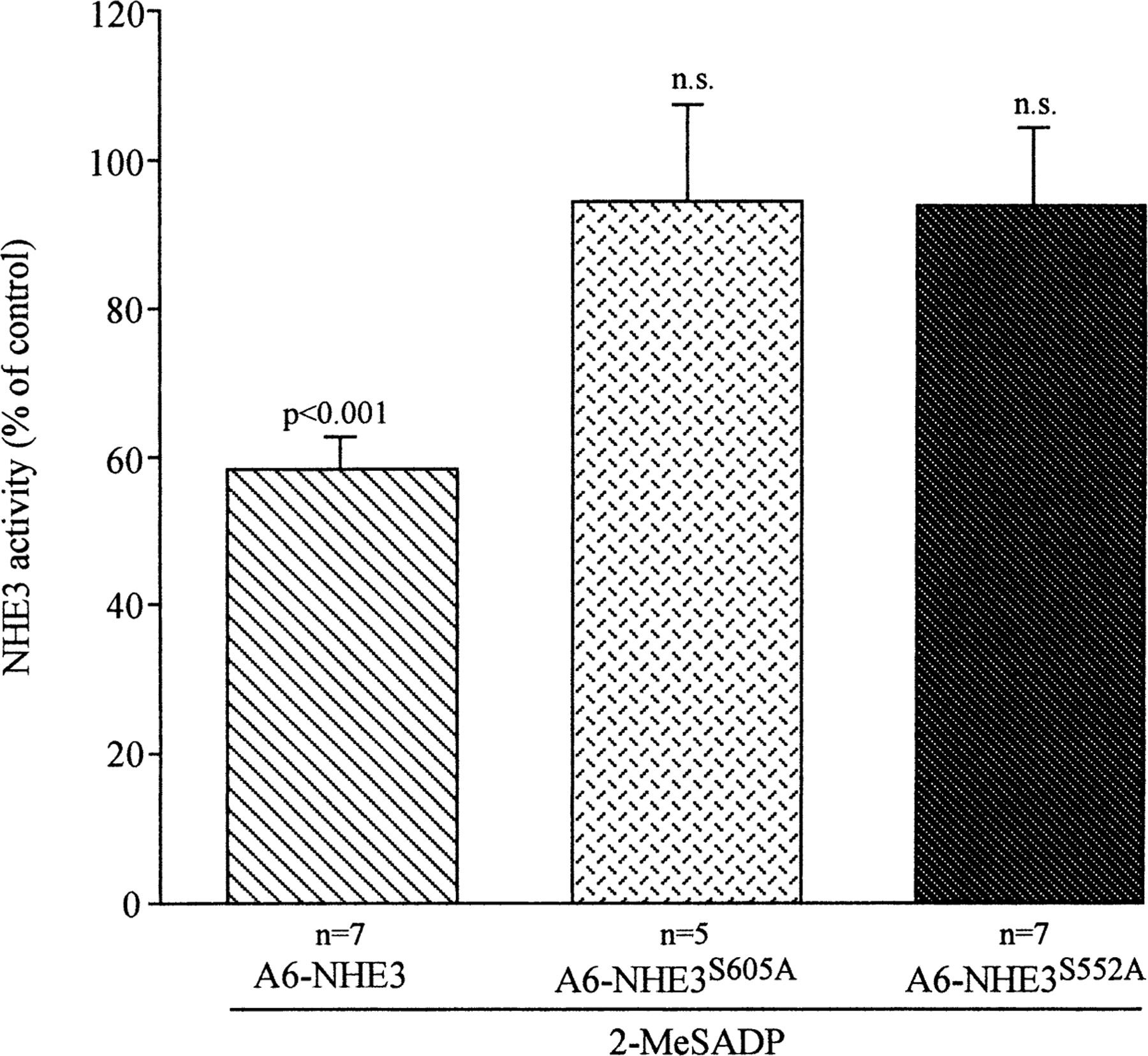
Effect of the mutation of PKA substrate serines 552 and 605 to alanine on 2-MeSADP-dependent regulation of NHE3 activity. Measurements of the initial rate of pHi recovery induced by superfusion of Na+ medium of acid-loaded cells were performed first in the absence (control) and then in presence of 100 nm basolateral 2-MeSADP, as described in Fig. 1. Measurements were conducted in A6 cells transfected with either wild-type NHE3 (A6-NHE3), NHE3 with serine 605 mutated to alanine (A6-NHE3S605A) or NHE3 with serine 552 mutated to alanine (A6-NHE3S552A). Values are means ± se of the indicated number of experiments and analyzed by Student’s t-test for paired data of pHi recoveries in the same monolayer before and after 2-MeSADP (100 nm) treatment.
Fig. 7.
Fig. 7.
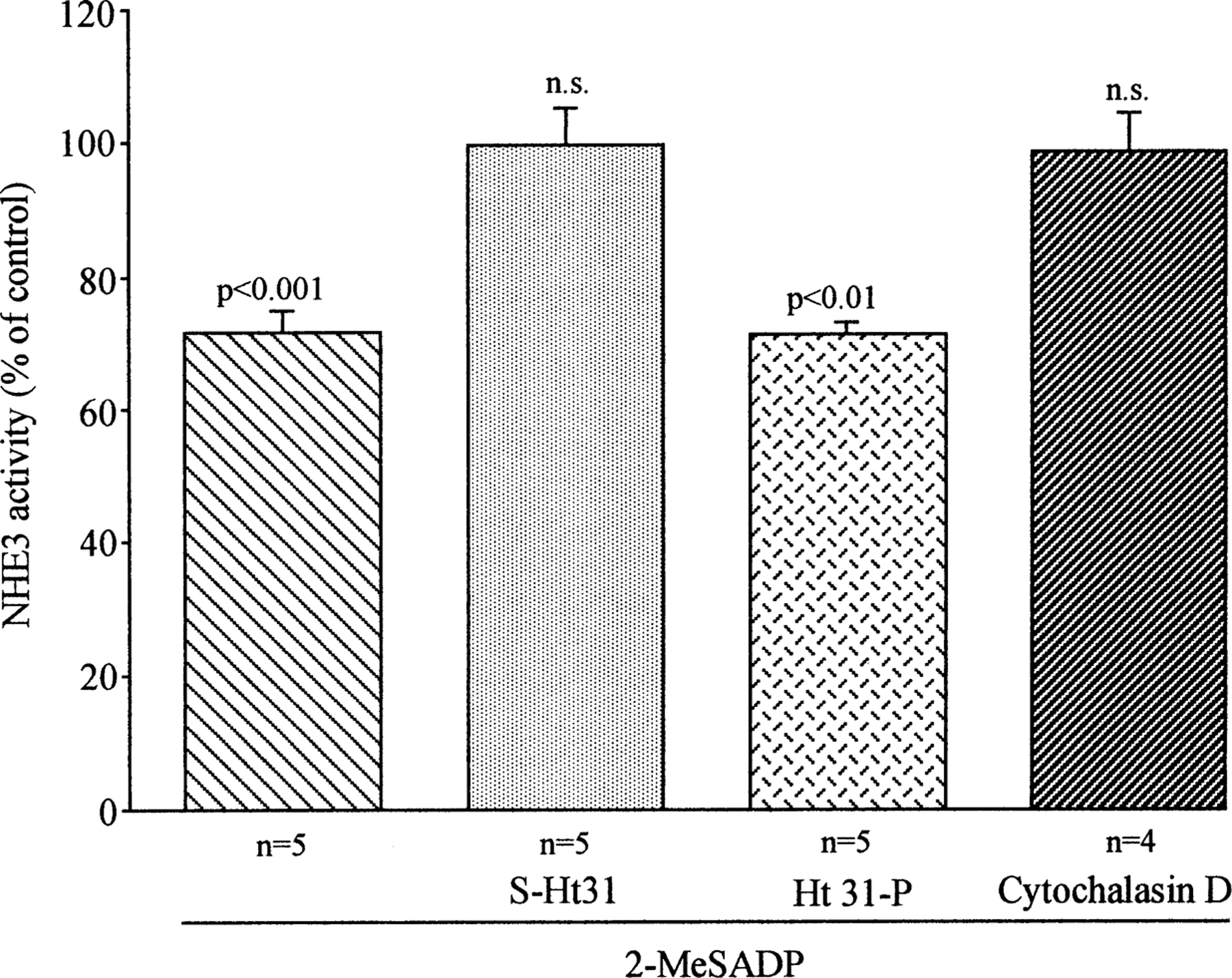
Effect of pre-incubation with the synthetic peptide S-Ht31, its inactive control, Ht31-P, or cytochalasin D on 2-MeSADP-dependent regulation of NHE3 activity. In the experiments in which the effect of S-Ht31 was analyzed, the A6-NHE3 monolayers were pre-incubated for one hour with either the active peptide, S-Ht31 (100 µm) or with the inactive form, Ht31-P (100 µm). Afterwards, the effect of 2-MeSADP (100 nm) on NHE3 activity was analyzed as above. For cytochalasin D, after measuring the pHi recovery in control conditions (without 2-Me-SADP), the same monolayers were incubated for 30 min with 2 µm cytochalasin D, and recovery in the presence of 2-MeSADP (100 nm) was measured. Each column represents the mean ± SE of the indicated number of experiments as analyzed with Student’s t-test for paired data in comparison with untreated, control cells.

References

    1. Abbracchio MP, Burnstock G 1994. Purinoceptors: are there families of P2X and P2Y purinoceptors? Pharmacol. Ther 64:445–475 - PubMed
    1. Amemiya M, LoAng J, Lötscher M, Haissling B, Alpern RJ, Moe OW 1995. Expression of NHE3 in the apical membrane of rat renal proximal tubule and thick ascending limb. Kidney Intern 48:1206–1215 - PubMed
    1. Bagorda A, Guerra L, Di Sole F, Helmle-Holb C, Cardone RA, Fanelli T, Reshkin SJ, Gisler SM, Murer H, Casavola V 2002. Reciprocal PKA regulatory interactions between CFTR and NHE3 in a renal polarized epithelial cell model. J. Biol. Chem 277:21480–21488 - PubMed
    1. Banderali U, Brochiero E, Lindenthal S, Raschi C, Bogliolo S, Ehrenfeld J 1999. Control of apical membrane chloride permeability in the renal A6 cell line by nucleotides. J. Physiol 519:737–751 - PMC - PubMed
    1. Barnard EA, Burnstock G, Webb TE 1994. G protein-coupled receptors for ATP and other nucleotides: a new receptor family. Trends Physiol. Sci 15:67–70 - PubMed

Publication types

MeSH terms

LinkOut - more resources