


Effects of neutrophils on cefazolin activity and penicillin-binding proteins in Staphylococcus aureus abscesses
- PMID: 12183241
- PMCID: PMC127421
- DOI: 10.1128/AAC.46.9.2878-2884.2002
Effects of neutrophils on cefazolin activity and penicillin-binding proteins in Staphylococcus aureus abscesses
Abstract
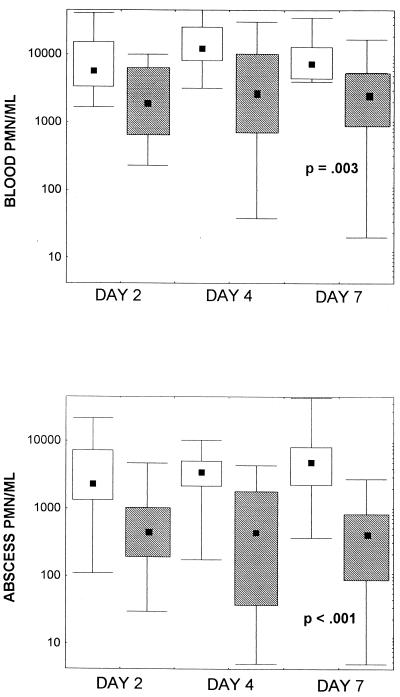
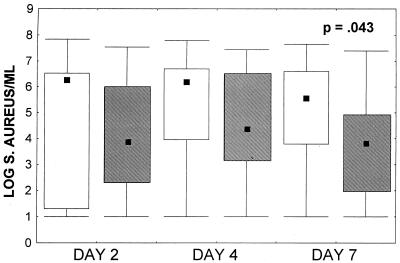
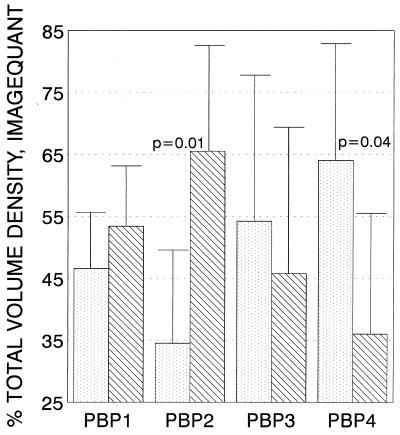
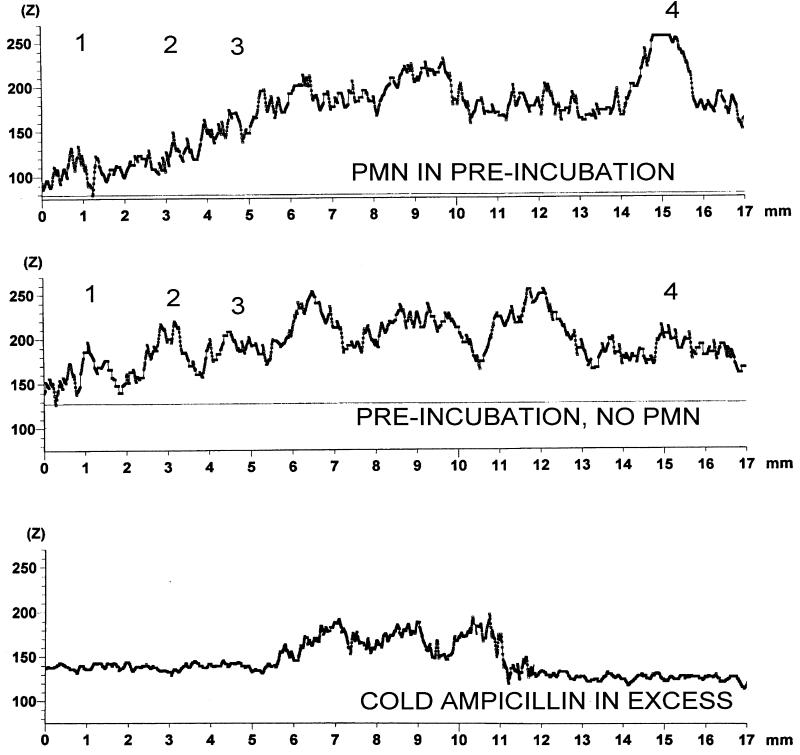
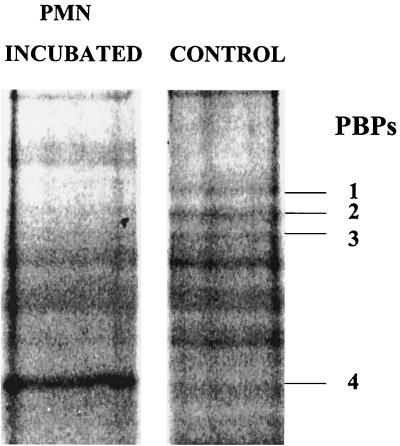
Bacteria survive within abscesses despite antimicrobial therapy, usually necessitating drainage. Our previous work showed that bacterial killing is diminished within the neutrophils of animals with abscesses. To further assess the role of neutrophils in Staphylococcus aureus survival and the poor activities of beta-lactams in abscesses, tissue cage abscess-bearing rats were given polymorphonuclear leukocyte (PMN)-depleting antibody prior to and several times following inoculation of the tissue cages with S. aureus. Cefazolin (300 mg/kg of body weight/day) was administered to all animals in appropriately divided doses. After 7 days of antimicrobial therapy, the 17 animals that received anti-PMN serum had significantly fewer abscess neutrophils than the 18 controls and fewer abscess bacteria (5.55 versus 3.79 log(10) CFU/ml [P = 0.04]) than the 18 controls. The data were consistent with the premise that cefazolin is more effective in abscesses depleted of neutrophils. To investigate further, S. aureus was incubated with rat peritoneal neutrophils; and bacterial cell membrane proteins were isolated, labeled with biotinylated ampicillin, separated by electrophoresis, blotted onto nitrocellulose, and stained for biotin reactivity. PBP 2 expression was consistently and significantly decreased after a brief, nonkilling PMN exposure. These experiments showed that PMN depletion enhanced the activity of cefazolin in the abscess milieu. Furthermore, altered bacterial cell wall cefazolin targets may be the mechanism by which the PMN diminishes antimicrobial activity, suggesting the importance of the staphylococcus-PMN interaction in the outcome of established infections.
Figures
References
-
- Anhalt, J. 1981. Antimicrobial assays, p. 692-699. In J. A. Washington (ed.), Laboratory procedures in clinical microbiology. Springer-Verlag, New York, N.Y.
-
- Bamberger, D. M. 1996. Outcome of medical treatment of bacterial abscesses without therapeutic drainage: review of cases reported in the literature. Clin. Infect. Dis. 23:592-603. - PubMed
-
- Bamberger, D. M., and B. L. Herndon. 1990. Bactericidal capacity of neutrophils in rabbits with experimental acute and chronic abscesses. J. Infect. Dis. 162:186-192. - PubMed
-
- Bamberger, D. M., B. L. Herndon, M. Dew, R.P. Chern, H. Mitchell, L. E. Summers, R. F. Marcus, S. C. Kim, and P. R. Suvarna. 1997. Efficacies of ofloxacin, rifampin, and clindamycin in treatment of Staphylococcus aureus abdominal abscesses and correlation with results of an in vitro assay of intracellular bacterial killing. Antimicrob. Agents Chemother. 41:1178-1181. - PMC - PubMed
Publication types
MeSH terms
Substances
LinkOut - more resources
Full Text Sources
Medical
Research Materials
Miscellaneous
