


The siderophore iron transporter of Candida albicans (Sit1p/Arn1p) mediates uptake of ferrichrome-type siderophores and is required for epithelial invasion
- PMID: 12183576
- PMCID: PMC128288
- DOI: 10.1128/IAI.70.9.5246-5255.2002
The siderophore iron transporter of Candida albicans (Sit1p/Arn1p) mediates uptake of ferrichrome-type siderophores and is required for epithelial invasion
Abstract
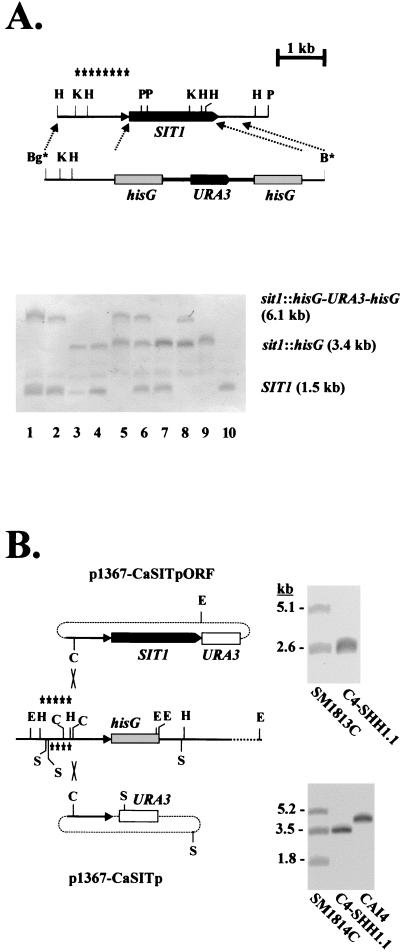
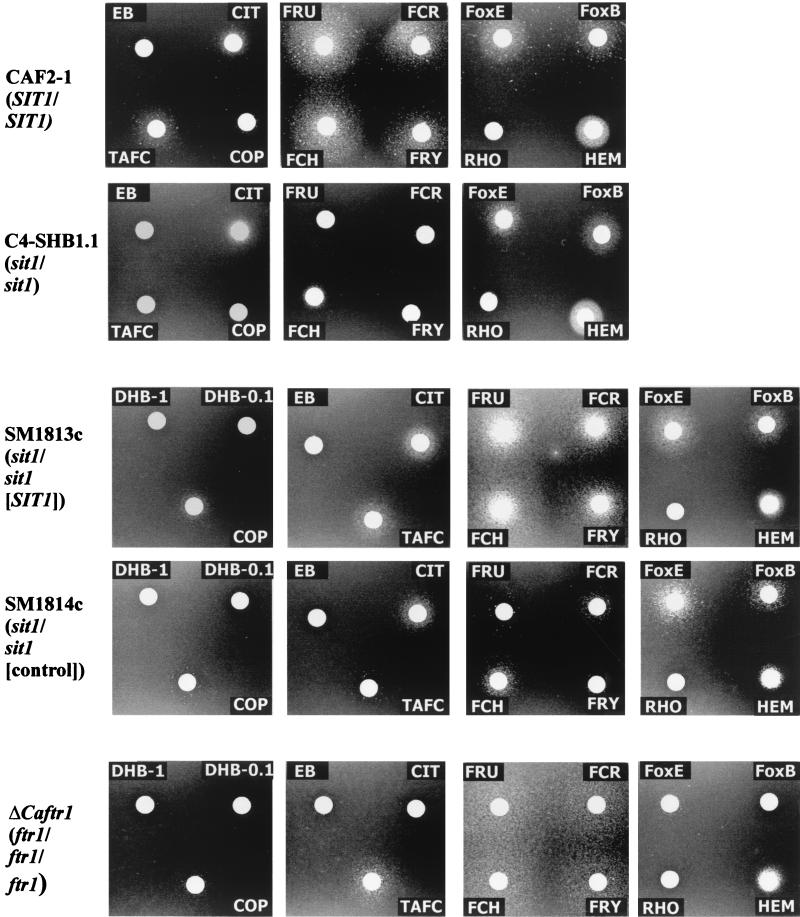
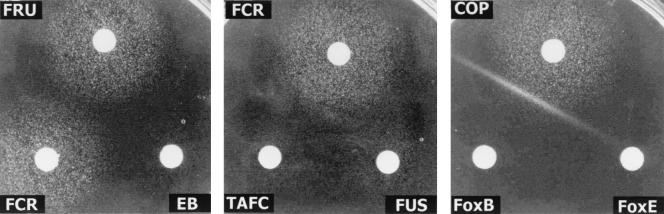
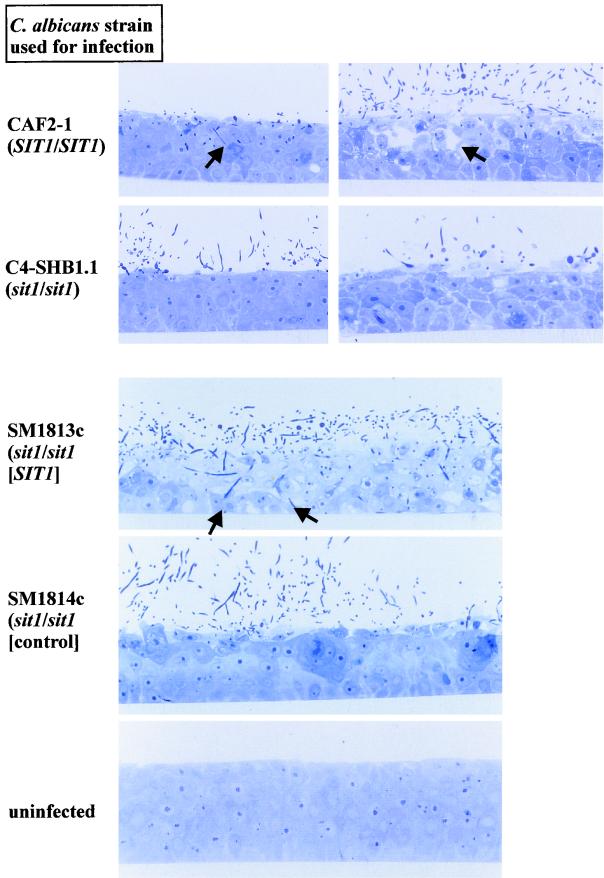
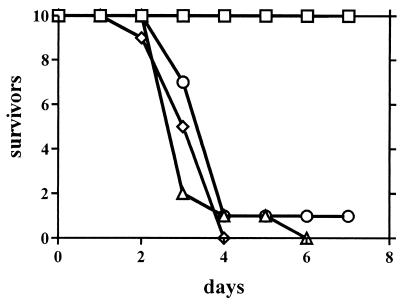
The human fungal pathogen Candida albicans contains a close homologue of yeast siderophore transporters, designated Sit1p/Arn1p. We have characterized the function of SIT1 in C. albicans by constructing sit1 deletion strains and testing their virulence and ability to utilize a range of siderophores and other iron complexes. sit1 mutant strains are defective in the uptake of ferrichrome-type siderophores including ferricrocin, ferrichrysin, ferrirubin, coprogen, and triacetylfusarinine C. A mutation of FTR1 did not impair the use of these siderophores but did affect the uptake of ferrioxamines E and B, as well as of ferric citrate, indicating that their utilization was independent of Sit1p. Hemin was a source of iron for both sit1 and ftr1 mutants, suggesting a pathway of hemin uptake distinct from that of siderophores and iron salts. Heterologous expression of SIT1 in the yeast Saccharomyces cerevisiae confirmed the function of Sit1p as a transporter for ferrichrome-type siderophores. The sit1 mutant was defective in infection of a reconstituted human epithelium as a model for human oral mucosa, while the SIT1 strain was invasive. In contrast, both sit1 and SIT1 strains were equally virulent in the mouse model of systemic infection. These results suggest that siderophore uptake by Sit1p/Arn1p is required in a specific process of C. albicans infection, namely epithelial invasion and penetration, while in the blood or within organs other sources of iron, including heme, may be used.
Figures
References
-
- Ardon, O., H. Bussey, C. Philpott, D. McVey Ward, S. Davis-Kaplan, S. Verroneau, B. Jiang, and J. Kaplan. 2002. Identification of a Candida albicans ferrichrome transporter and its characterization by expression in Saccharomyces cerevisiae. J. Biol. Chem. 276:43049-43055. - PubMed
-
- Askwith, C., D. Eide, A. van Ho, P. S. Bernhard, L. Li, S. Davis-Kaplan, D. M. Sipe, and J. Kaplan. 1994. The FET3 gene of S. cerevisiae encodes a multicopper oxidase required for ferrous iron uptake. Cell 76:403-410. - PubMed
-
- Askwith, C. C., D. de Silva, and J. Kaplan. 1996. Molecular biology of iron acquisition in Saccharomyces cerevisiae. Mol. Microbiol. 20:27-34. - PubMed
-
- Blaiseau, P. L., E. Lesuisse, and J. M. Camadro. 2001. Aft2p, a novel iron-regulated transcription activator that modulates, with Aft1p, intracellular iron use and resistance to oxidative stress in yeast. J. Biol. Chem. 276:34221-34226. - PubMed
-
- Bockmühl, D. P., S. Krishnamurthy, M. Gerads, A. Sonneborn, and J. F. Ernst. 2001. Distinct and redundant roles of the two protein kinase A isoforms Tpk1p and Tpk2p in morphogenesis and growth of Candida albicans. Mol. Microbiol. 42:1243-1257. - PubMed
MeSH terms
Substances
LinkOut - more resources
Full Text Sources
Other Literature Sources
Molecular Biology Databases
