


The carboxyl-terminal region of IkappaB kinase gamma (IKKgamma) is required for full IKK activation
- PMID: 12192055
- PMCID: PMC135629
- DOI: 10.1128/MCB.22.18.6573-6581.2002
The carboxyl-terminal region of IkappaB kinase gamma (IKKgamma) is required for full IKK activation
Abstract
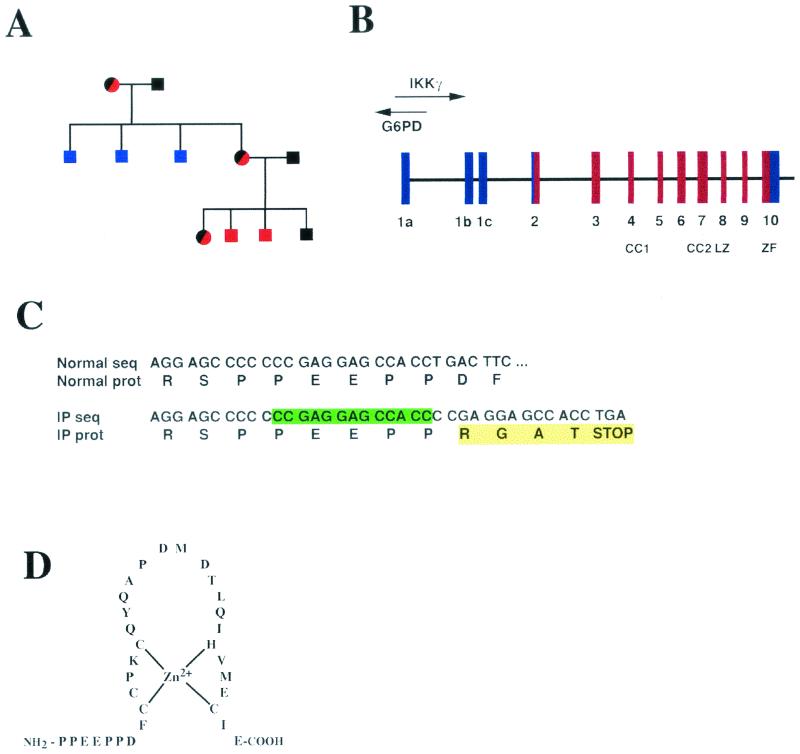
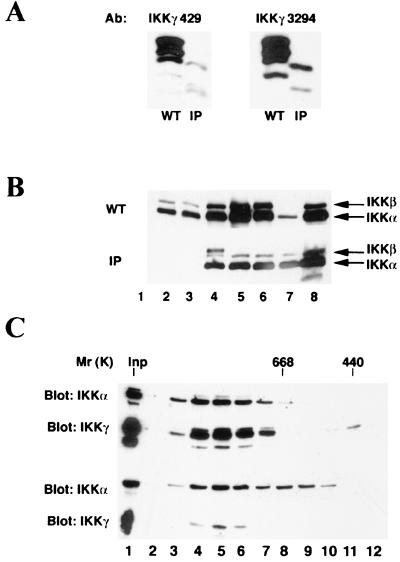
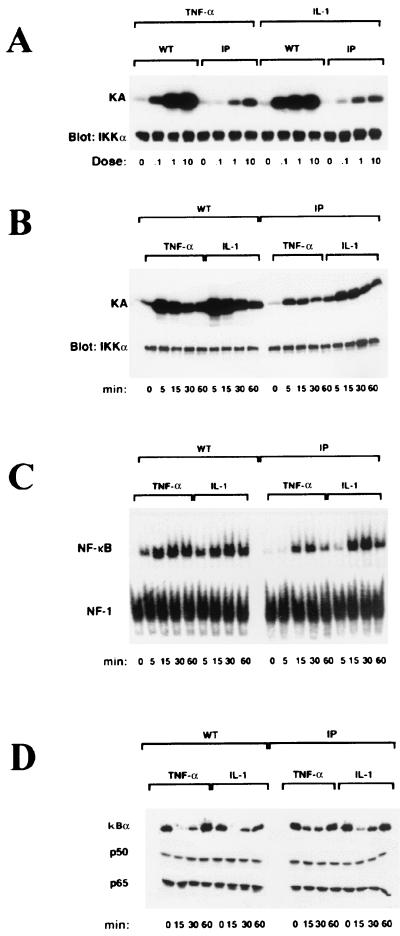
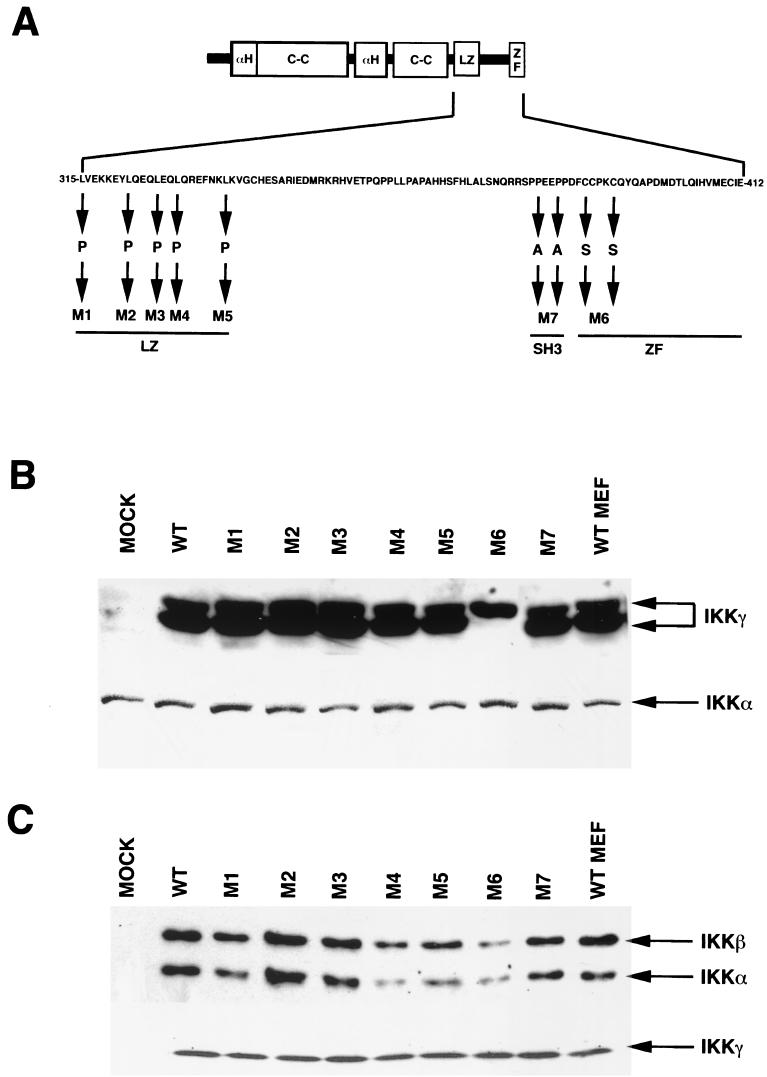
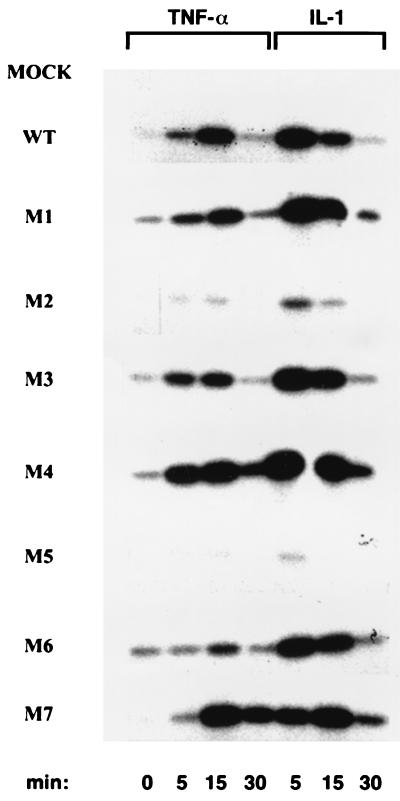
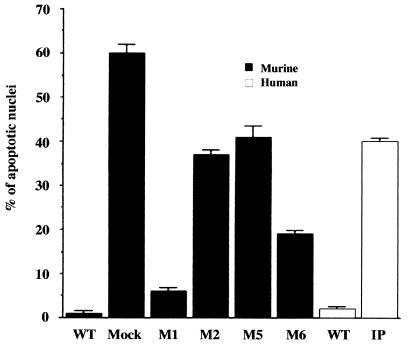
IkappaB kinase gamma (IKKgamma) (also known as NEMO, Fip-3, and IKKAP-1) is the essential regulatory component of the IKK complex; it is required for NF-kappaB activation by various stimuli, including tumor necrosis factor alpha (TNF-alpha), interleukin 1 (IL-1), phorbol esters, lipopolysaccharides, and double-stranded RNA. IKKgamma is encoded by an X-linked gene, deficiencies in which may result in two human genetic disorders, incontinentia pigmenti (IP) and hypohidrotic ectodermal dysplasia with severe immunodeficiency. Subsequent to the linkage of IKKgamma deficiency to IP, we biochemically characterized the effects of a mutation occurring in an IP-affected family on IKK activity and NF-kappaB signaling. This particular mutation results in premature termination, such that the variant IKKgamma protein lacks its putative C-terminal Zn finger and, due to decreased mRNA stability, is underexpressed. Correspondingly, IKK and NF-kappaB activation by TNF-alpha and, to a lesser extent, IL-1 are reduced. Mutagenesis of the C-terminal region of IKKgamma was performed in an attempt to define the role of the putative Zn finger and other potential functional motifs in this region. The mutants were expressed in IKKgamma-deficient murine embryonic fibroblasts (MEFs) at levels comparable to those of endogenous IKKgamma in wild-type MEFs and were able to associate with IKKalpha and IKKbeta. Substitution of two leucines within a C-terminal leucine zipper motif markedly reduced IKK activation by TNF-alpha and IL-1. Another point mutation resulting in a cysteine-to-serine substitution within the putative Zn finger motif affected IKK activation by TNF-alpha but not by IL-1. These results may explain why cells that express these or similar mutant alleles are sensitive to TNF-alpha-induced apoptosis despite being able to activate NF-kappaB in response to other stimuli.
Figures
References
-
- Beg, A. A., and D. Baltimore. 1996. An essential role for NF-κB in preventing TNF-α induced cell death. Science 274:782-784. - PubMed
-
- Beg, A. A., W. C. Sha, R. T. Bronson, S. Ghosh, and D. Baltimore. 1995. Embryonic lethality and liver degeneration in mice lacking the RelA component of NF-κB. Nature 376:167-169. - PubMed
-
- Cao, Y., G. Bonizzi, T. Seagroves, Greten, F., R. Johnson, E. Schmidt, and M. Karin. 2001. IKKα provides an essential link between RANK signaling and cyclin D1 expression during mammary gland development. Cell 107:763-775. - PubMed
-
- Delhase, M., and M. Karin. 1999. The IκB kinase: a master regulator of NF-κB, innate immunity and epidermal differentiation. Cold Spring Harbor Symp. Quant. Biol. 64:491-503. - PubMed
-
- DiDonato, J. A., M. Hayakawa, D. M. Rothwarf, E. Zandi, and M. Karin. 1997. A cytokine-responsive IκB kinase that activates the transcription factor NF-κB. Nature 388:548-554. - PubMed
Publication types
MeSH terms
Substances
Grants and funding
LinkOut - more resources
Full Text Sources
Other Literature Sources
Molecular Biology Databases
Miscellaneous
