


Microtubule-dependent subcellular redistribution of the transcriptional coactivator p/CIP
- PMID: 12192059
- PMCID: PMC135647
- DOI: 10.1128/MCB.22.18.6611-6626.2002
Microtubule-dependent subcellular redistribution of the transcriptional coactivator p/CIP
Abstract
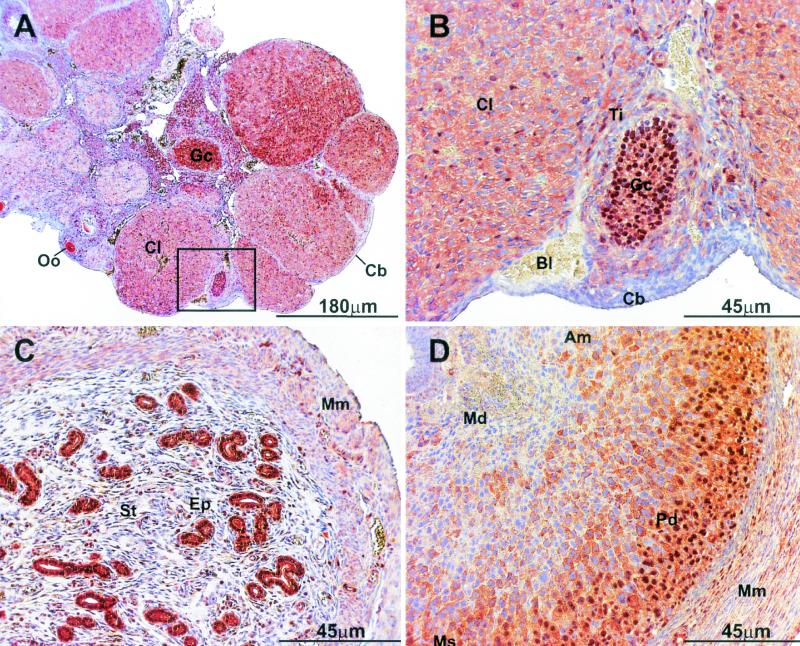
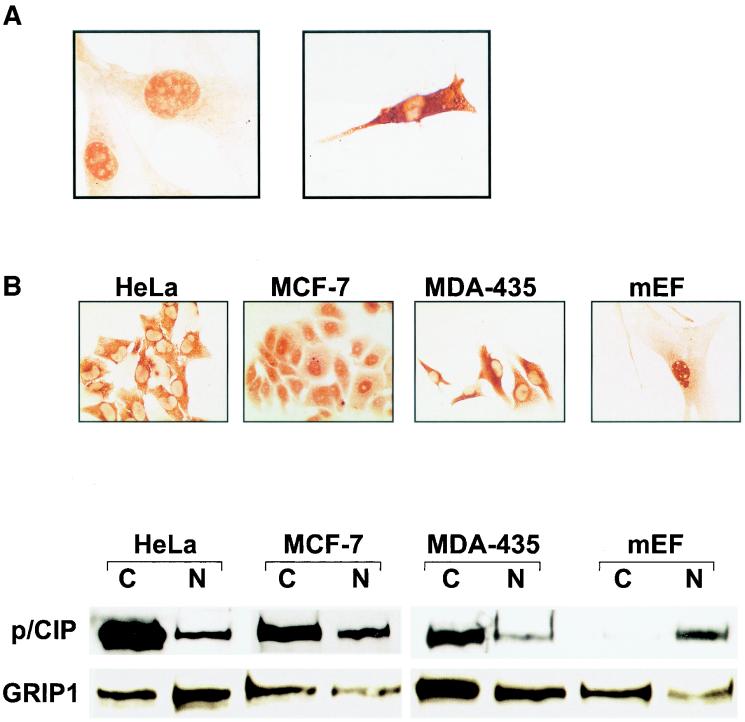
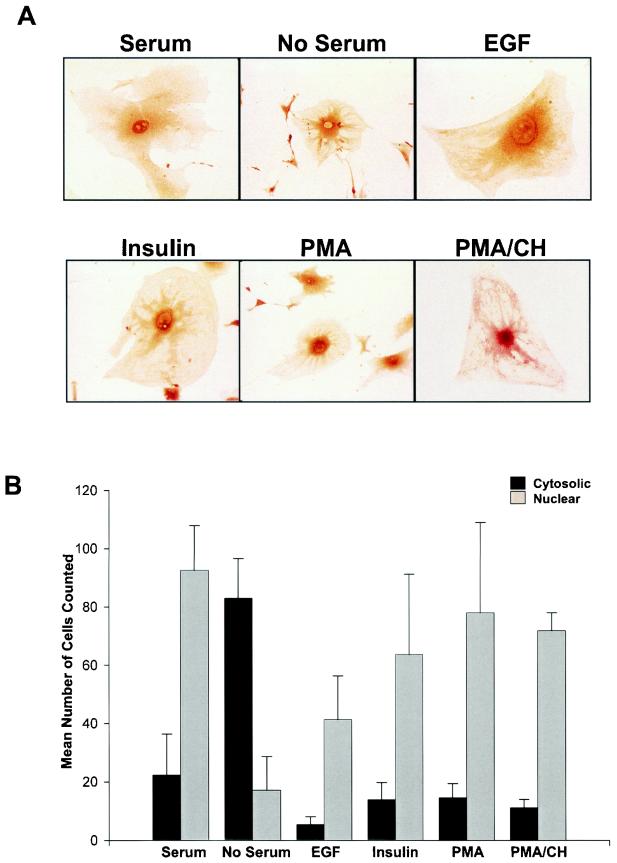
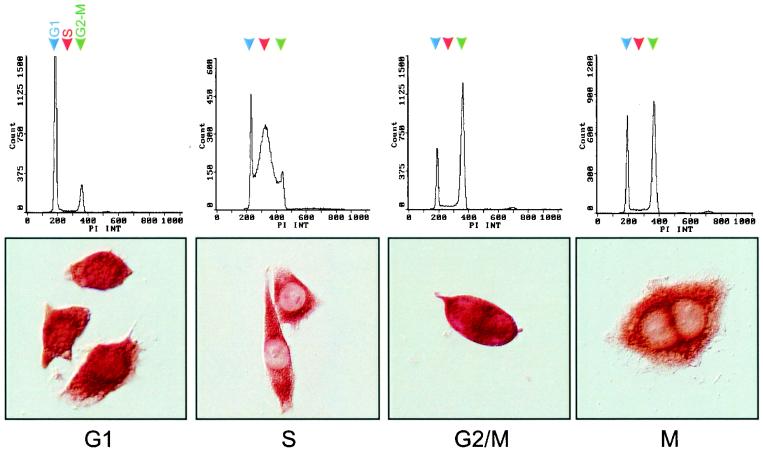
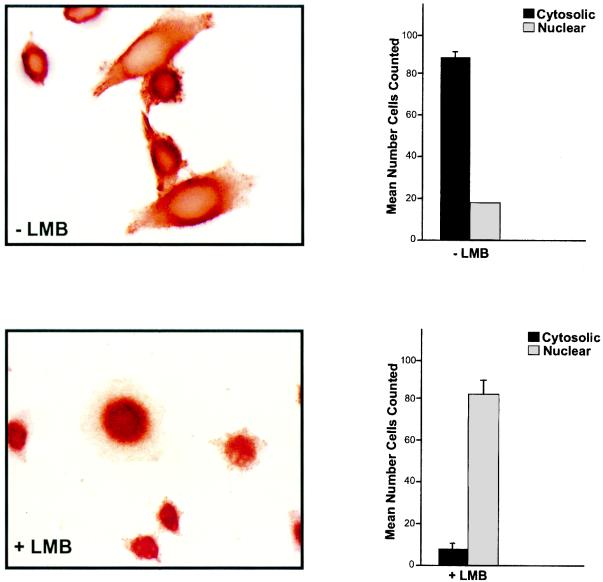
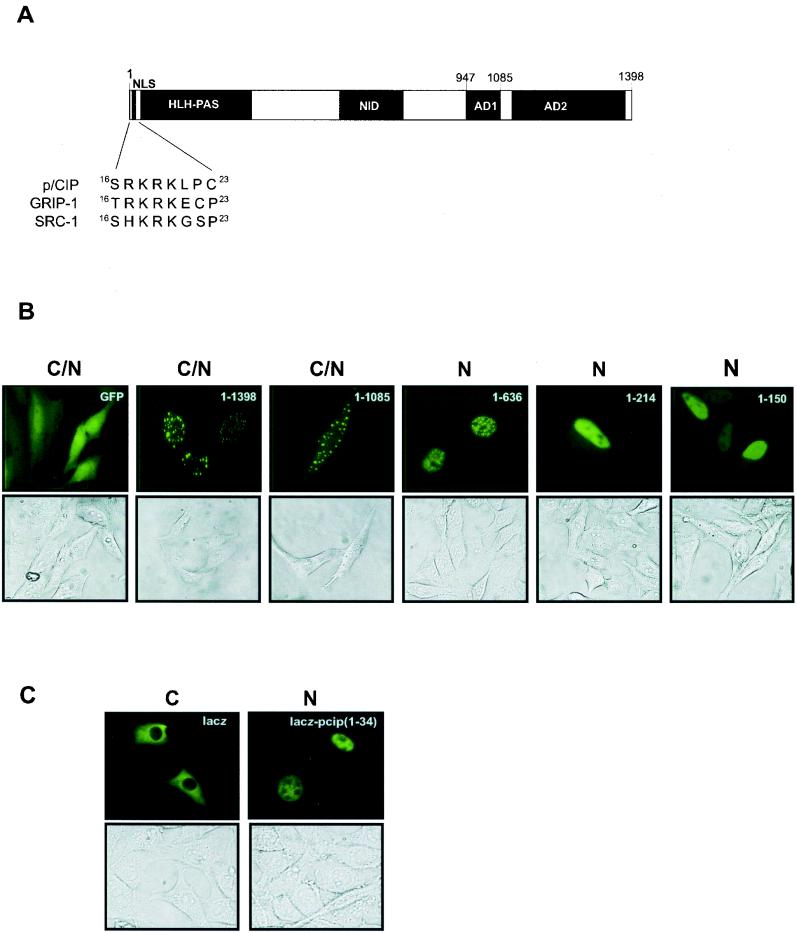
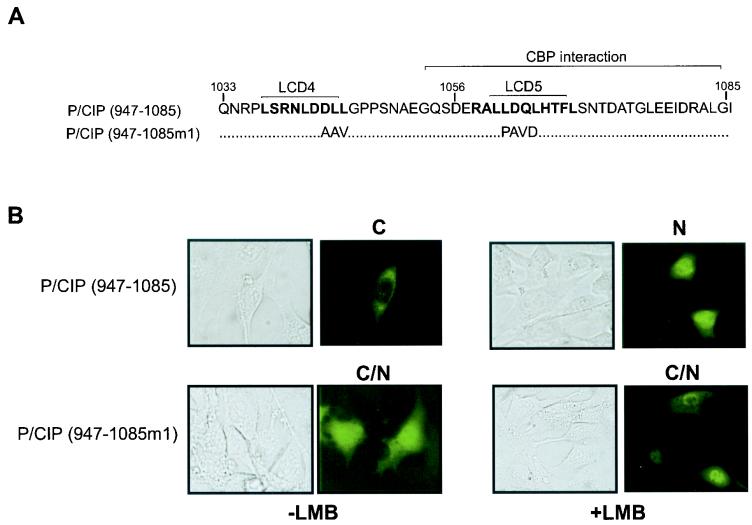
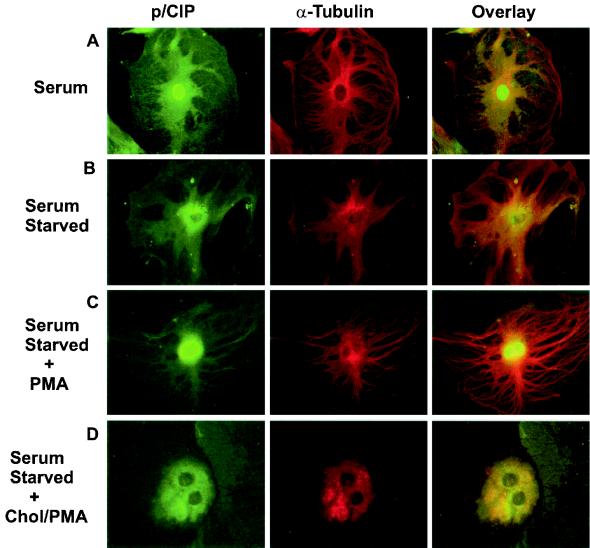
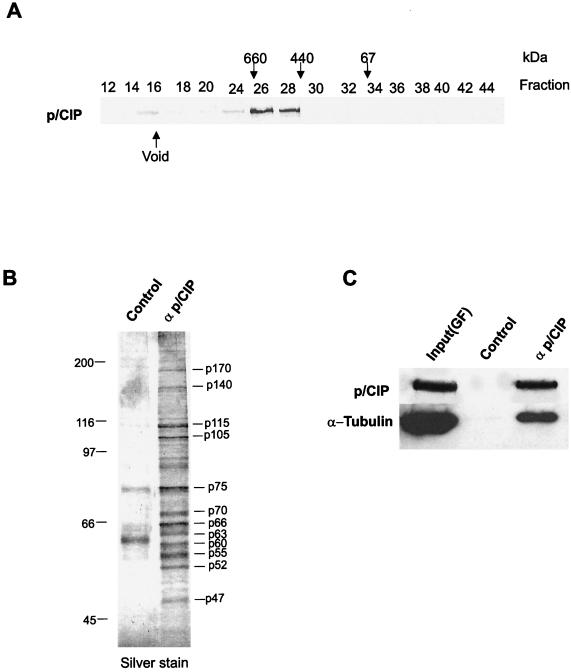
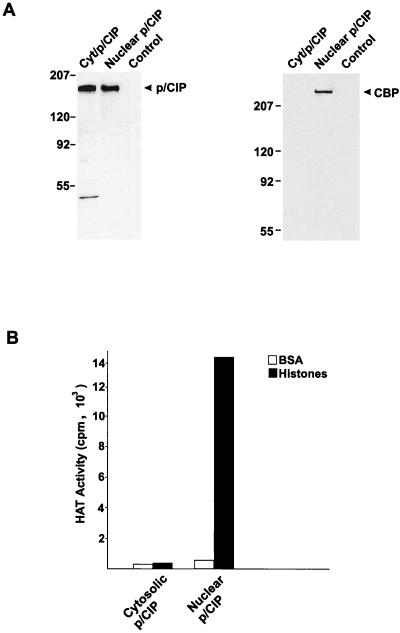
The transcriptional coactivator p/CIP is a member of a family of nuclear receptor coactivator/steroid receptor coactivator (NCoA/SRC) proteins that mediate the transcriptional activities of nuclear hormone receptors. We have found that p/CIP is predominantly cytoplasmic in a large proportion of cells in various tissues of the developing mouse and in a number of established cell lines. In mouse embryonic fibroblasts, serum deprivation results in the redistribution of p/CIP to the cytoplasmic compartment and stimulation with growth factors or tumor-promoting phorbol esters promotes p/CIP shuttling into the nucleus. Cytoplasmic accumulation of p/CIP is also cell cycle dependent, occurring predominantly during the S and late M phases. Leptomycin B (LMB) treatment results in a marked nuclear accumulation, suggesting that p/CIP undergoes dynamic nuclear export as well as import. We have identified a strong nuclear import signal in the N terminus of p/CIP and two leucine-rich motifs in the C terminus that resemble CRM-1-dependent nuclear export sequences. When fused to green fluorescent protein, the nuclear export sequence region is cytoplasmic and is retained in the nucleus in an LMB-dependent manner. Disruption of the leucine-rich motifs prevents cytoplasmic accumulation. Furthermore, we demonstrate that cytoplasmic p/CIP associates with tubulin and that an intact microtubule network is required for intracellular shuttling of p/CIP. Immunoaffinity purification of p/CIP from nuclear and cytosolic extracts revealed that only nuclear p/CIP complexes possess histone acetyltransferase activity. Collectively, these results suggest that cellular compartmentalization of NCoA/SRC proteins could potentially regulate nuclear hormone receptor-mediated events as well as integrating signals in response to different environmental cues.
Figures
References
-
- Anafi, M., Y. F. Yang, N. A. Barlev, M. V. Govindan, S. L. Berger, T. R. Butt, and P. G. Walfish. 2000. GCN5 and ADA adaptor proteins regulate triiodothyronine/GRIP1 and SRC-1 coactivator-dependent gene activation by the human thyroid hormone receptor. Mol. Endocrinol. 14:718-732. - PubMed
-
- Anzick, S. L., J. Kononen, R. L. Walker, D. O. Azorsa, M. M. Tanner, X. Y. Guan, G. Sauter, O. P. Kallioniemi, J. M. Trent, and P. S. Meltzer. 1997. AIB1, a steroid receptor coactivator amplified in breast and ovarian cancer. Science 277:965-968. - PubMed
-
- Braiman, L., L. Sheffi-Friedman, A. Bak, T. Tennenbaum, and S. R. Sampson. 1999. Tyrosine phosphorylation of specific protein kinase C isoenzymes participates in insulin stimulation of glucose transport in primary cultures of rat skeletal muscle. Diabetes 48:1922-1929. - PubMed
-
- Chen, D., H. Ma, H. Hong, S. S. Koh, S. M. Huang, B. T. Schurter, D. W. Aswad, and M. R. Stallcup. 1999. Regulation of transcription by a protein methyltransferase. Science 284:2174-2177. - PubMed
Publication types
MeSH terms
Substances
LinkOut - more resources
Full Text Sources
Miscellaneous
