


Regulation of V(D)J recombination: a dominant role for promoter positioning in gene segment accessibility
- PMID: 12196630
- PMCID: PMC129441
- DOI: 10.1073/pnas.182166699
Regulation of V(D)J recombination: a dominant role for promoter positioning in gene segment accessibility
Abstract
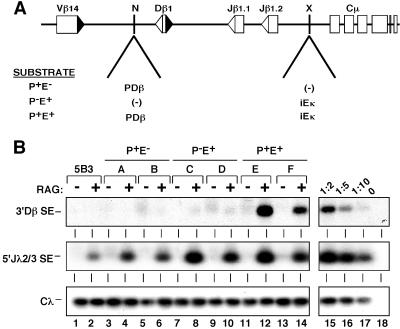
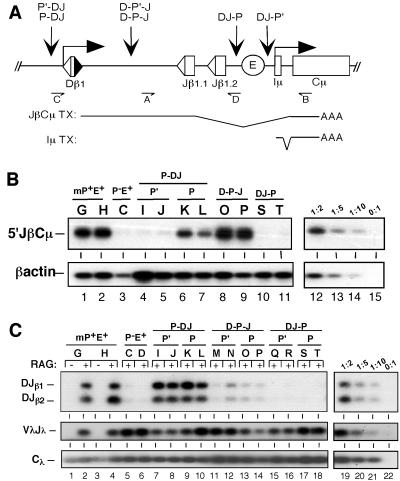
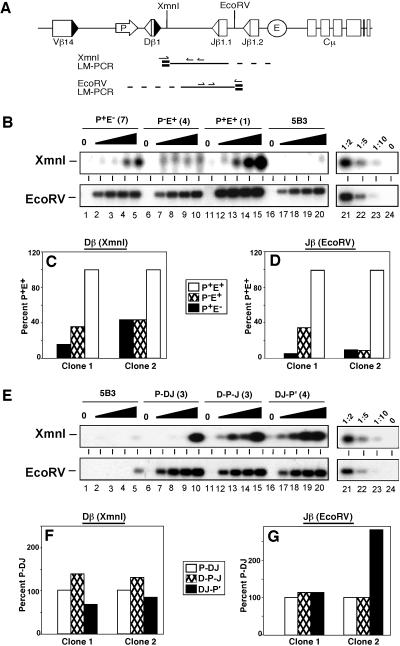
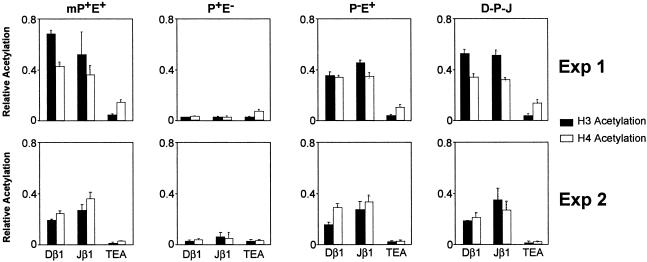
Antigen receptor gene assembly is regulated by transcriptional promoters and enhancers, which control the accessibility of gene segments to a lymphocyte-specific V(D)J recombinase. However, it remained unclear whether accessibility depends on the process of transcription itself or chromatin modifications that accompany transcription. By using T cell receptor beta substrates that integrate stably into nuclear chromatin, we show that promoter location, rather than germ-line transcription or histone acetylation, is a primary determinant of recombination efficiency. These spatial constraints on promoter positioning may reflect an RNA polymerase-independent mechanism to target adjacent gene segments for chromatin remodeling events that facilitate rearrangement.
Figures
References
-
- Oettinger M. A., Schatz, D. G., Gorka, C. & Baltimore, D. (1990) Science 248, 1517-1523. - PubMed
-
- Schatz D. G., Oettinger, M. A. & Baltimore, D. (1989) Cell 59, 1036-1048. - PubMed
-
- Hesslein D. G. & Schatz, D. G. (2001) Adv. Immunol. 78, 169-232. - PubMed
-
- Oettinger M. A. (1999) Curr. Opin. Cell Biol. 11, 325-329. - PubMed
-
- Roth D. B. & Roth, S. Y. (2000) Cell 103, 699-702. - PubMed
Publication types
MeSH terms
Substances
Grants and funding
LinkOut - more resources
Full Text Sources
