


Memory CD4(+) T cells are the earliest detectable human immunodeficiency virus type 1 (HIV-1)-infected cells in the female genital mucosal tissue during HIV-1 transmission in an organ culture system
- PMID: 12208964
- PMCID: PMC136513
- DOI: 10.1128/jvi.76.19.9868-9876.2002
Memory CD4(+) T cells are the earliest detectable human immunodeficiency virus type 1 (HIV-1)-infected cells in the female genital mucosal tissue during HIV-1 transmission in an organ culture system
Abstract
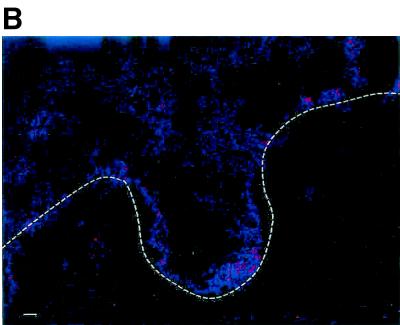
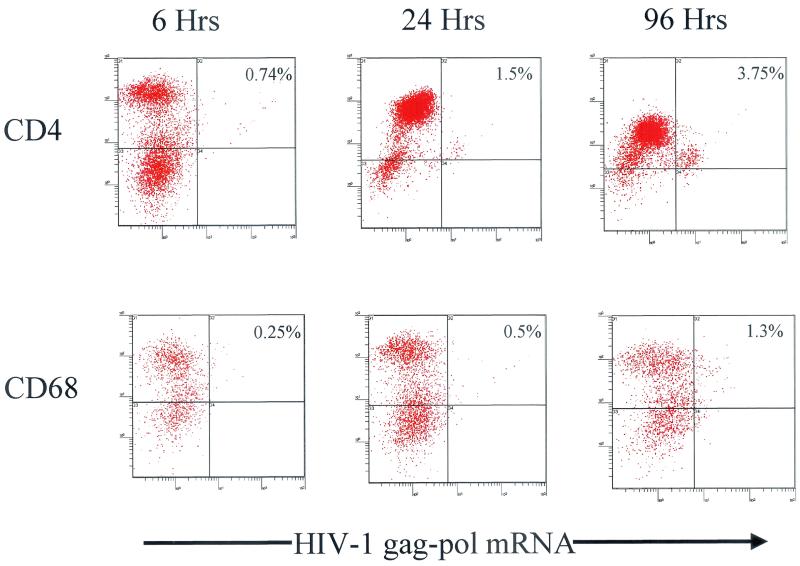
The virologic and cellular factors that are involved in transmission of human immunodeficiency virus type 1 (HIV-1) across the female genital tissue are poorly understood. We have recently developed a human cervical tissue-derived organ culture model to study heterosexual transmission of HIV-1 that mimics the in vivo situation. Using this model we investigated the role of phenotypic characteristics of HIV-1 and identified the cell types that are first infected during transmission. Our data indicate that the cell-free R5 HIV-1 was more efficiently transmitted than cell-free X4 HIV-1. Cell-free and cell-associated HIV-1 had comparable transmission efficiency regardless of whether the virus was of R5 or X4 type. We have demonstrated that memory CD4(+) T cells and not Langerhans cells were the first HIV-1 RNA-positive cells detected at the epithelial-submucosal junction 6 h after virus exposure. Multicolor laser confocal microscopy demonstrated a globular distribution of HIV-1 gag-pol mRNA in the cytoplasm, and the distribution of CD4 and the CD45RO isoform was irregular on the cellular membrane. At 96 h postinoculation, in addition to memory CD4(+) T cells, HIV-1 RNA-positive Langerhans cells and macrophages were also detected. The identification of CD4(+) T cells in the tissue at 6 h was confirmed by flow cytometric simultaneous immunophenotyping and ultrasensitive fluorescence in situ hybridization assay on immune cells isolated from disaggregated tissue. Furthermore, PMPA [9-[2-(phosphonomethoxy)propyl] adenine], an antiretroviral compound, and UC781, a microbicide, inhibited HIV-1 transmission across the mucosa, indicating the utility of the organ culture to screen topical microbicides for their ability to block sexual transmission of HIV-1.
Figures



References
-
- Balachandran, R., P. Thampatty, A. Enrico, C. Rinaldo, and P. Gupta. 1991. Human immunideficiency virus isolates from asymptomatic homosexual men and from AIDS patients have distinct biologic and genetic properties. Virology 180:229-238. - PubMed
-
- Balzarini, J., L. Naesens, E. Verbeken, M. Laga, L. Van Damme, M. Parniak, L. Van Mellaert, J. Anne, and E. De Clercq. 1998. Preclinical studies on thiocarboxanilide UC781 as a virucidal agent. AIDS 12:1129-1138. - PubMed
-
- Borkow, G., J. Barnard, T. M. Nguyen, A. Belmonte, M. A. Wainberg, and M. A. Parniak. 1997. Chemical barrier to human immunodeficiency virus type 1 (HIV-1) infection: retrovirucidal activity of UC781, a thiocarboxanilide nonnucleoside inhibitor of HIV-1 reverse transcriptase. J. Virol. 71:3023-3030. - PMC - PubMed
Publication types
MeSH terms
Substances
Grants and funding
LinkOut - more resources
Full Text Sources
Other Literature Sources
Medical
Research Materials
