


Chronic morphine induces downregulation of spinal glutamate transporters: implications in morphine tolerance and abnormal pain sensitivity
- PMID: 12223586
- PMCID: PMC6758088
- DOI: 10.1523/JNEUROSCI.22-18-08312.2002
Chronic morphine induces downregulation of spinal glutamate transporters: implications in morphine tolerance and abnormal pain sensitivity
Abstract
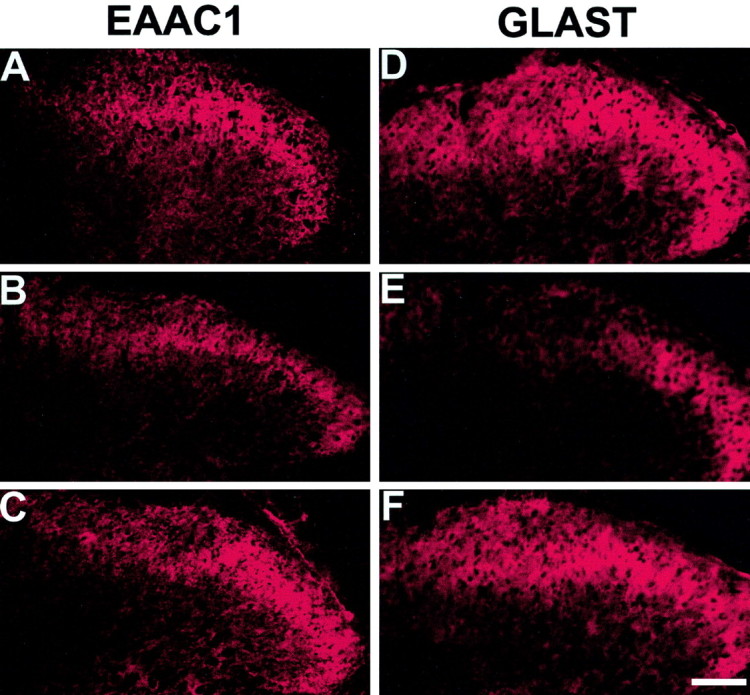
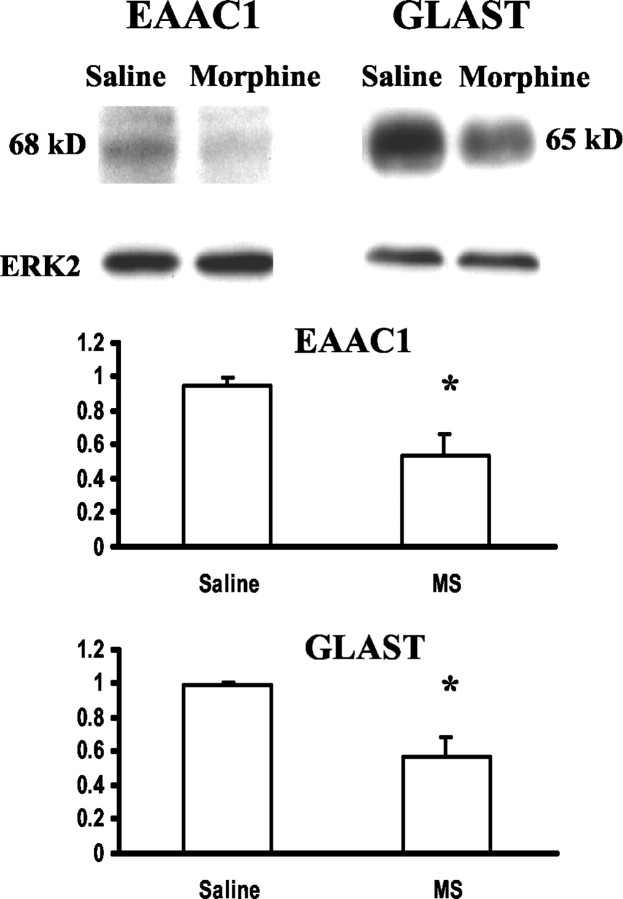
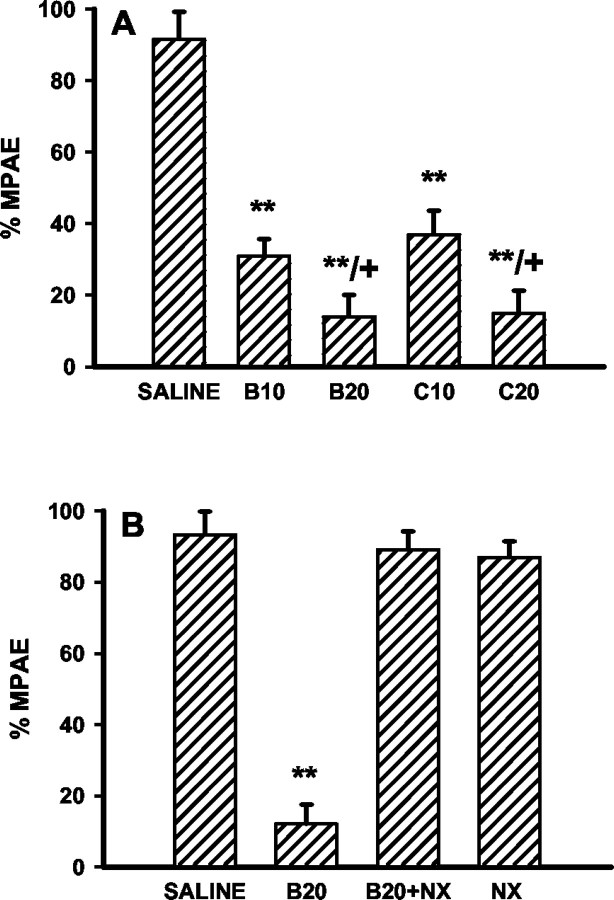
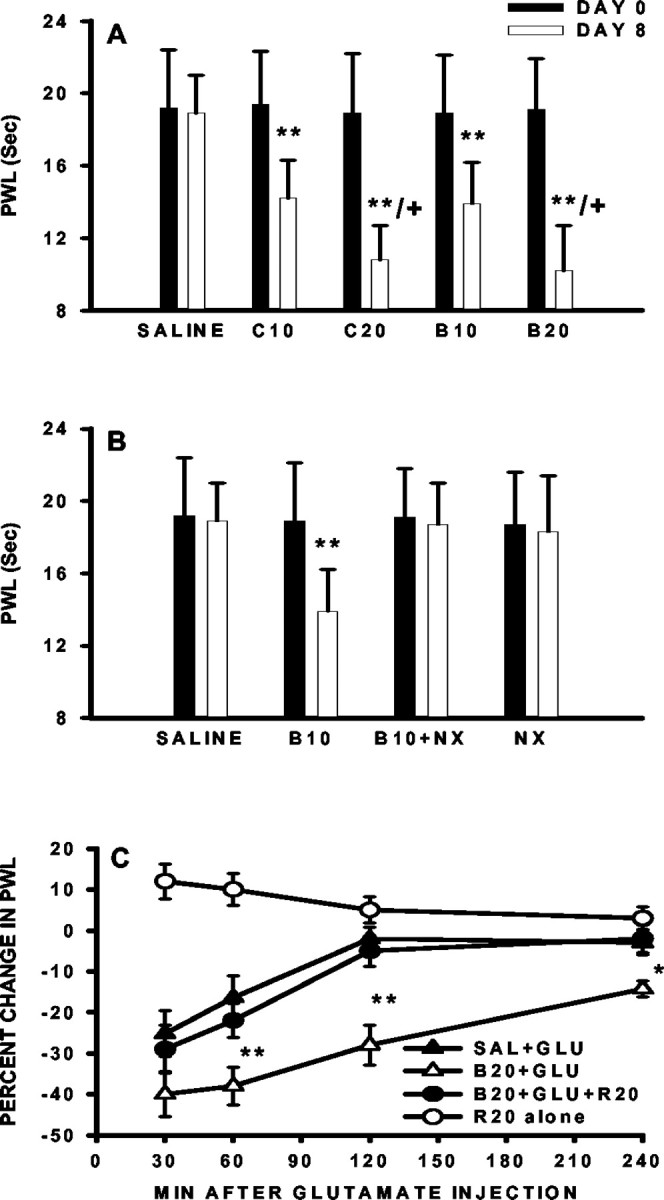
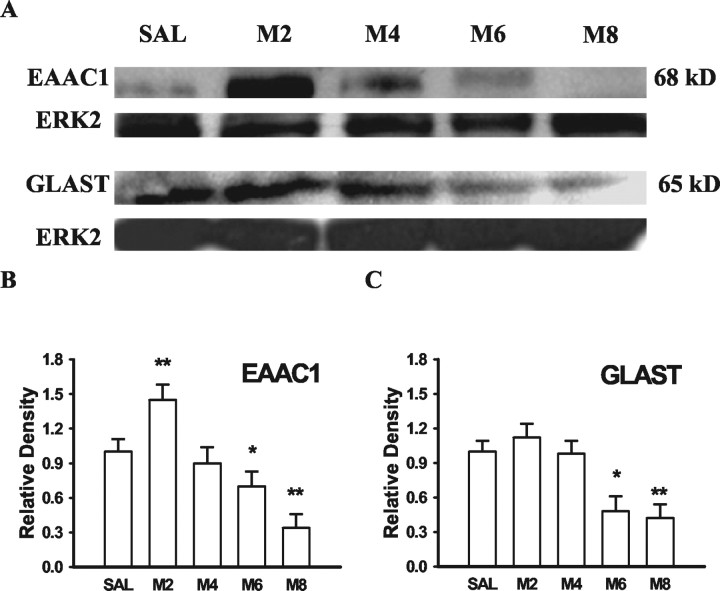
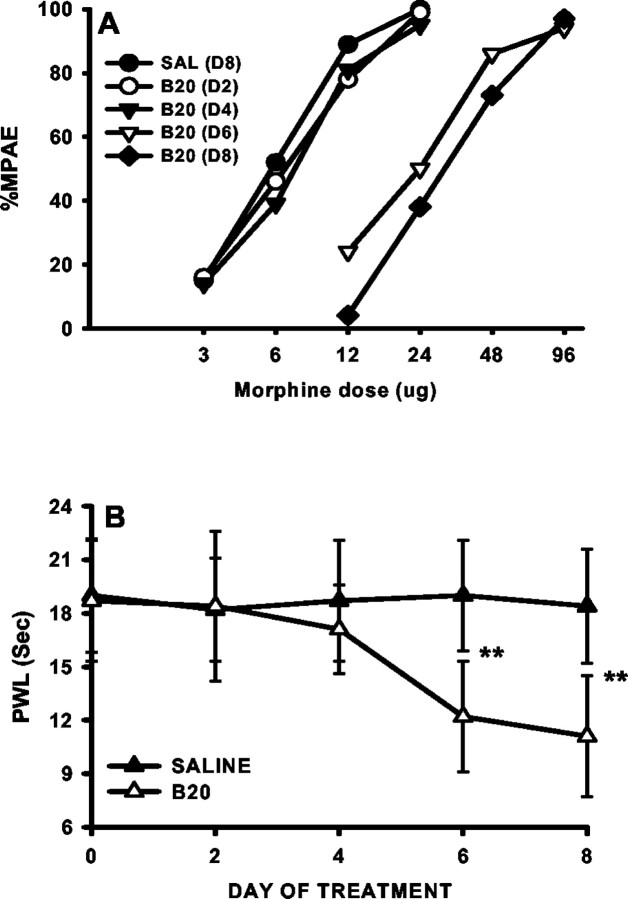
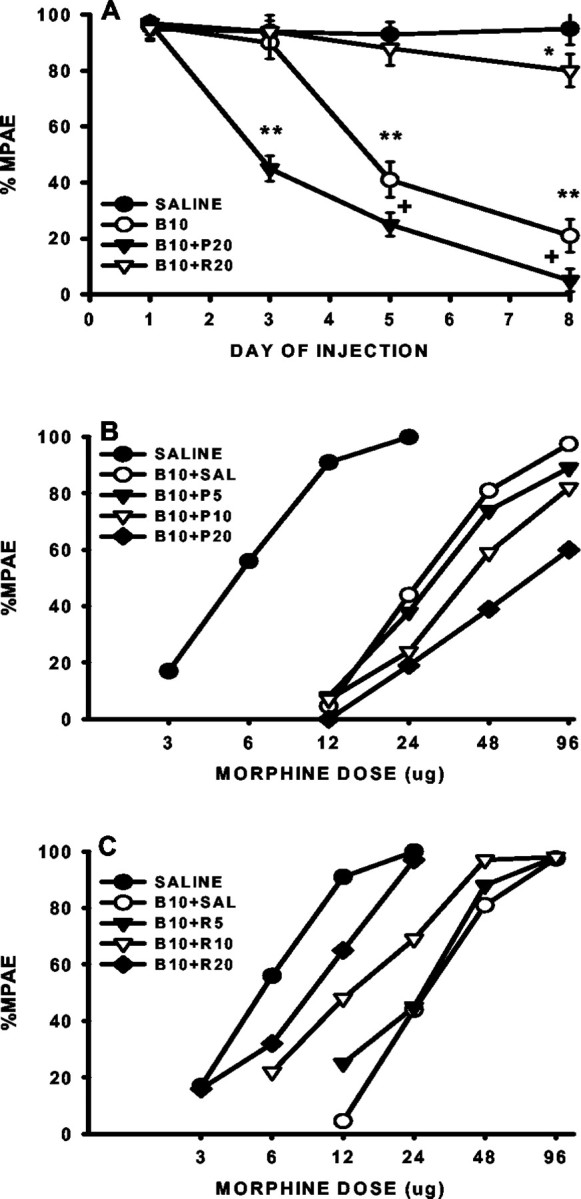
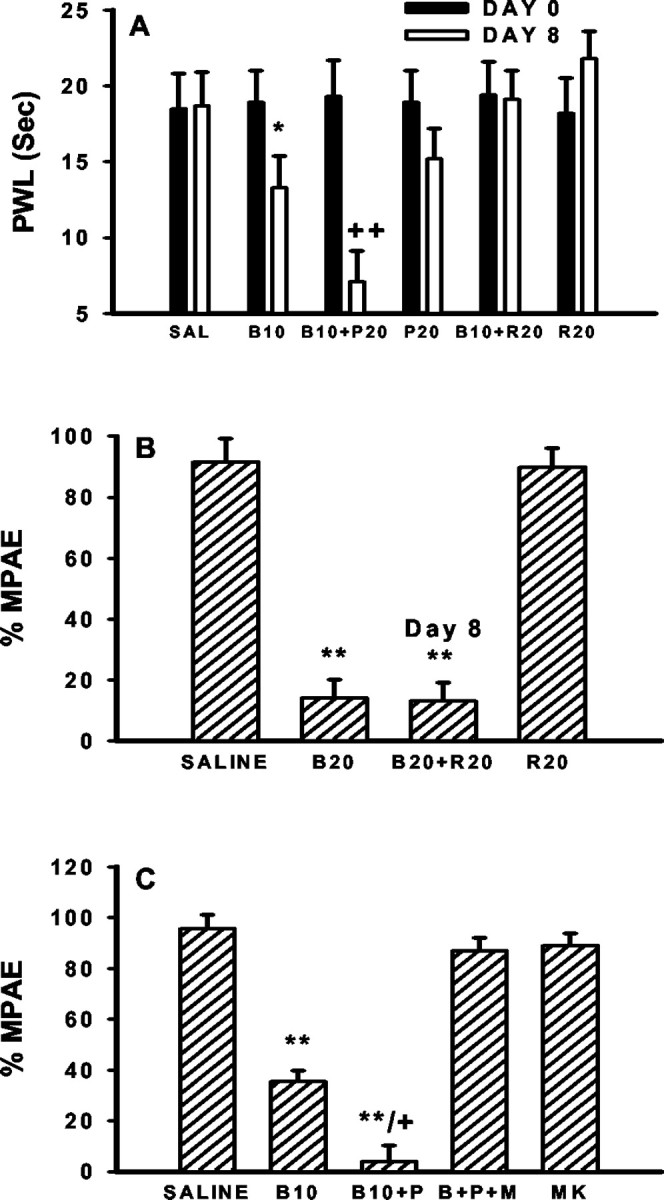
Tolerance to the analgesic effects of an opioid occurs after its chronic administration, a pharmacological phenomenon that has been associated with the development of abnormal pain sensitivity such as hyperalgesia. In the present study, we examined the role of spinal glutamate transporters (GTs) in the development of both morphine tolerance and associated thermal hyperalgesia. Chronic morphine administered through either intrathecal boluses or continuous infusion induced a dose-dependent downregulation of GTs (EAAC1 and GLAST) in the rat's superficial spinal cord dorsal horn. This GT downregulation was mediated through opioid receptors because naloxone blocked such GT changes. Morphine-induced GT downregulation reduced the ability to maintain in vivo glutamate homeostasis at the spinal level, because the hyperalgesic response to exogenous glutamate was enhanced, including an increased magnitude and a prolonged time course, in morphine-treated rats with reduced spinal GTs. Moreover, the downregulation of spinal GTs exhibited a temporal correlation with the development of morphine tolerance and thermal hyperalgesia. Consistently, the GT inhibitor l-trans-pyrrolidine-2-4-dicarboxylate (PDC) potentiated, whereas the positive GT regulator riluzole reduced, the development of both morphine tolerance and thermal hyperalgesia. The effects from regulating spinal GT activity by PDC were at least in part mediated through activation of the NMDA receptor (NMDAR), because the noncompetitive NMDAR antagonist MK-801 blocked both morphine tolerance and thermal hyperalgesia that were potentiated by PDC. These results indicate that spinal GTs may contribute to the neural mechanisms of morphine tolerance and associated abnormal pain sensitivity by means of regulating regional glutamate homeostasis.
Figures

References
-
- Akil H, Mayer DJ. Antagonization of stimulation produced analgesia by p-CPA, a serotonin synthesis inhibitor. Brain Res. 1972;44:692–697. - PubMed
-
- Azbill RD, Mu X, Springer JE. Riluzole increases high-affinity glutamate uptake in rat spinal cord synaptosome. Brain Res. 2000;871:175–180. - PubMed
-
- Bilsky EJ, Bernstein Z, Wang Z, Sadee W, Porreca F. Effects of naloxone and d-Phe-Cys-Tyr-d-Trp-Arg-Thr-Phe-Thr-NH2 and the protein kinase inhibitors H7 and H8 on acute morphine dependence and antinociceptive tolerance in mice. J Pharmacol Exp Ther. 1996;277:484–490. - PubMed
-
- Bohn LM, Lefkowitz RJ, Gainestdinov RR, Peppel K, Caron MG, Lin F. Enhanced morphine analgesia in mice lacking beta-arrestin-2. Science. 1999;286:2495–2498. - PubMed
-
- Bohn LM, Gainestdinov RR, Lin FT, Lefkowitz RJ, Caron MG. Mu-opioid receptor desensitization by beta-arrestin-2 determines morphine tolerance but not dependence. Nature. 2000;408:720–723. - PubMed
Publication types
MeSH terms
Substances
Grants and funding
LinkOut - more resources
Full Text Sources
Other Literature Sources
Medical
Miscellaneous
