


Incidence of ROP in two consecutive Swedish population based studies
- PMID: 12234891
- PMCID: PMC1771335
- DOI: 10.1136/bjo.86.10.1122
Incidence of ROP in two consecutive Swedish population based studies
Abstract
Aims: To prospectively analyse the present incidence of ROP (retinopathy of prematurity) in a well defined geographical area in Sweden, and to compare it with that from a decade earlier in exactly the same area.
Methods: Infants born between 1 August 1998 and 31 July 2000 with a birth weight of 1500 g or less were studied. They were screened for ROP from 5 weeks of postnatal age until the retina was entirely vascularised. The incidence of ROP, with its various stages, was compared with that of a previous (1988-90) population based study in the same geographical area.
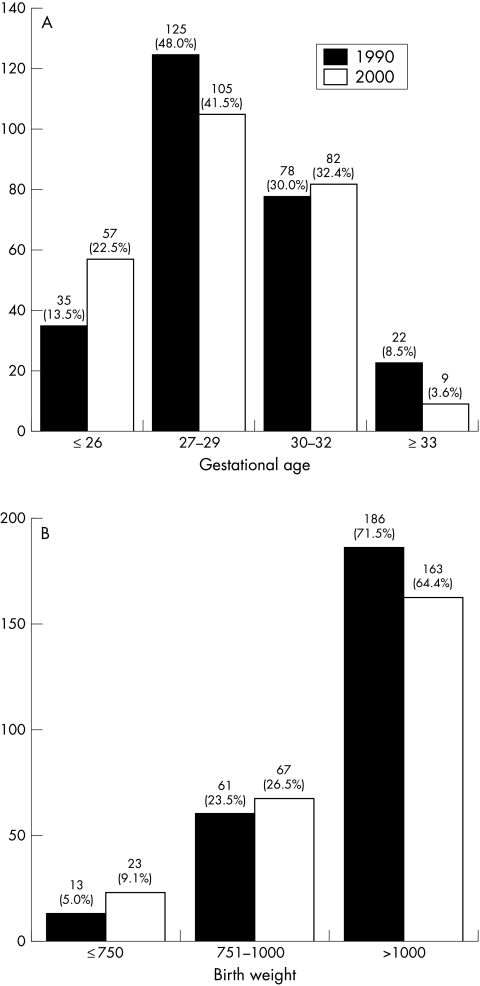
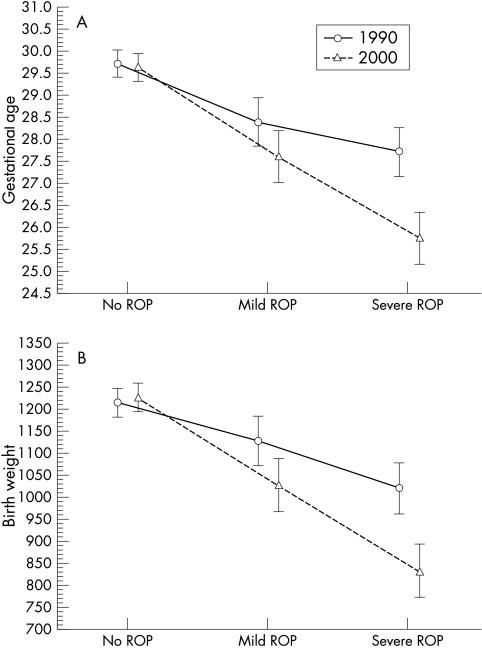
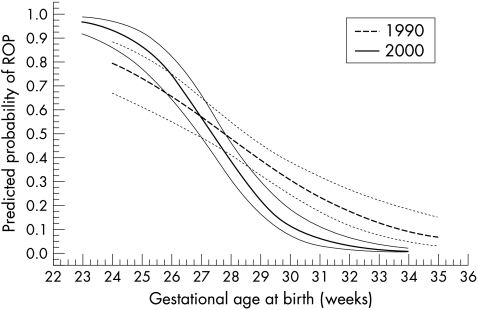
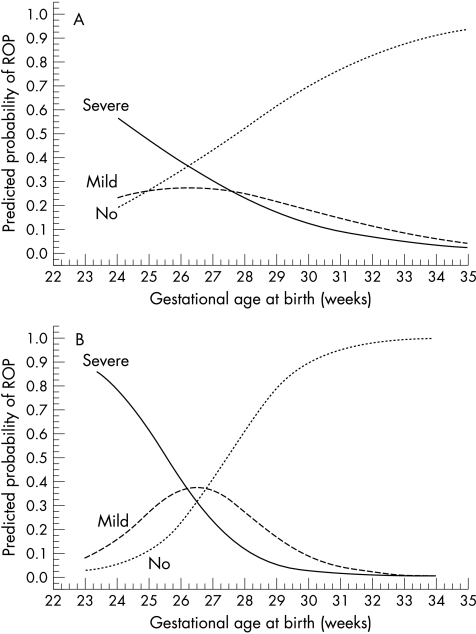
Results: The incidence of ROP in the present study was 36.4% (mild (18.2%) and severe ROP (18.2%)), which was similar to that of the previous study. Gestational age at birth remained the most important risk factor for ROP. We found a change in the distribution of ROP. The probability of ROP, particularly severe ROP, was highest in the most immature infants while it was lower in the least immature ones.
Conclusions: The incidence of ROP remained the same in two consecutive population based studies. The more "mature" infants developed ROP, particularly severe ROP, less often, while the most immature infants had ROP more often, particularly severe ROP.
Figures
Comment in
-
Retinopathy of prematurity.Br J Ophthalmol. 2002 Oct;86(10):1071. doi: 10.1136/bjo.86.10.1071. Br J Ophthalmol. 2002. PMID: 12234878 Free PMC article. No abstract available.
References
-
- Cryotherapy for Retinopathy of Prematurity Cooperative Group. Multicenter trial of cryotherapy for retinopathy of prematurity. Preliminary results. Arch Ophthalmol 1988;106:471–9. - PubMed
-
- Committee for the Classification of Retinopathy of Prematurity. An international classification of retinopathy of prematurity. Arch Ophthalmol 1984;102:1130–4. - PubMed
-
- International Committee for the Classification of the Late Stages of Retinopathy of Prematurity. An international classification of retinopathy of prematurity. Arch Ophthalmol 1987;105:905–12 - PubMed
Publication types
MeSH terms
LinkOut - more resources
Full Text Sources
