


CxxS: fold-independent redox motif revealed by genome-wide searches for thiol/disulfide oxidoreductase function
- PMID: 12237451
- PMCID: PMC2373698
- DOI: 10.1110/ps.0218302
CxxS: fold-independent redox motif revealed by genome-wide searches for thiol/disulfide oxidoreductase function
Abstract
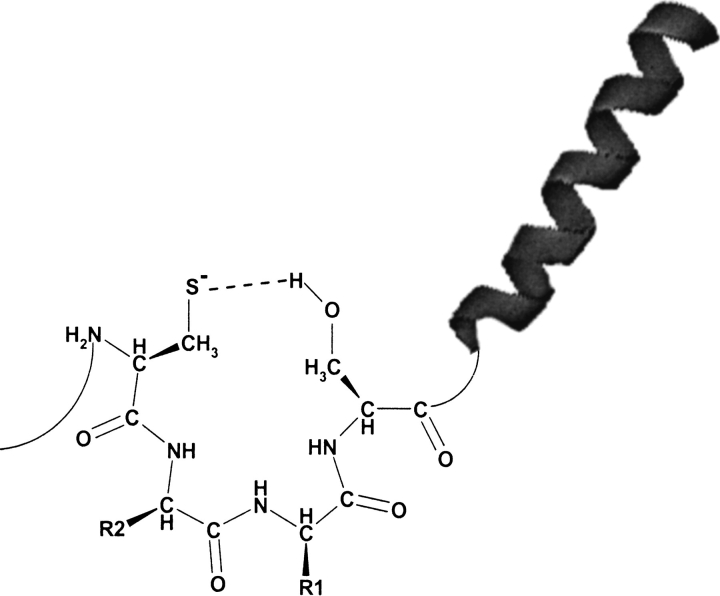
Redox reactions involving thiol groups in proteins are major participants in cellular redox regulation and antioxidant defense. Although mechanistically similar, thiol-dependent redox processes are catalyzed by structurally distinct families of enzymes, which are difficult to identify by available protein function prediction programs. Herein, we identified a functional motif, CxxS (cysteine separated from serine by two other residues), that was often conserved in redox enzymes, but rarely in other proteins. Analyses of complete Escherichia coli, Campylobacter jejuni, Methanococcus jannaschii, and Saccharomyces cerevisiae genomes revealed a high proportion of proteins known to use the CxxS motif for redox function. This allowed us to make predictions in regard to redox function and identity of redox groups for several proteins whose function previously was not known. Many proteins containing the CxxS motif had a thioredoxin fold, but other structural folds were also present, and CxxS was often located in these proteins upstream of an alpha-helix. Thus, a conserved CxxS sequence followed by an alpha-helix is typically indicative of a redox function and corresponds to thiol-dependent redox sites in proteins. The data also indicate a general approach of genome-wide identification of redox proteins by searching for simple conserved motifs within secondary structure patterns.
Figures


References
-
- Arner, E.S. and Holmgren, A. 2000. Physiological functions of thioredoxin and thioredoxin reductase. Eur. J. Biochem. 267 6102–6109. - PubMed
-
- Atichartpongkul, S., Loprasert, S., Vattanaviboon, P., Whangsuk, W., Helmann, J.D., and Mongkolsuk, S. 2001. Bacterial Ohr and OsmC paralogues define two protein families with distinct functions and patterns of expression. Microbiology 147 1775–1782. - PubMed
-
- Bateman, A. 1999. The SIS domain: A phosphosugar-binding domain. Trends. Biochem. Sci. 24 94–95. - PubMed
MeSH terms
Substances
LinkOut - more resources
Full Text Sources
Other Literature Sources
Molecular Biology Databases
