


Characterization of an enteropathogenic bovine calicivirus representing a potentially new calicivirus genus
- PMID: 12239283
- PMCID: PMC136553
- DOI: 10.1128/jvi.76.20.10089-10098.2002
Characterization of an enteropathogenic bovine calicivirus representing a potentially new calicivirus genus
Abstract
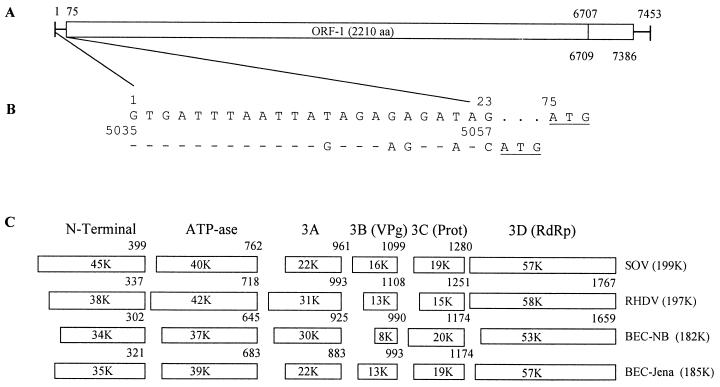
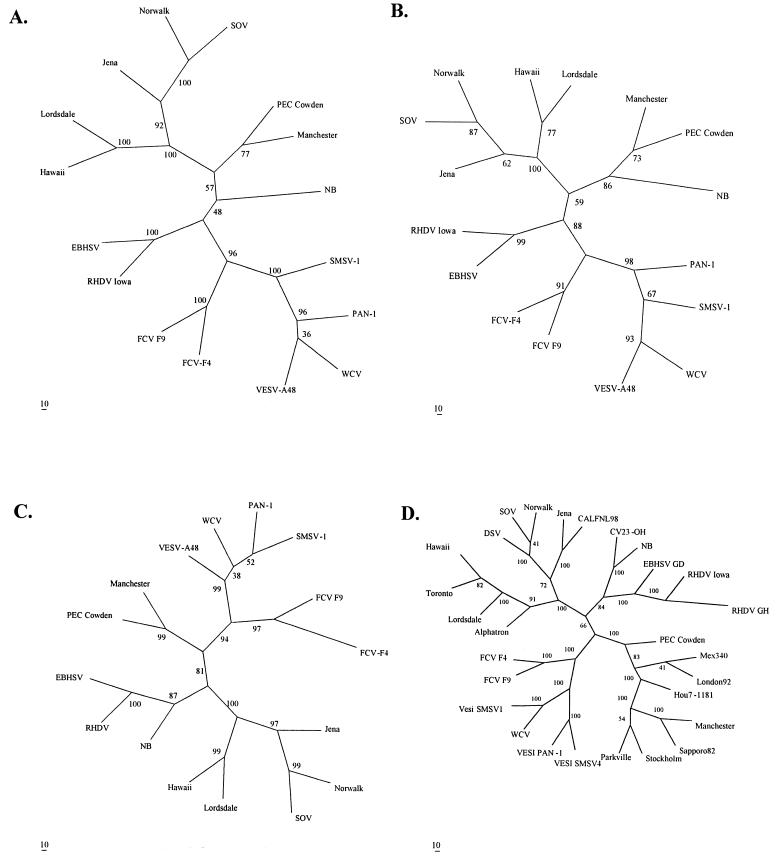
Bovine enteric caliciviruses (BEC) are associated with diarrhea in young calves. The BEC strains detected in Europe form a third genogroup within the genus "Norwalk-like viruses" (NLV) of the family Caliciviridae. In this report, we present sequence, clinical, and histological data characterizing a novel enteropathogenic BEC strain, NB, detected in fecal specimens from calves in the United States. The complete RNA genome of the NB virus is 7,453 bases long and is organized into two open reading frames (ORFs). ORF-1 is 2,210 amino acids long and encodes a large nonstructural polyprotein contiguous with the major capsid protein (VP1), similar to the lagoviruses and "Sapporo-like viruses" (SLV). The conserved calicivirus motifs were identified in the nonstructural proteins. ORF-2 is located at the 3' end of the genome and encodes a small basic protein (VP2) of 225 amino acids. The 5' and 3' untranslated regions are 74 and 67 bases long, respectively. Among caliciviruses, NB virus shows amino acid identities of 14.1 to 22.6% over the entire ORF-1 nonstructural-protein sequence with NLV, SLV, vesivirus, and lagovirus strains, while the overall sequence identity of the complete NB VP-1 with other caliciviruses is low, varying between 14.6 and 26.7%. Phylogenetic analysis of the complete VP1 protein, including strains from all four calicivirus genera, showed the closest grouping of NB virus to be with viruses in the genus Lagovirus, which cause liver infections and systemic hemorrhage in rabbits. In gnotobiotic calves, however, NB virus elicited only diarrhea and intestinal lesions that were most severe in the upper small intestine (duodenum and jejunum), similar to the NLV BEC strains. The tissues of major organs, including the lung, liver, kidney, and spleen, had no visible microscopic lesions.
Figures
References
-
- Ando, T., S. S. Monroe, J. S. Noel, and R. I. Glass. 1997. A one-tube method of reverse transcription-PCR to efficiently amplify a 3-kilobase region from the RNA polymerase gene to the poly(A) tail of small round-structured viruses (Norwalk-like viruses). J. Clin. Microbiol. 35:570-577. - PMC - PubMed
-
- Ando, T., J. S. Noel, and R. L. Fankhauser. 2000. Genetic classification of “Norwalk-like viruses.” J. Infect. Dis. 181(Suppl. 2):S336-S348. - PubMed
-
- Berke, T., B. Golding, X. Jiang, D. W. Cubitt, M. Wolfaardt, A. W. Smith, and D. O. Matson. 1997. Phylogenetic analysis of the caliciviruses. J. Med. Virol. 52:419-424. - PubMed
Publication types
MeSH terms
Substances
Associated data
- Actions
- Actions
Grants and funding
LinkOut - more resources
Full Text Sources
