


Molecular genetic evidence that the hydrophobic anchors of glycoproteins E2 and E1 interact during assembly of alphaviruses
- PMID: 12239293
- PMCID: PMC136572
- DOI: 10.1128/jvi.76.20.10188-10194.2002
Molecular genetic evidence that the hydrophobic anchors of glycoproteins E2 and E1 interact during assembly of alphaviruses
Abstract
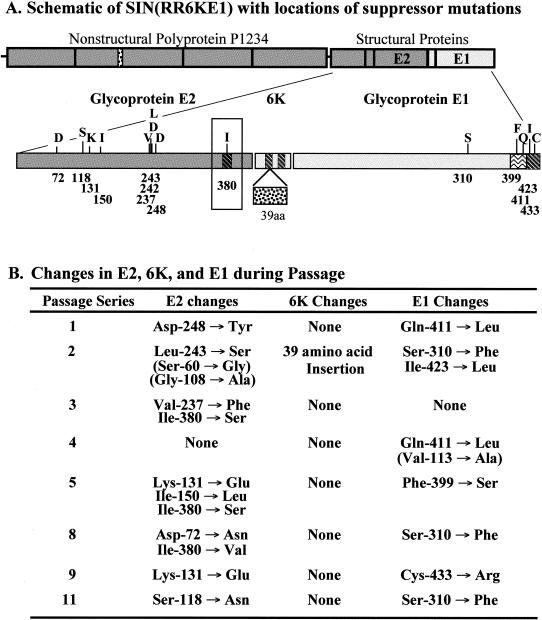
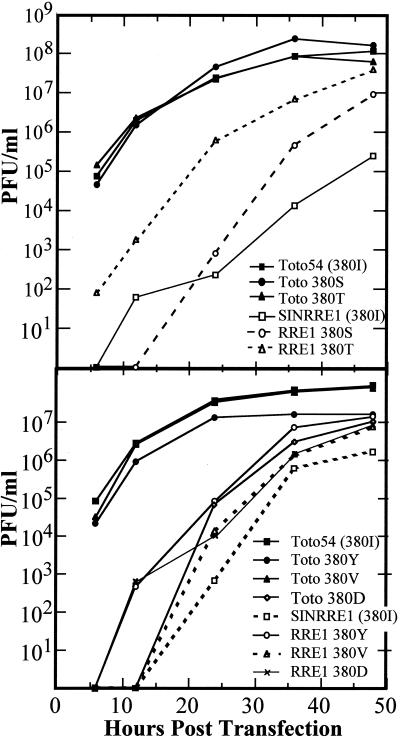
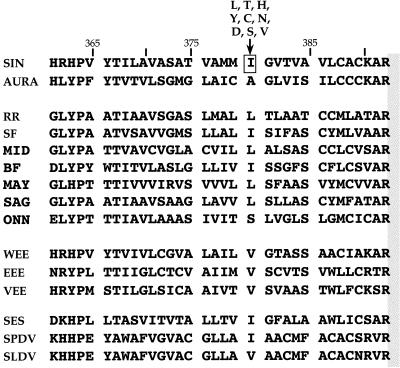
Chimeric alphaviruses in which the 6K and glycoprotein E1 moieties of Sindbis virus are replaced with those of Ross River virus grow very poorly, but upon passage, adapted variants arise that grow >100 times better. We have sequenced the entire domain encoding the E2, 6K, and E1 proteins of a number of these adapted variants and found that most acquired two amino acid changes, which had cumulative effects. In three independent passage series, amino acid 380 of E2, which is in the transmembrane domain, was mutated from the original isoleucine to serine in two instances and to valine once. We have now changed this residue to seven others by site-directed mutagenesis and tested the effects of these mutations on the growth of both the chimera [SIN(RRE1)] and of parental Sindbis. These results indicate that the transmembrane domains of glycoproteins E2 and E1 of alphaviruses interact in a sequence-dependent manner and that this interaction is required for efficient budding and assembly of infectious virions.
Figures
References
-
- Gaedigk-Nitschko, K., M. Ding, and M. J. Schlesinger. 1990. Site-directed mutations in the Sindbis virus 6K protein reveal sites for fatty acylation and the underacylated protein affects virus release and virion structure. Virology 175:282-291. - PubMed
-
- Gaedigk-Nitschko, K., and M. J. Schlesinger. 1990. The Sindbis virus 6K protein can be detected in virions and is acylated with fatty acid. Virology 175:274-281. - PubMed
Publication types
MeSH terms
Substances
Grants and funding
LinkOut - more resources
Full Text Sources
Other Literature Sources
