Primary lymphoma of bone--survival and prognosis
- PMID: 12298430
- PMCID: PMC4531681
- DOI: 10.3904/kjim.2002.17.3.191
Primary lymphoma of bone--survival and prognosis
Abstract
Background: Primary lymphoma of bone is a rare disease. There is yet no systematical evaluation of primary lymphoma of bone in Korea. Here we report our experience of sixteen cases with primary lymphoma of bone focusing on the survival.
Methods: Sixteen cases, collected for 13 years, were evaluated on the clinical presentation, histologic subtype, stage and treatment outcomes of the primary bone lymphoma.
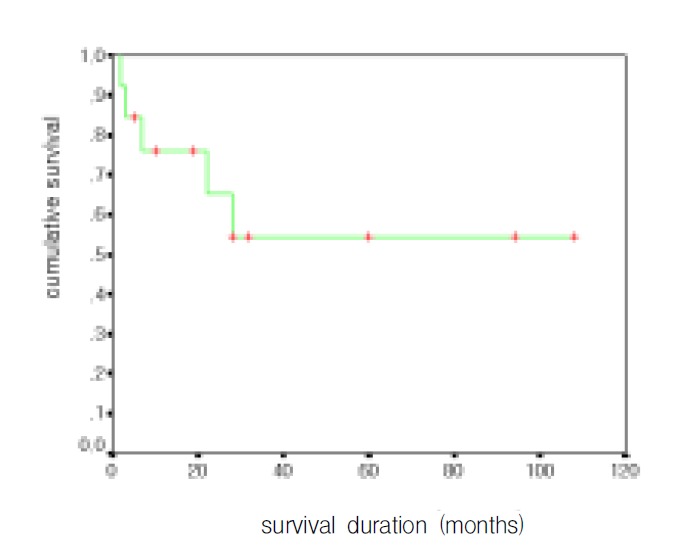
Results: The most common presenting complaint was bone pain. Malignant lymphoma of bone involved a wide variety of sites, the most prevalent site of which in this study was the spine. Most of the cases were in the diffuse large B-cell category. The clinical stage of lymphoma was IEA in two cases, IIEA in three cases, IVEA in five cases and IVEB in three cases. All treated cases received systemic chemotherapy and ten cases among them were treated with combined modality therapy. Median overall survival was not reached after median follow-up period of 28 months and five-year overall survival rate was 54%.
Conclusion: More promising therapeutic strategies are needed for survival improvement on more accumulated cases.
Figures


References
-
- Freeman C, Berg JW, Cutler SJ. Occurrence and prognosis of extranodal lymphomas. Cancer. 1972;29:252–260. - PubMed
-
- Rudders RA, Ross ME, DeLellis RA. Primary extranodal lymphoma. Response to treatment and factors influencing prognosis. Cancer. 1978;42:406–416. - PubMed
-
- Parker F, Jackson H. Primary reticulum cell sarcoma of bone. Surg Gynecol Obstet. 1939;68:45–53.
-
- Rosenberg SA, Diamond HD, Jaslowitz B, Cravwer LF. Lymphosarcoma. A review of 1269 cases. Medicine. 1961;40:31–81. - PubMed
-
- Hahn JS, Lee S, Chong SY, Min YH, Ko YW. Eight-year experience of malignant lymphoma. Yonsei Med J. 1997;38(5):270–284. - PubMed
MeSH terms
LinkOut - more resources
Full Text Sources
Medical