


PKQuest: capillary permeability limitation and plasma protein binding - application to human inulin, dicloxacillin and ceftriaxone pharmacokinetics
- PMID: 12323078
- PMCID: PMC130020
- DOI: 10.1186/1472-6904-2-7
PKQuest: capillary permeability limitation and plasma protein binding - application to human inulin, dicloxacillin and ceftriaxone pharmacokinetics
Abstract
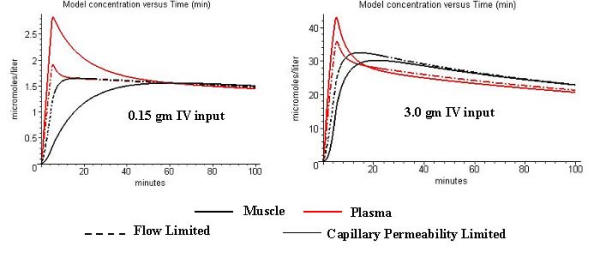
Background: It is generally assumed that the tissue exchange of antibiotics is flow limited (complete equilibration between the capillary and the tissue water). This assumption may not be valid if there is a large amount of plasma protein binding because the effective capillary permeability depends on the product of the intrinsic capillary permeability (PS) and the fraction of solute that is free in the blood (fwB). PKQuest, a new generic physiologically based pharmacokinetic software routine (PBPK), provides a novel approach to modeling capillary permeability in which the only adjustable parameter is the PS of muscle.
Methods: All the results were obtained by applying PKQuest to previously published human pharmacokinetic data.
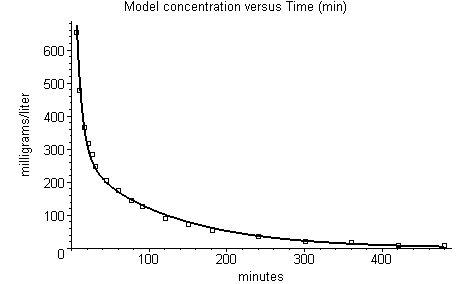
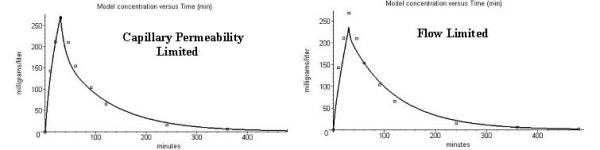
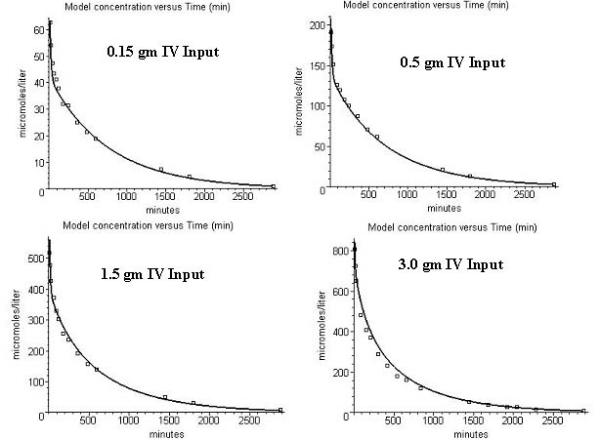
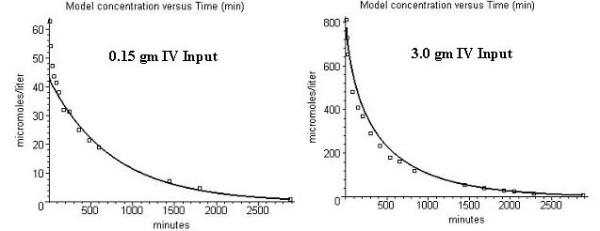
Results: The PKQuest analysis suggests that the highly protein bound antibiotics dicloxacillin and ceftriaxone have a significant capillary permeability limitation. The human muscle capillary PS of inulin, dicloxacillin and ceftriaxone was 0.6, 13 and 6 ml/min/100 gm, respectively. The ceftriaxone protein binding is non-linear, saturating at high plasma concentrations. The experimental ceftriaxone data over a wide range of intravenous inputs (0.15 to 3 gms) was well described by PKQuest. PKQuest is the first PBPK that includes both permeability limitation and non-linear binding.
Conclusions: Because of their high degree of plasma protein binding, dicloxacillin and ceftriaxone appear to have a diffusion limited exchange rate between the blood and tissue and are not flow limited as had been previously assumed. PKQuest and all the examples are freely available at http:\\www.pkquest.com.
Figures
References
-
- Gerlowski LE, Jain RK. Physiologically based pharmacokinetic modeling: principles and applications. J Pharm Sci. 1983;72:1103–27. - PubMed
-
- Crone C, Levitt DG. Capillary permeability to small solutes Bethesda, Maryland: American Physiological Society; 1984.
MeSH terms
Substances
LinkOut - more resources
Full Text Sources
