Training in flexible, intensive insulin management to enable dietary freedom in people with type 1 diabetes: dose adjustment for normal eating (DAFNE) randomised controlled trial
- PMID: 12364302
- PMCID: PMC128375
- DOI: 10.1136/bmj.325.7367.746
Training in flexible, intensive insulin management to enable dietary freedom in people with type 1 diabetes: dose adjustment for normal eating (DAFNE) randomised controlled trial
Abstract
Objectives: To evaluate whether a course teaching flexible intensive insulin treatment combining dietary freedom and insulin adjustment can improve both glycaemic control and quality of life in type 1 diabetes.
Design: Randomised design with participants either attending training immediately (immediate DAFNE) or acting as waiting list controls and attending "delayed DAFNE" training 6 months later.
Setting: Secondary care diabetes clinics in three English health districts.
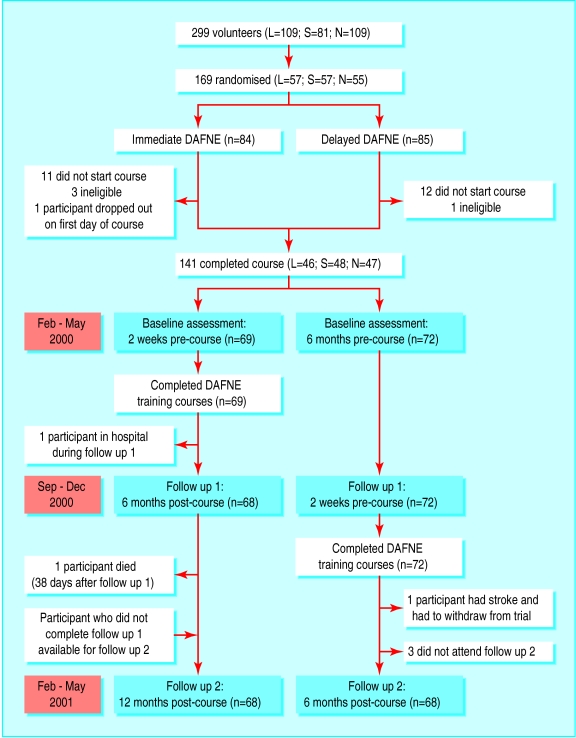
Participants: 169 adults with type 1 diabetes and moderate or poor glycaemic control.
Main outcome measures: Glycated haemoglobin (HbA(1c)), severe hypoglycaemia, impact of diabetes on quality of life (ADDQoL).
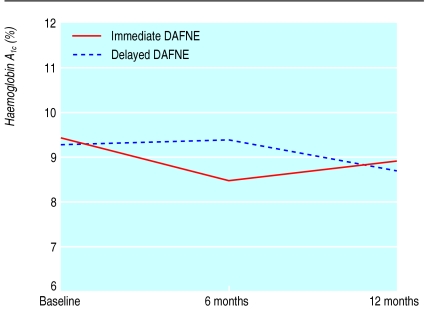
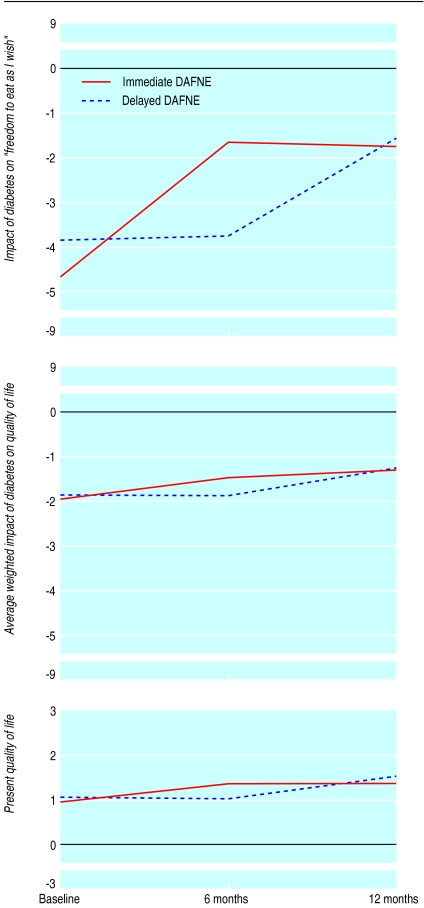
Results: At 6 months, HbA(1c) was significantly better in immediate DAFNE patients (mean 8.4%) than in delayed DAFNE patients (9.4%) (t=6.1, P<0.0001). The impact of diabetes on dietary freedom was significantly improved in immediate DAFNE patients compared with delayed DAFNE patients (t=-5.4, P<0.0001), as was the impact of diabetes on overall quality of life (t=2.9, P<0.01). General wellbeing and treatment satisfaction were also significantly improved, but severe hypoglycaemia, weight, and lipids remained unchanged. Improvements in "present quality of life" did not reach significance at 6 months but were significant by 1 year.
Conclusion: Skills training promoting dietary freedom improved quality of life and glycaemic control in people with type 1 diabetes without worsening severe hypoglycaemia or cardiovascular risk. This approach has the potential to enable more people to adopt intensive insulin treatment and is worthy of further investigation.
Figures
Comment in
-
Training in flexible intensive insulin management improved glycemic control and quality of life in type 1 diabetes.ACP J Club. 2003 May-Jun;138(3):68. ACP J Club. 2003. PMID: 12725623 No abstract available.
-
Training in flexible intensive insulin management improved glycaemic control and quality of life in type 1 diabetes.Evid Based Nurs. 2003 Jul;6(3):77. doi: 10.1136/ebn.6.3.77. Evid Based Nurs. 2003. PMID: 12882190 No abstract available.
References
-
- Audit Commission. Testing times: a review of diabetes services in England and Wales. London: Audit Commission; 2000.
-
- The Diabetes Control and Complications Trial Research Group. The effect of intensive treatment of diabetes on the development and progression of long-term complications in insulin-dependent diabetes mellitus. N Engl J Med. 1993;329:683–689. - PubMed
-
- Bradley C, Todd C, Gorton T, Symonds E, Martin A, Plowright R. The development of an individualized questionnaire measure of perceived impact of diabetes on quality of life: the ADDQoL. Qual Life Res. 1999;8:79–91. - PubMed
-
- Bradley C, Speight J. Patient perceptions of diabetes and diabetes therapy: assessing quality of life. Diabetes Metab Res Rev (in press). - PubMed
Publication types
MeSH terms
Substances
LinkOut - more resources
Full Text Sources
Other Literature Sources
Medical
Miscellaneous