


Soluble peptide-MHC monomers cause activation of CD8+ T cells through transfer of the peptide to T cell MHC molecules
- PMID: 12374859
- PMCID: PMC129758
- DOI: 10.1073/pnas.212515299
Soluble peptide-MHC monomers cause activation of CD8+ T cells through transfer of the peptide to T cell MHC molecules
Abstract
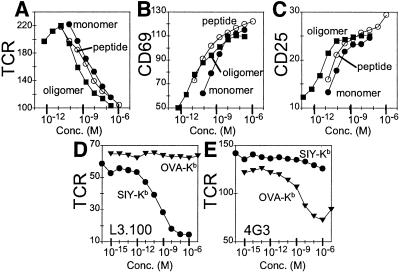
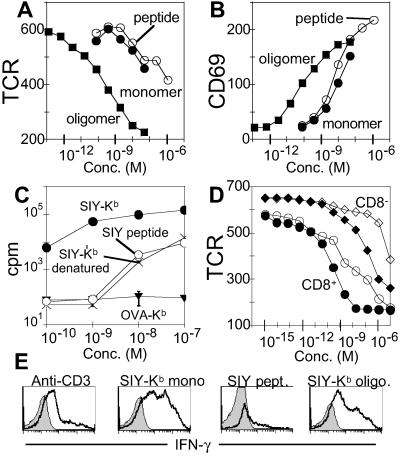
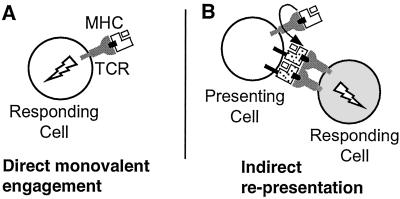
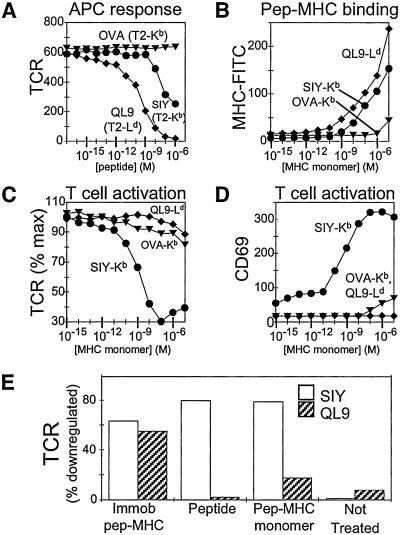
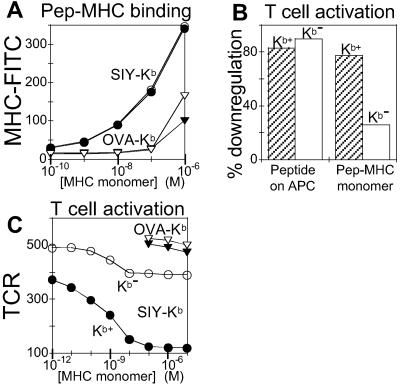
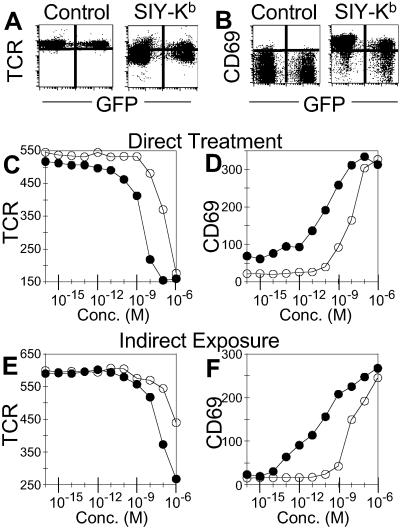
T cell receptor (TCR)-mediated activation of CD4(+) T cells is known to require multivalent engagement of the TCR by, for example, oligomeric peptide-MHC complexes. In contrast, for CD8(+) T cells, there is evidence for TCR-mediated activation by univalent engagement of the TCR. We have here compared oligomeric and monomeric L(d) and K(b) peptide-MHC complexes and free peptide as stimulators of CD8(+) T cells expressing the 2C TCR. We found that the monomers are indeed effective in activating naive and effector CD8(+) T cells, but through an unexpected mechanism that involves transfer of peptide from soluble monomers to T cell endogenous MHC (K(b)) molecules. The result is that T cells, acting as antigen-presenting cells, are able to activate other naive T cells.
Figures
References
Publication types
MeSH terms
Substances
Grants and funding
LinkOut - more resources
Full Text Sources
Other Literature Sources
Molecular Biology Databases
Research Materials
