


Molecular sequelae of proteasome inhibition in human multiple myeloma cells
- PMID: 12391322
- PMCID: PMC137891
- DOI: 10.1073/pnas.202445099
Molecular sequelae of proteasome inhibition in human multiple myeloma cells
Abstract
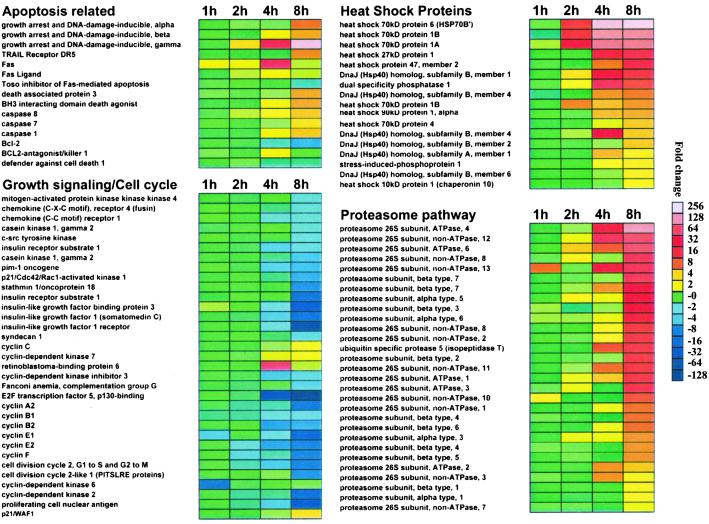
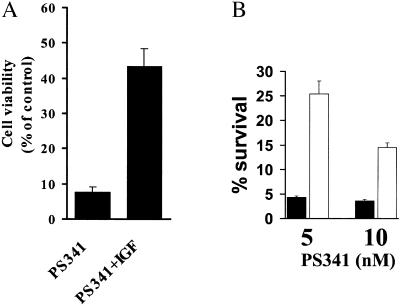
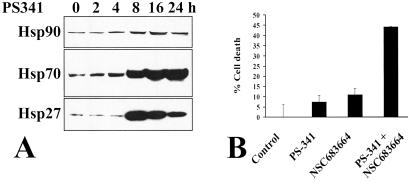
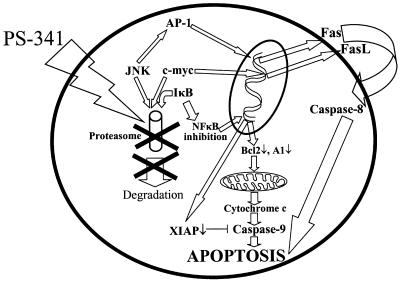
The proteasome inhibitor PS-341 inhibits IkappaB degradation, prevents NF-kappaB activation, and induces apoptosis in several types of cancer cells, including chemoresistant multiple myeloma (MM) cells. PS-341 has marked clinical activity even in the setting of relapsed refractory MM. However, PS-341-induced apoptotic cascade(s) are not yet fully defined. By using gene expression profiling, we characterized the molecular sequelae of PS-341 treatment in MM cells and further focused on molecular pathways responsible for the anticancer actions of this promising agent. The transcriptional profile of PS-341-treated cells involved down-regulation of growth/survival signaling pathways, and up-regulation of molecules implicated in proapoptotic cascades (which are both consistent with the proapoptotic effect of proteasome inhibition), as well as up-regulation of heat-shock proteins and ubiquitin/proteasome pathway members (which can correspond to stress responses against proteasome inhibition). Further studies on these pathways showed that PS-341 decreases the levels of several antiapoptotic proteins and triggers a dual apoptotic pathway of mitochondrial cytochrome c release and caspase-9 activation, as well as activation of Jun kinase and a Fas/caspase-8-dependent apoptotic pathway [which is inhibited by a dominant negative (decoy) Fas construct]. Stimulation with IGF-1, as well as overexpression of Bcl-2 or constitutively active Akt in MM cells also modestly attenuates PS-341-induced cell death, whereas inhibitors of the BH3 domain of Bcl-2 family members or the heat-shock protein 90 enhance tumor cell sensitivity to proteasome inhibition. These data provide both insight into the molecular mechanisms of antitumor activity of PS-341 and the rationale for future clinical trials of PS-341, in combination with conventional and novel therapies, to improve patient outcome in MM.
Figures
References
-
- Ciechanover A., Finley, D. & Varshavsky, A. (1984) J. Cell. Biochem. 24, 27-53. - PubMed
-
- Ciechanover A., Finley, D. & Varshavsky, A. (1984) Cell 37, 57-66. - PubMed
-
- Varshavsky A. (1997) Trends Biochem. Sci. 22, 383-387. - PubMed
-
- Varshavsky A., Bachmair, A., Finley, D., Gonda, D. K. & Wunning, I., (1989) Bio/Technology 13, 109–143. - PubMed
Publication types
MeSH terms
Substances
Grants and funding
LinkOut - more resources
Full Text Sources
Other Literature Sources
Medical
Research Materials
Miscellaneous
