


Salmonellae in avian wildlife in Norway from 1969 to 2000
- PMID: 12406754
- PMCID: PMC129881
- DOI: 10.1128/AEM.68.11.5595-5599.2002
Salmonellae in avian wildlife in Norway from 1969 to 2000
Abstract
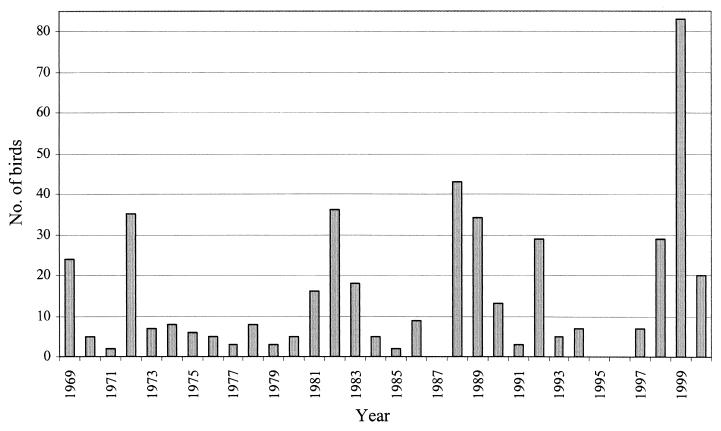
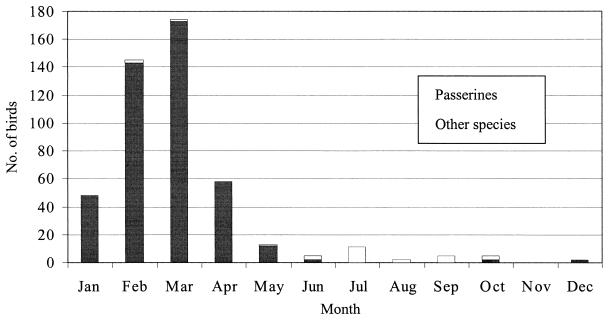
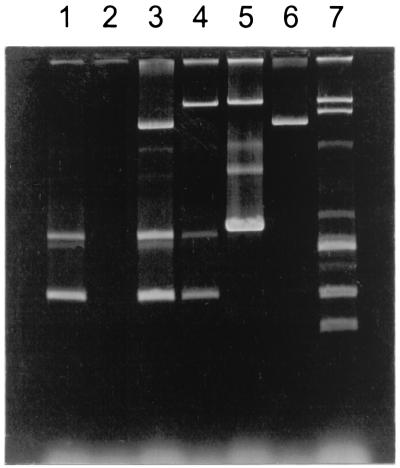
Postmortem records of wild-living birds in Norway with laboratory-confirmed findings of salmonella infection were summarized for the period from 1969 to 2000. Salmonella spp. were isolated from 470 birds belonging to 26 species. The salmonella-positive birds included 441 small passerines, 15 gulls, 5 waterfowl, 4 birds of prey, 3 doves, and 2 crows. The bullfinch (Pyrrhula pyrrhula) was by far the most frequently recorded species (54% of the cases). Salmonella enterica serover Typhimurium was recovered from all cases except from one hooded crow (Corvus corone), which yielded serovar Paratyphi-B var. Java. Variant O:4,12 comprised 96% (451 cases) of all serovar Typhimurium isolates, including all the passerines, while variant O:4,5,12 accounted for the remaining 4% (18 cases). The occurrence of salmonellae in small passerines showed a distinct seasonality, with a peak in February and March. Plasmid profile analysis of 346 isolates of serovar Typhimurium O:4,12 detected six profiles, of which two comprised 66 and 28% of the isolates, respectively. Phage typing of 52 randomly selected isolates of serovar Typhimurium O:4,12 from passerines detected four types: DT 40 (54%), U277 (35%), DT 99 (6%), and DT 110 (4%).
Figures
References
-
- Aalvik, B., and L. Rossebø. 1969. Studies of the occurrence of salmonella in intestinal contents and deposited feces from seagulls in Norwegian coastal regions. Nor. Veterinærtidsskr. 21:389-393. (In Norwegian.)
-
- Aavitsland, P., and T. Hofshagen. 1999. Outbreak of salmonellosis in Herøy municipality. Nytt fra miljø- og samfunnsmedisin, vol. 3, report no. 12. National Institute of Public Health, Oslo, Norway. (In Norwegian.).
-
- Aurstad, K., and E. S. Vaadal. 1991. The presence of Salmonella bacteria in gulls at Tranamarka refuse dump, Steinkjer municipality, August-September 1991. Municipal Food Control Authorities, Innherred, Norway.
Publication types
MeSH terms
LinkOut - more resources
Full Text Sources
Miscellaneous
