


Molecular surveillance of drug resistance through imported isolates of Plasmodium falciparum in Europe
- PMID: 12423552
- PMCID: PMC140139
- DOI: 10.1186/1475-2875-1-11
Molecular surveillance of drug resistance through imported isolates of Plasmodium falciparum in Europe
Abstract
Background: Results from numerous studies point convincingly to correlations between mutations at selected genes and phenotypic resistance to antimalarials in Plasmodium falciparum isolates. In order to move molecular assays for point mutations on resistance-related genes into the realm of applied tools for surveillance, we investigated a selection of P. falciparum isolates that were imported during the year 2001 into Europe to study the prevalence of resistance-associated point mutations at relevant codons. In particular, we tested for parasites which were developing resistance to antifolates and chloroquine. The screening results were used to map the prevalence of mutations and, thus, levels of potential drug resistance in endemic areas world-wide.
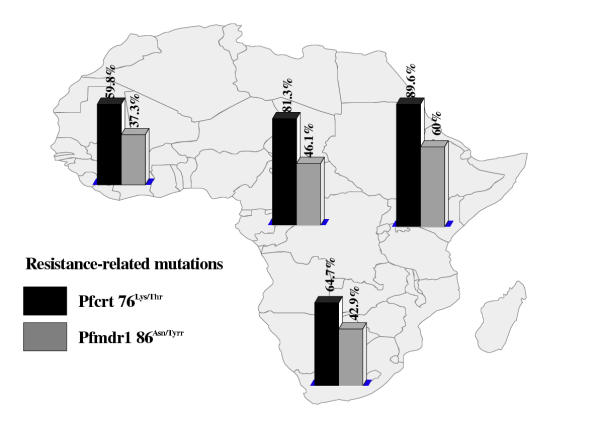
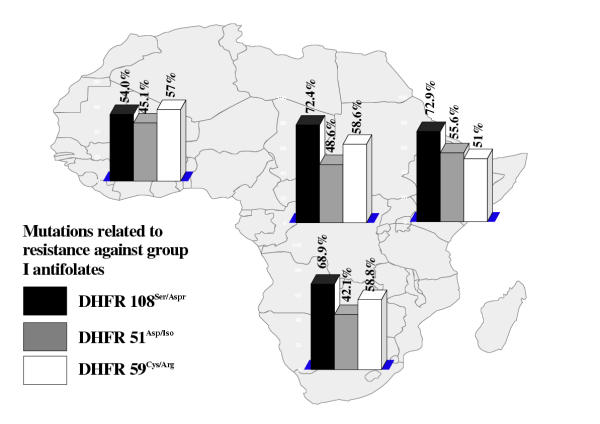
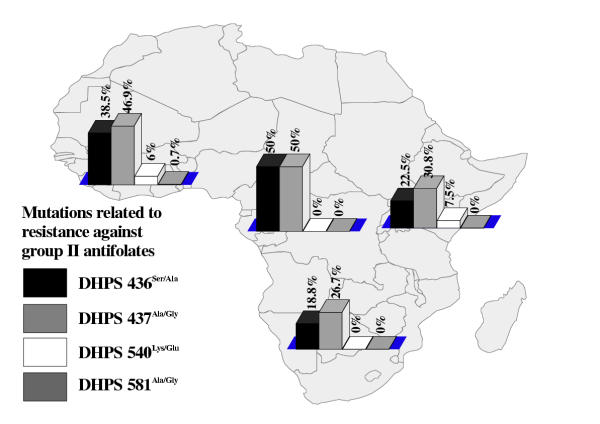
Results: 337 isolates have been tested so far. Prevalence of mutations that are associated with resistance to chloroquine on the pfcrt and pfmdr genes of P. falciparum was demonstrated at high levels. However, the prevalence of mutations associated with resistance to antifolates at the DHFR and DHPS genes was unexpectedly low, rarely exceeding 60% in endemic areas.
Conclusions: Constant screening of imported isolates will enable TropNetEurop to establish a screening tool for emerging resistance in endemic areas.
Figures
References
-
- Warhurst D. Drug resistance in Plasmodium falciparum malaria. Infection. 1999;27:S55–58. - PubMed
-
- Curtis J, Duraisingh M, Trigg J, Mbwana H, Warhurst D, Curtis C. Direct evidence that asparagine at position 108 of the Plasmodium falciparum dihydrofolate reductase is involved in resistance to antifolate drugs in Tanzania. Trans R Soc Trop Med Hyg. 1996;90:678–680. - PubMed
-
- Curtis J, Duraisingh M, Warhurst D. In Vivo Selection for a specific Genotype of Dihydropteroate Synthetase of Plasmodium falciparum by Pyrimethamine-Sulfadoxine but not Chlorproguanil-Dapsone Treatment. J Infect Dis. 1998;177:1429–1433. - PubMed
Publication types
MeSH terms
Substances
LinkOut - more resources
Full Text Sources
