


Mechanisms of decreased susceptibility to cefpodoxime in Escherichia coli
- PMID: 12435684
- PMCID: PMC132766
- DOI: 10.1128/AAC.46.12.3829-3836.2002
Mechanisms of decreased susceptibility to cefpodoxime in Escherichia coli
Abstract
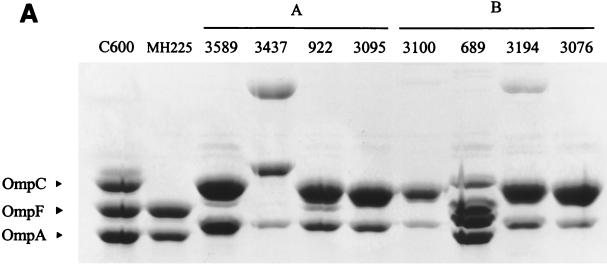
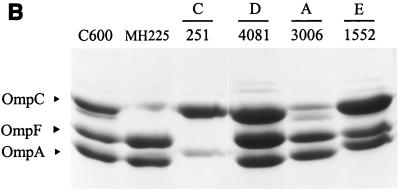
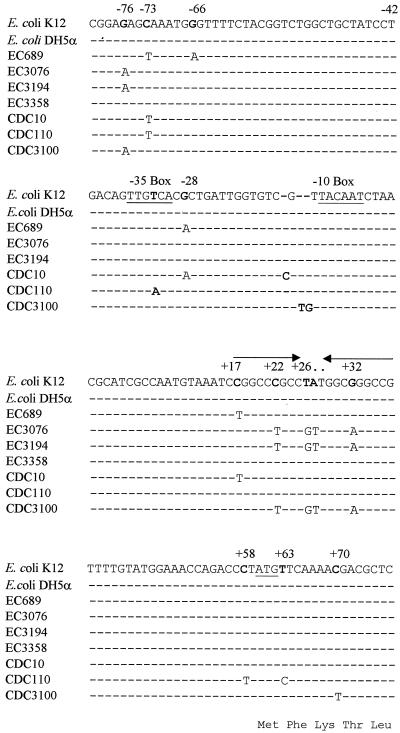
Cefpodoxime is one of five antimicrobial agents recommended by the National Committee for Clinical Laboratory Standards for screening isolates of Klebsiella spp. and Escherichia coli for extended-spectrum beta-lactamase (ESBL) production. In a prior study, we noted that among 131 E. coli isolates for which the MIC of at least one extended-spectrum cephalosporin (ESC) or aztreonam was > or =2 micro g/ml (suggesting the presence of ESBL production), there were 59 isolates (45.0%) for which the MIC of cefpodoxime was 2 to 4 micro g/ml (i.e., a positive ESBL screening test), but the MICs of ceftazidime, cefotaxime, and ceftriaxone were < or =1 micro g/ml (below the ESBL screening breakpoint). Thus, the results appeared to be false-positive ESBL screening tests. These 59 isolates were divided into five phenotypic groups based on the susceptibility patterns of the organisms to a variety of beta-lactam agents and further characterized. The first group (32 isolates) all produced a TEM-1 beta-lactamase, and changes in the major outer membrane proteins were detected in representative strains. The second group (18 isolates) lacked bla(TEM) but showed a number of porin changes; some also showed a modest elevation in production of the AmpC chromosomal beta-lactamase. In the third phenotypic group (seven isolates) all expressed an OXA-30 beta-lactamase. Some also harbored altered porins. The two remaining phenotypes each had a distinct pattern of porin changes with or without beta-lactamase production. These data indicate that several factors are associated with decreased susceptibility to cefpodoxime in E. coli, but none of the mechanisms are related to ESBL production. Current screening methods produced false-positive ESBL results for these isolates. Such isolates should not be classified as containing ESBLs, nor should interpretations of ESCs or aztreonam susceptibility be changed to resistant on test reports for these isolates.
Figures
References
-
- Aggeler, R., R. Then, and R. Ghosh. 1987. Reduced expression of outer-membrane proteins in β-lactam-resistant mutants of Enterobacter cloacae. J. Gen. Microbiol. 133:3383-3392. - PubMed
-
- Caroff, N., E. Espaze, I. Berard, H. Richet, and A. Reynaud. 1999. Mutations in the ampC promoter of Escherichia coli isolates resistant to oxyminocephalosporins without extended spectrum β-lactamase production. FEMS Microbiology Lett. 173:459-465. - PubMed
-
- Caroff, N., E. Espaze, D. Gautreau, H. Richet, and A. Reynaud. 2000. Analysis of the effects of −42 and −32 ampC promoter mutations in clinical isolates of Escherichia coli hyperproducing AmpC. J. Antimicrob. Chemother. 45:783-788. - PubMed
MeSH terms
Substances
LinkOut - more resources
Full Text Sources
Miscellaneous
