


Inactivation of human immunodeficiency virus type 1 by porphyrins
- PMID: 12435696
- PMCID: PMC132794
- DOI: 10.1128/AAC.46.12.3917-3925.2002
Inactivation of human immunodeficiency virus type 1 by porphyrins
Abstract
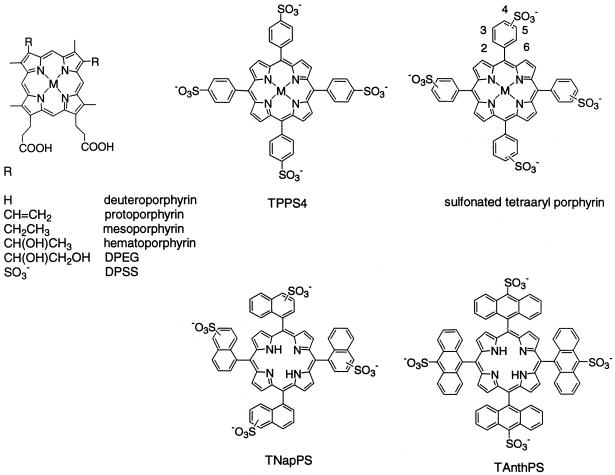
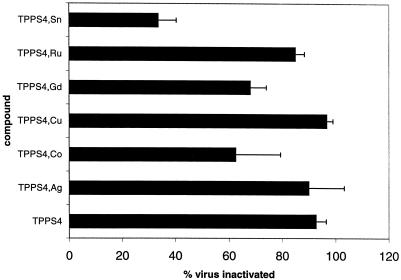
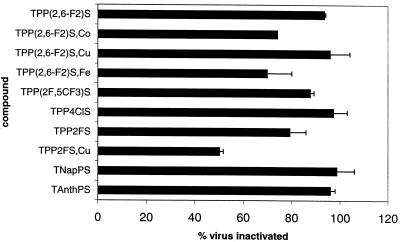
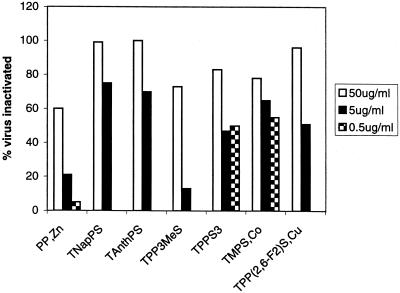
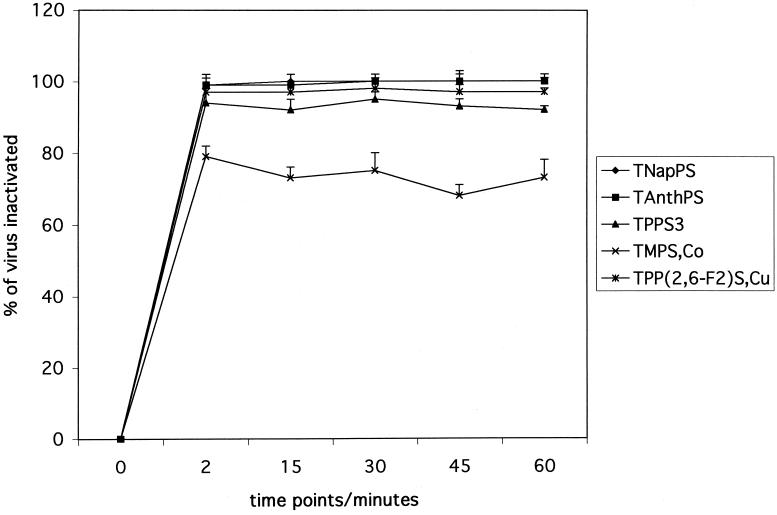
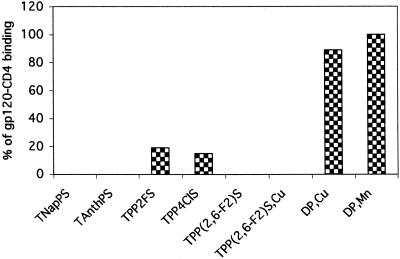
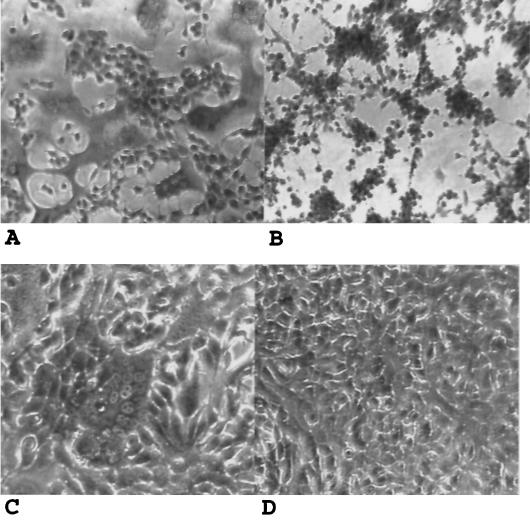
We have evaluated the anti-human immunodeficiency virus (HIV) activity of a series of natural and synthetic porphyrins to identify compounds that could potentially be used as microbicides to provide a defense against infection by sexually transmitted virus. For assays we used an epithelial HeLa-CD4 cell line with an integrated long terminal repeat-beta-galactosidase gene. For structure-activity analysis, we divided the porphyrins tested into three classes: (i) natural porphyrins, (ii) metallo-tetraphenylporphyrin tetrasulfonate (metallo-TPPS4) derivatives, and (iii) sulfonated tetra-arylporphyrin derivatives. None of the natural porphyrins studied reduced infection by more than 80% at a concentration of 5 micro g/ml in these assays. Some metal chelates of TPPS4 were more active, and a number of sulfonated tetra-aryl derivatives showed significantly higher activity. Some of the most active compounds were the sulfonated tetranaphthyl porphyrin (TNapPS), sulfonated tetra-anthracenyl porphyrin (TAnthPS), and sulfonated 2,6-difluoro-meso-tetraphenylporphine [TPP(2,6-F2)S] and its copper chelate [TPP(2,6-F2)S,Cu], which reduced infection by 99, 96, 94, and 96%, respectively. Our observations indicate that at least some of these compounds are virucidal, i.e., that they render the virus noninfectious. The active compounds were found to inhibit binding of the HIV type 1 gp120 to CD4 and also to completely inhibit the ability of Env proteins expressed from recombinant vectors to induce cell fusion with receptor-bearing target cells. These results support the conclusion that modified porphyrins exhibit substantial activity against HIV and that their target is the HIV Env protein.
Figures
References
-
- Argyris, E. G., J. M. Vanderkooi, and Y. Paterson. 2001. Mutagenesis of key residues identifies the connection subdomain of HIV-1 reverse transcriptase as the site of inhibition by heme. Eur. J. Biochem. 268:925-931. - PubMed
-
- Argyris, E. G., J. M. Vanderkooi, P. S. Venkateswaran, B. K. Kay, and Y. Paterson. 1999. The connection domain is implicated in metalloporphyrin binding and inhibition of HIV reverse transcriptase. J. Biol. Chem. 274:1549-1556. - PubMed
-
- Asanaka, M., T. Kurimura, H. Toya, J. Ogaki, and Y. Kato. 1989. Anti-HIV activity of protoporphyrin. AIDS 3:403-404. - PubMed
-
- Blasco, R., and B. Moss. 1995. Selection of recombinant vaccinia viruses on the basis of plaque formation. Gene 158:157-162. - PubMed
-
- Chackerian, B., N. L. Haigwood, and J. Overbaugh. 1995. Characterization of a CD4-expressing macaque cell line that can detect virus after a single replication cycle and can be infected by diverse simian immunodeficiency virus isolates. Virology 213:386-394. - PubMed
Publication types
MeSH terms
Substances
Grants and funding
LinkOut - more resources
Full Text Sources
Other Literature Sources
Research Materials
Miscellaneous
