In vitro-in vivo correlations for drugs eliminated by glucuronidation: investigations with the model substrate zidovudine
- PMID: 12445028
- PMCID: PMC1874472
- DOI: 10.1046/j.1365-2125.2002.01669.x
In vitro-in vivo correlations for drugs eliminated by glucuronidation: investigations with the model substrate zidovudine
Abstract
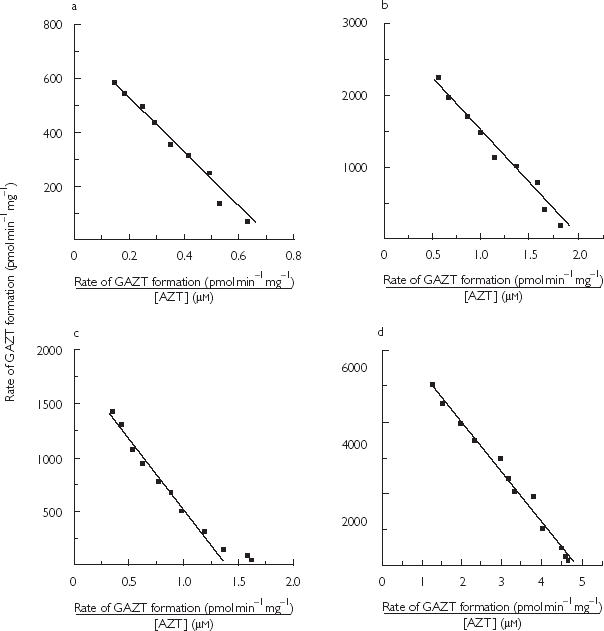
Aims: To investigate the effects of incubation conditions on the kinetic constants for zidovudine (AZT) glucuronidation by human liver microsomes, and whether microsomal intrinsic clearance (CLint) derived for the various conditions predicted hepatic AZT clearance by glucuronidation (CLH) in vivo.
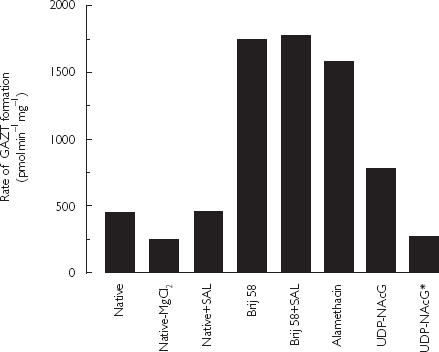
Methods: The effects of incubation constituents, particularly buffer type (phosphate, Tris) and activators (Brij58, alamethacin, UDP-N-acetylglucosamine (UDP-NAcG)), on the kinetics of AZT glucuronidation by human liver microsomes was investigated. AZT glucuronide (AZTG) formation by microsomal incubations was quantified by h.p.l.c. Microsomal CLint values determined for the various experimental conditions were extrapolated to a whole organ CLint and these data were used to calculate in vivo CLH using the well-stirred, parallel tube and dispersion models.
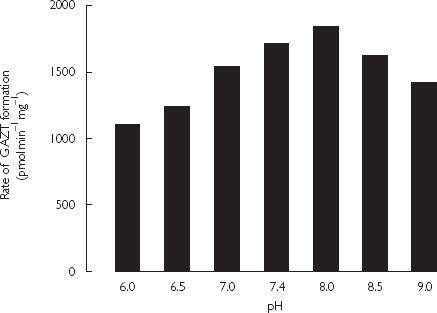
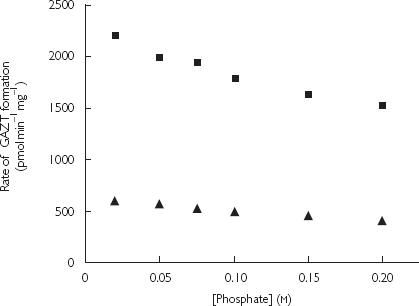
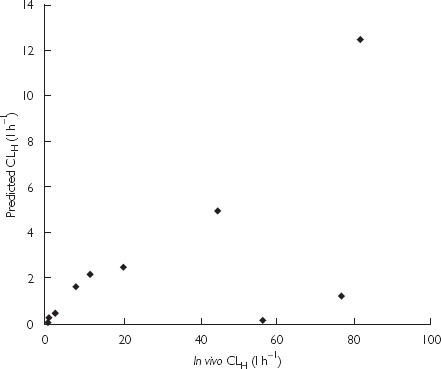
Results: Mean CLint values for Brij58 activated microsomes in both phosphate (3.66 +/- 1.40 micro l min-1 mg-1, 95% CI 1.92, 5.39) and Tris (3.79 +/- 0.74 micro l min-1 mg-1, 95% CI 2.87, 4.71) buffers were higher (P < 0.05) than the respective values for native microsomes (1.04 +/- 0.42, 95% CI 0.53, 1.56 and 1.37 +/- 0.30 micro l min-1 mg-1, 95% CI 1.00, 1.73). Extrapolation of the microsomal data to a whole organ CLint and substitution of these values in the expressions for the well-stirred, parallel tube and dispersion models underestimated the known in vivo blood AZT clearance by glucuronidation by 6.5- to 23-fold (3.61-12.71 l h-1vs 82 l h-1). There was no significant difference in the CLH predicted by each of the models for each set of conditions. A wide range of incubation constituents and conditions were subsequently investigated to assess their effects on GAZT formation, including alamethacin, UDP-NAcG, MgCl2, d-saccharic acid 1,4-lactone, ATP, GTP, and buffer pH and ionic strength. Of these, only decreasing the phosphate buffer concentration from 0.1 m to 0.02 m for Brij58 activated microsomes substantially increased the rate of GAZT formation, but the extrapolated CLH determined for this condition still underestimated known AZT glucuronidation clearance by more than 4-fold. AZT was shown not to bind nonspecifically to microsomes. Analysis of published data for other glucuronidated drugs confirmed a trend for microsomal CLint to underestimate in vivo CLH.
Conclusions: AZT glucuronidation kinetics by human liver microsomes are markedly dependent on incubation conditions, and there is a need for interlaboratory standardization. Extrapolation of in vitro CLint underestimates in vivo hepatic clearance of drugs eliminated by glucuronidation.
Figures
References
-
- Obach RS, Baxter JG, Liston TE, et al. The prediction of human pharmacokinetic parameters from preclinical and in vitro metabolism data. J Pharmacol Exp Ther. 1997;283:46–58. - PubMed
-
- Miners JO, Veronese ME, Birkett DJ. In vitro approaches for the preclinical prediction of human drug metabolism. Ann Reports Med Chem. 1994;29:307–316.
-
- Houston JB. Utility of in vitro drug metabolism data in predicting in vivo metabolic clearance. Biochem Pharmacol. 1994;47:1469–1479. - PubMed
-
- Wilkinson GR, Shand DG. A physiological approach to hepatic drug clearance. Clin Pharmacol Ther. 1975;18:377–390. - PubMed
-
- Pang KS, Rowland M. Hepatic clearance of drugs. I. Theoretical considerations of a ‘well-stirred’ model and a ‘parallel tube’ model. Influence of hepatic blood flow, plasma and blood cell binding, and the hepatocellular enzymatic activity on hepatic drug clearance. J Pharmacokinet Biopharm. 1977;5:625–653. - PubMed
Publication types
MeSH terms
Substances
LinkOut - more resources
Full Text Sources
Other Literature Sources
Medical
Miscellaneous