


Field studies using a recombinant mycoinsecticide (Metarhizium anisopliae) reveal that it is rhizosphere competent
- PMID: 12450863
- PMCID: PMC134390
- DOI: 10.1128/AEM.68.12.6383-6387.2002
Field studies using a recombinant mycoinsecticide (Metarhizium anisopliae) reveal that it is rhizosphere competent
Abstract
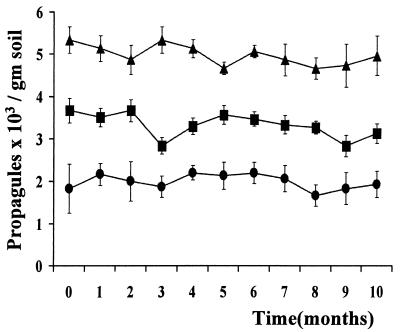
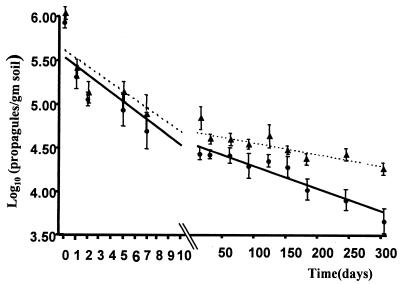
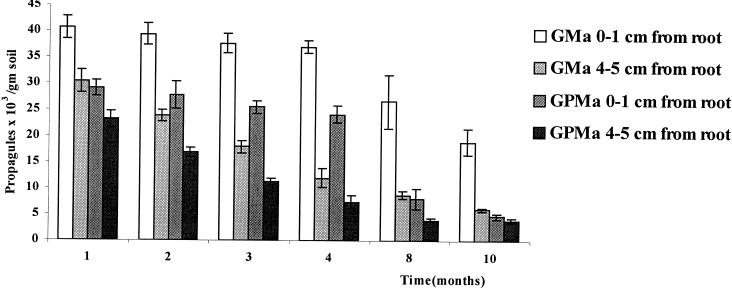
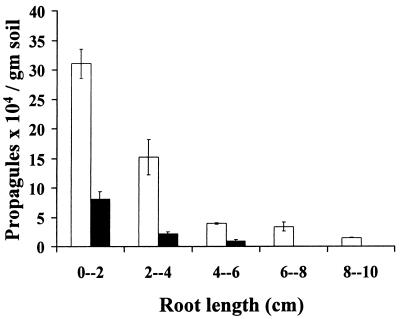
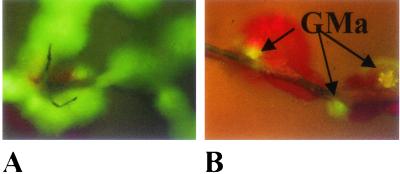
In the summer of 2000, we released genetically altered insect-pathogenic fungi onto a plot of cabbages at a field site on the Upper Marlboro Research Station, Md. The transformed derivatives of Metarhizium anisopliae ARSEF 1080, designated GPMa and GMa, carried the Aequorea victoria green fluorescent protein (gfp) gene alone (GMa) or with additional protease genes (Pr1) (GPMa). The study (i) confirmed the utility of gfp for monitoring pathogen strains in field populations over time, (ii) demonstrated little dissemination of transgenic strains and produced no evidence of transmission by nontarget insects, (iii) found that recombinant fungi were genetically stable over 1 year under field conditions, and (iv) determined that deployment of the transgenic strains did not depress the culturable indigenous fungal microflora. The major point of the study was to monitor the fate (survivorship) of transformants under field conditions. In nonrhizosphere soil, the amount of GMa decreased from 10(5) propagules/g at depths of 0 to 2 cm to 10(3) propagules/g after several months. However, the densities of GMa remained at 10(5) propagules/g in the inner rhizosphere, demonstrating that rhizospheric soils are a potential reservoir for M. anisopliae. These results place a sharp focus on the biology of the soil/root interphase as a site where plants, insects, and pathogens interact to determine fungal biocontrol efficacy, cycling, and survival. However, the rhizospheric effect was less marked for GPMa, and overall it showed reduced persistence in soils than did GMa.
Figures
References
-
- Bidochka, M. J. 2001. Monitoring the fate of biocontrol fungi, p. 193-218. In T. M. Butt, C. Jackson, and N. Morgan, (eds.), Fungal biocontrol agents: progress, problems and potential. CAB International, Wallingford, United Kingdom.
-
- Butt, T. M., C. Jackson, and N. Magan. 2001. Introduction-fungal biological control agents: progress, problems and potential, p. 1-8. In T. M. Butt, C. Jackson, and N. Morgan (ed.), Fungal biocontrol agents: progress, problems and potential. CAB International, Wallingford, United Kingdom.
-
- Goettel, M. S., and G. D. Inglis. 1997. Fungi: hyphomycetes, p. 367-394. In L. Lacey, (ed.), Manual of techniques in insect pathology. Academic Press, Inc., San Diego, Calif.
-
- Goettel, M. S., R. J. St. Leger, S. Bhairi, M. K. Jung, B. R. Oakley, D. W. Roberts, and R. C. Staples. 1990. Pathogenicity and growth of Metarhizium anisopliae stably transformed to benomyl resistance. Curr. Genet. 17:129-132.
-
- Hajek, A. E., I. Delalibera, and M. L. McManus. 2000. Introduction of exotic pathogens and documentation of their establishment and impact, p. 339-370. In L. A. Lacey and H. K. Kaya (ed.), Field manual of techniques in invertebrate pathology. Kluwer Academic Press, Dordrecht, The Netherlands.
Publication types
MeSH terms
Substances
LinkOut - more resources
Full Text Sources
