Childhood trauma associated with smaller hippocampal volume in women with major depression
- PMID: 12450959
- PMCID: PMC3230324
- DOI: 10.1176/appi.ajp.159.12.2072
Childhood trauma associated with smaller hippocampal volume in women with major depression
Abstract
Objective: Smaller hippocampal volume has been reported only in some but not all studies of unipolar major depressive disorder. Severe stress early in life has also been associated with smaller hippocampal volume and with persistent changes in the hypothalamic-pituitary-adrenal axis. However, prior hippocampal morphometric studies in depressed patients have neither reported nor controlled for a history of early childhood trauma. In this study, the volumes of the hippocampus and of control brain regions were measured in depressed women with and without childhood abuse and in healthy nonabused comparison subjects.
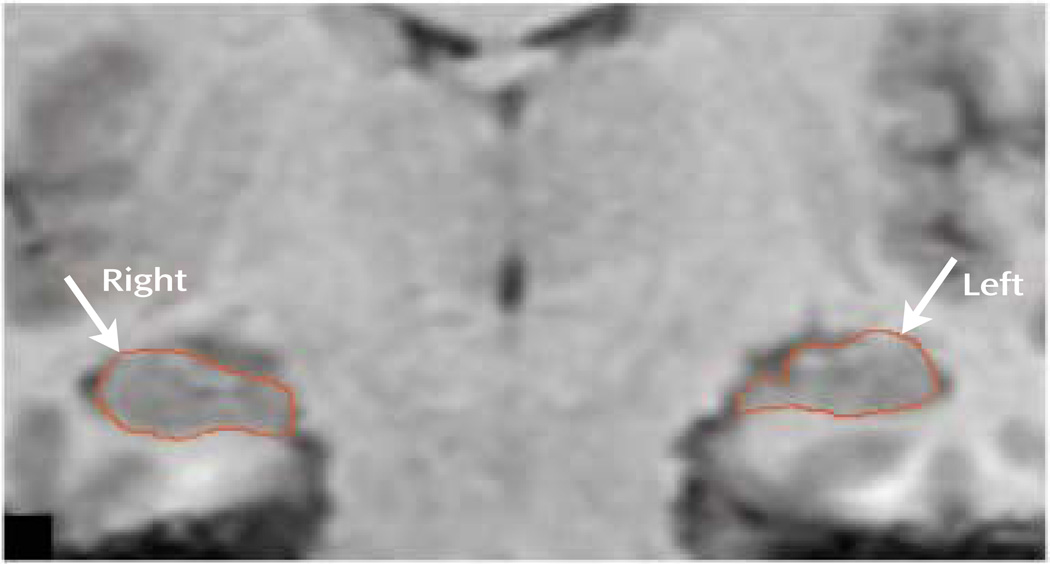
Method: Study participants were 32 women with current unipolar major depressive disorder-21 with a history of prepubertal physical and/or sexual abuse and 11 without a history of prepubertal abuse-and 14 healthy nonabused female volunteers. The volumes of the whole hippocampus, temporal lobe, and whole brain were measured on coronal MRI scans by a single rater who was blind to the subjects' diagnoses.
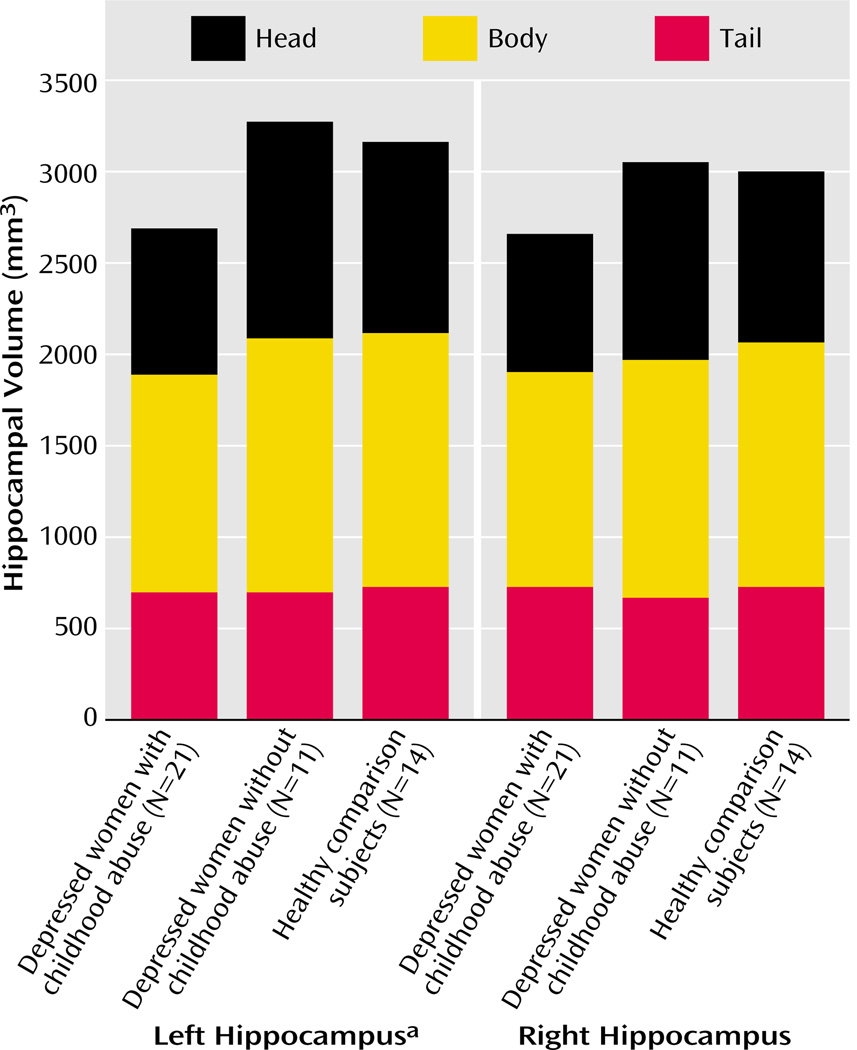
Results: The depressed subjects with childhood abuse had an 18% smaller mean left hippocampal volume than the nonabused depressed subjects and a 15% smaller mean left hippocampal volume than the healthy subjects. Right hippocampal volume was similar across the three groups. The right and left hippocampal volumes in the depressed women without abuse were similar to those in the healthy subjects.
Conclusions: A smaller hippocampal volume in adult women with major depressive disorder was observed exclusively in those who had a history of severe and prolonged physical and/or sexual abuse in childhood. An unreported history of childhood abuse in depressed subjects could in part explain the inconsistencies in hippocampal volume findings in prior studies in major depressive disorder.
Figures
References
-
- Kendler KS, Thornton LM, Gardner CO. Stressful life events and previous episodes in the etiology of major depression in women: an evaluation of the “kindling” hypothesis. Am J Psychiatry. 2000;157:1243–1251. - PubMed
-
- Maciejewski PK, Prigerson HG, Mazure CM. Sex differences in event-related risk for major depression. Psychol Med. 2001;31:593–604. - PubMed
-
- Wirz-Justice A. In: Biological rhythms in affective disorders, in Psychopharmacology: The Fourth Generation of Progress. Bloom FE, Kupfer DJ, editors. New York: Raven Press; 1995. pp. 999–1017.
-
- Young EA, Carlson NE, Brown MB. Twenty-four-hour ACTH and cortisol pulsatility in depressed women. Neuropsychopharmacology. 2001;25:267–276. - PubMed
Publication types
MeSH terms
Grants and funding
LinkOut - more resources
Full Text Sources
Other Literature Sources
Medical