


Proinflammatory mediators, stimulators of sensory neuron excitability via the expression of acid-sensing ion channels
- PMID: 12486159
- PMCID: PMC6758460
- DOI: 10.1523/JNEUROSCI.22-24-10662.2002
Proinflammatory mediators, stimulators of sensory neuron excitability via the expression of acid-sensing ion channels
Abstract
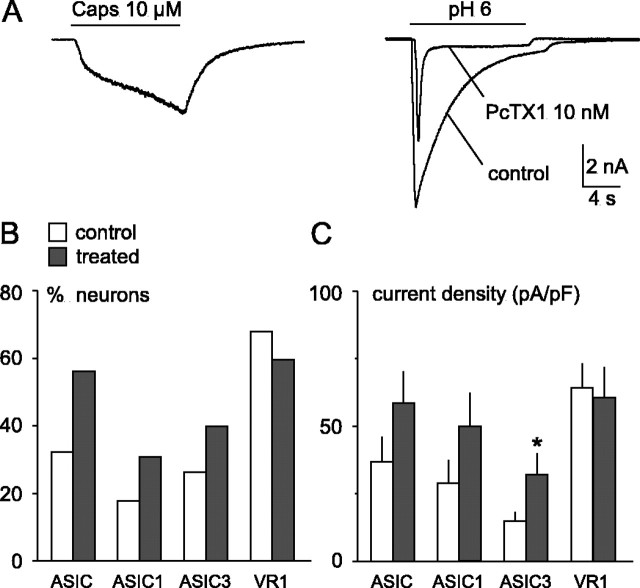
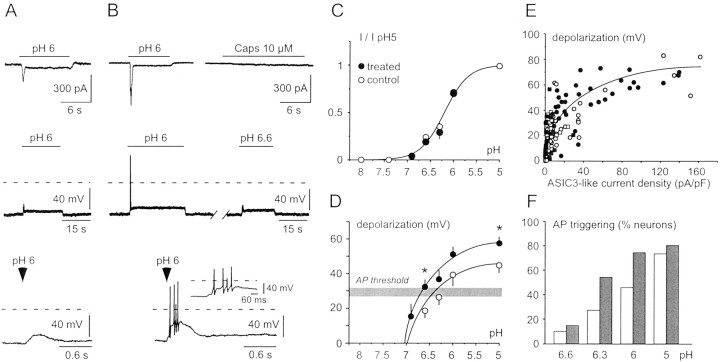
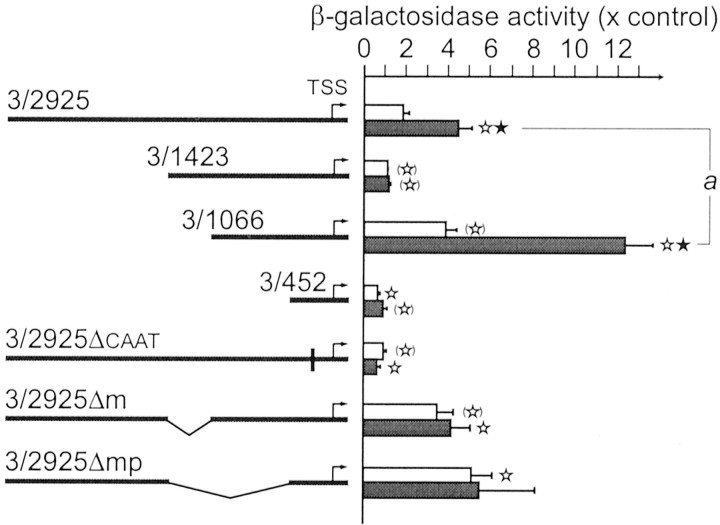
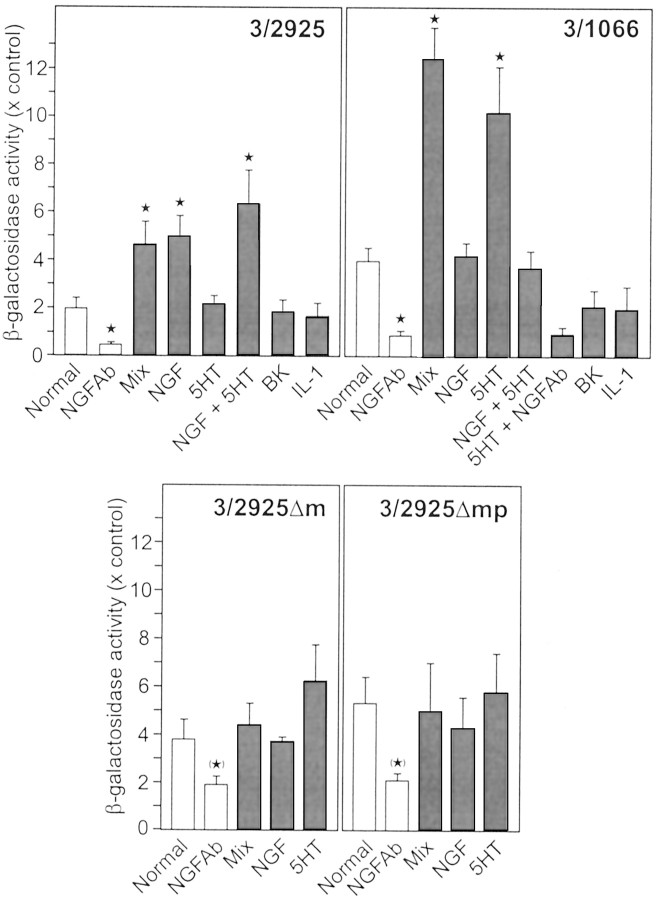
Tissue acidosis is an important feature of inflammation. It is a direct cause of pain and hyperalgesia. Protons activate sensory neurons mainly through acid-sensing ion channels (ASICs) and the subsequent membrane depolarization that leads to action potential generation. We had previously shown that ASIC transcript levels were increased in inflammatory conditions in vivo. We have now found that this increase is caused by the proinflammatory mediators NGF, serotonin, interleukin-1, and bradykinin. A mixture of these mediators increases ASIC-like current amplitude on sensory neurons as well as the number of ASIC-expressing neurons and leads to a higher sensory neuron excitability. An analysis of the promoter region of the ASIC3 encoding gene, an ASIC specifically expressed in sensory neurons and associated with chest pain that accompanies cardiac ischemia, reveals that gene transcription is controlled by NGF and serotonin.
Figures
References
-
- Babinski K, Catarsi S, Biagini G, Seguela P. Mammalian ASIC2a and ASIC3 subunits co-assemble into heteromeric proton-gated channels sensitive to Gd3+. J Biol Chem. 2000;275:28519–28525. - PubMed
-
- Baker MD, Wood JN. Involvement of Na+ channels in pain pathways. Trends Pharmacol Sci. 2001;22:27–31. - PubMed
-
- Bennett DL, Koltzenburg M, Priestley JV, Shelton DL, McMahon SB. Endogenous nerve growth factor regulates the sensitivity of nociceptors in the adult rat. Eur J Neurosci. 1998;10:1282–1291. - PubMed
Publication types
MeSH terms
Substances
LinkOut - more resources
Full Text Sources
Molecular Biology Databases
