


APC mutation and tumour budding in colorectal cancer
- PMID: 12499439
- PMCID: PMC1769852
- DOI: 10.1136/jcp.56.1.69
APC mutation and tumour budding in colorectal cancer
Abstract
Aim: To determine the frequency of tumour budding and somatic APC mutation in a series of colorectal cancers stratified according to DNA microsatellite instability (MSI) status.
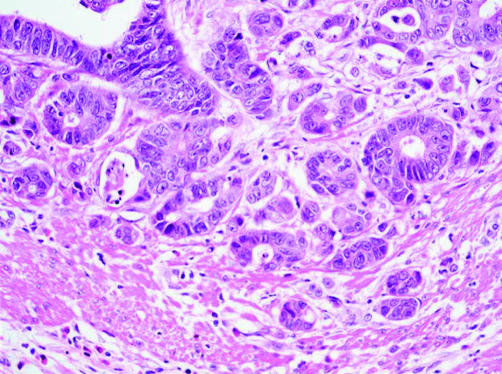
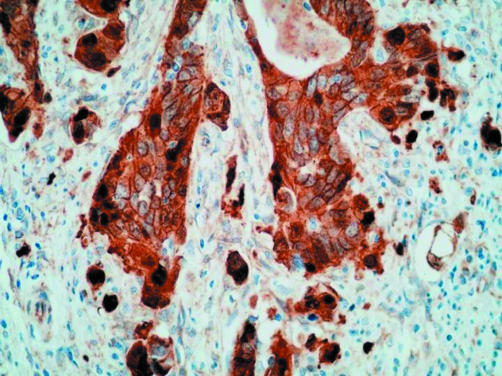
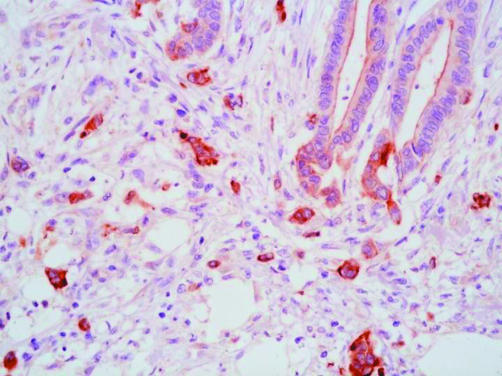
Material/methods: Ninety five colorectal cancers were genotyped for APC mutation in the mutation cluster region (exon 15) and scored for the presence of tumour budding at the invasive margin in haematoxylin and eosin stained sections. A subset was immunostained for beta catenin and p16.
Results: The frequency of both somatic APC mutation and tumour budding increased pari passu in cancers stratified as sporadic MSI high (MSI-H), hereditary non-polyposis colorectal cancer (HNPCC), MSI low (MSI-L), and microsatellite stable (MSS). Both budding and APC mutation were significantly less frequent in sporadic MSI-H cancers than in MSI-L or MSS cancers. Tumour buds were characterised by increased immunostaining for both beta catenin and p16.
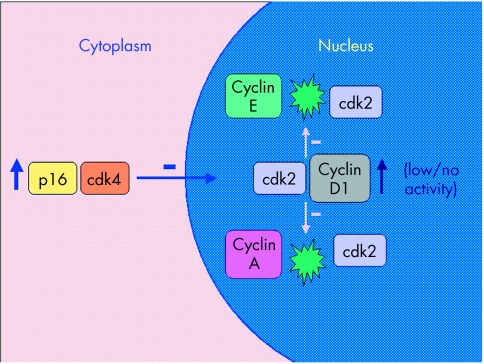
Conclusion: Tumour budding is associated with an adverse prognosis. The lack of budding in MSI-H colorectal cancer may account for the improved prognosis of this subset and may be explained by an intact WNT signalling pathway and/or inactivated p16(INK4a).
Figures
References
-
- Jass JR, Atkin WS, Cuzick J, et al. The grading of rectal cancer: historical perspectives and a multivariate analysis of 447 cases. Histopathology 1986;10:437–59. - PubMed
-
- Jass JR, Love SB, Northover JMA. A new prognostic classification of rectal cancer. Lancet 1987;i:1303–6. - PubMed
-
- Morodomi T, Isomoto H, Shirouzu K, et al. An index for estimating the probability of lymph node metastasis in rectal cancers. Lymph node metastasis and the histopathology of actively invasive regions of cancer. Cancer 1989;63:539–43. - PubMed
-
- Hase K, Shatney C, Johnson D, et al. Prognostic value of tumor “budding” in patients with colorectal cancer. Dis Colon Rectum 1993;36:627–35. - PubMed
-
- Ueno H, Murphy J, Jass JR, et al. Tumour “budding” as an index to estimate the potential of aggressiveness in rectal cancer. Histopathology 2002;40:127–32. - PubMed
Publication types
MeSH terms
Substances
Grants and funding
LinkOut - more resources
Full Text Sources
Other Literature Sources
Medical
Miscellaneous
