


Structural basis and prediction of substrate specificity in protein serine/threonine kinases
- PMID: 12502784
- PMCID: PMC140887
- DOI: 10.1073/pnas.0134224100
Structural basis and prediction of substrate specificity in protein serine/threonine kinases
Abstract
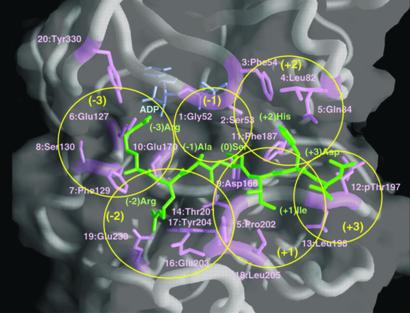
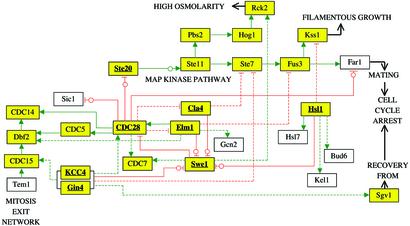
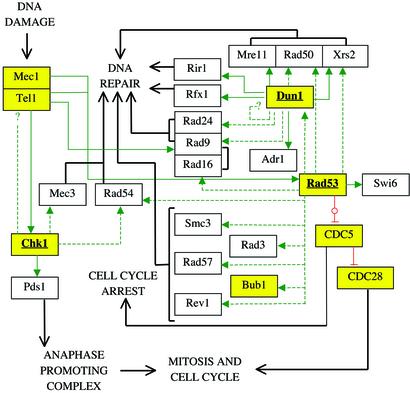
The large number of protein kinases makes it impractical to determine their specificities and substrates experimentally. Using the available crystal structures, molecular modeling, and sequence analyses of kinases and substrates, we developed a set of rules governing the binding of a heptapeptide substrate motif (surrounding the phosphorylation site) to the kinase and implemented these rules in a web-interfaced program for automated prediction of optimal substrate peptides, taking only the amino acid sequence of a protein kinase as input. We show the utility of the method by analyzing yeast cell cycle control and DNA damage checkpoint pathways. Our method is the only available predictive method generally applicable for identifying possible substrate proteins for protein serinethreonine kinases and helps in silico construction of signaling pathways. The accuracy of prediction is comparable to the accuracy of data from systematic large-scale experimental approaches.
Figures
References
-
- Songyang Z, Blechner S, Hoagland N, Hoekstra M F, Piwnica-Worms H, Cantley L C. Curr Biol. 1994;4:973–982. - PubMed
-
- Hardie D G. Protein Phosphorylation. Oxford: Oxford Univ. Press; 1999.
-
- Bishop A C, Ubersax J A, Petsch D T, Matheos D P, Gray N S, Blethrow J, Shimizu E, Tsien J Z, Schultz P G, Rose M D, et al. Nature. 2000;407:395–401. - PubMed
Publication types
MeSH terms
Substances
Associated data
- Actions
- Actions
- Actions
LinkOut - more resources
Full Text Sources
Other Literature Sources
Molecular Biology Databases
