


Factors affecting and affected by user acceptance of computer-based nursing documentation: results of a two-year study
- PMID: 12509358
- PMCID: PMC150360
- DOI: 10.1197/jamia.m1118
Factors affecting and affected by user acceptance of computer-based nursing documentation: results of a two-year study
Abstract
Objectives: The documentation of the nursing process is an important but often neglected part of clinical documentation. Paper-based systems have been introduced to support nursing process documentation. Frequently, however, problems such as low quality of documentation are reported. It is unclear whether computer-based documentation systems can reduce these problems and which factors influence their acceptance by users.
Design: We introduced a computer-based nursing documentation system on four wards of the University Hospitals of Heidelberg and systematically evaluated its preconditions and its effects in a pretest-posttest intervention study. For the analysis of user acceptance, we concentrated on subjective data drawn from questionnaires and interviews.
Measurements: A questionnaire was developed using items from published questionnaires and items that had to be developed for the special purpose of this study.
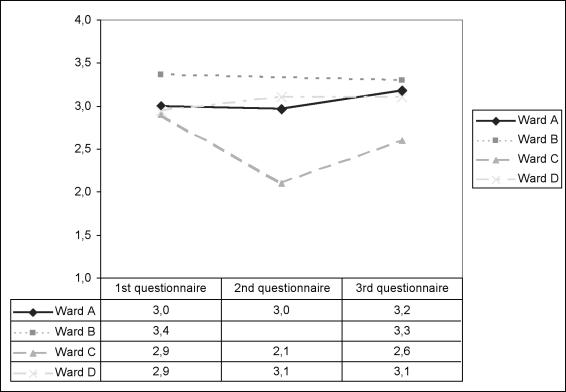
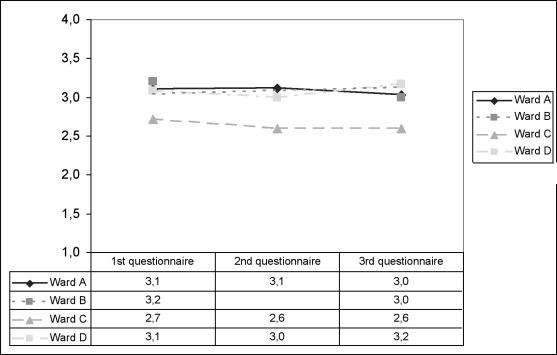
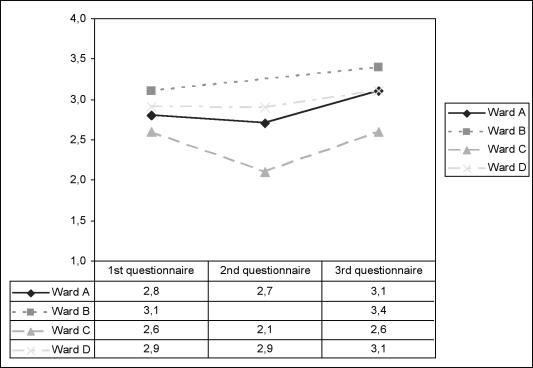
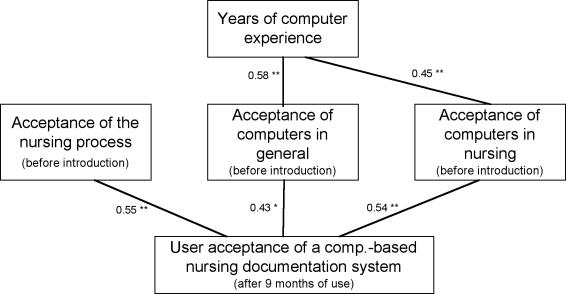
Results: The quantitative results point to two factors influencing the acceptance of a new computer-based documentation system: the previous acceptance of the nursing process and the previous amount of self-confidence when using computers. On one ward, the diverse acceptance scores heavily declined after the introduction of the nursing documentation system. Explorative qualitative analysis on this ward points to further success factors of computer-based nursing documentation systems.
Conclusion: Our results can be used to assist the planning and introduction of computer-based nursing documentation systems. They demonstrate the importance of computer experience and acceptance of the nursing process on a ward but also point to other factors such as the fit between nursing workflow and the functionality of a nursing documentation system.
Figures
References
-
- Varcoe C. Disparagement of the nursing process: the new dogma? J Adv Nurs 1996; 23(1):120–125. - PubMed
-
- Davis B, Billings J, Ryland R. Evaluation of nursing process documentation. J Adv Nurs 1994; 19(5):960–968. - PubMed
-
- O’Connell B, Myers H, Twigg D, Entriken F. Documenting and communicating patient care: are nursing care plans redundant? Int J Nurs Pract 2000; 6:276–280.
-
- Frank-Stromborg M, Christensen A, Elmhurst D. Nurse documentation: Not done or, worse, done the wrong way. Part I. Oncol Nurs Forum 2001; 28(4):687–702. - PubMed
-
- Allan J, Englebright J. Patient-centered documentation—an effective and efficient use of clinical information systems. J Nurs Adm 2000; 30(2):90–95. - PubMed
Publication types
MeSH terms
LinkOut - more resources
Full Text Sources
