The treatment of influenza with antiviral drugs
- PMID: 12515786
- PMCID: PMC139319
The treatment of influenza with antiviral drugs
Abstract
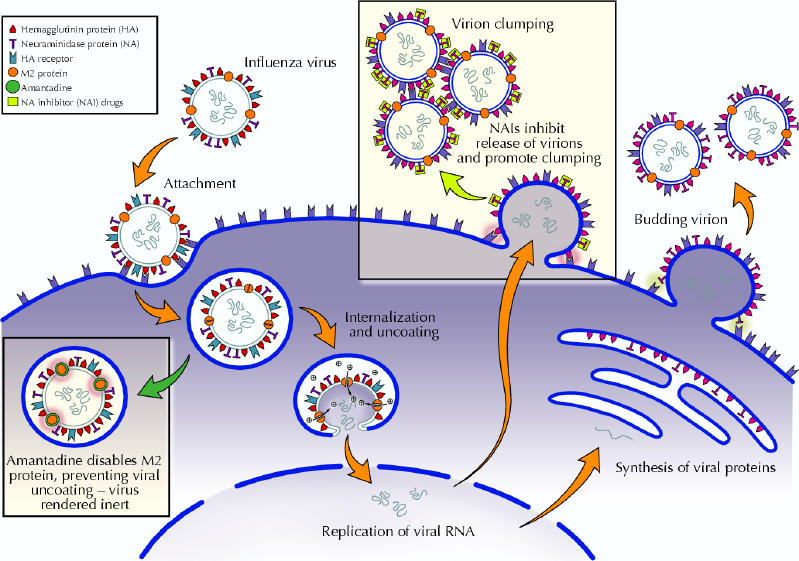
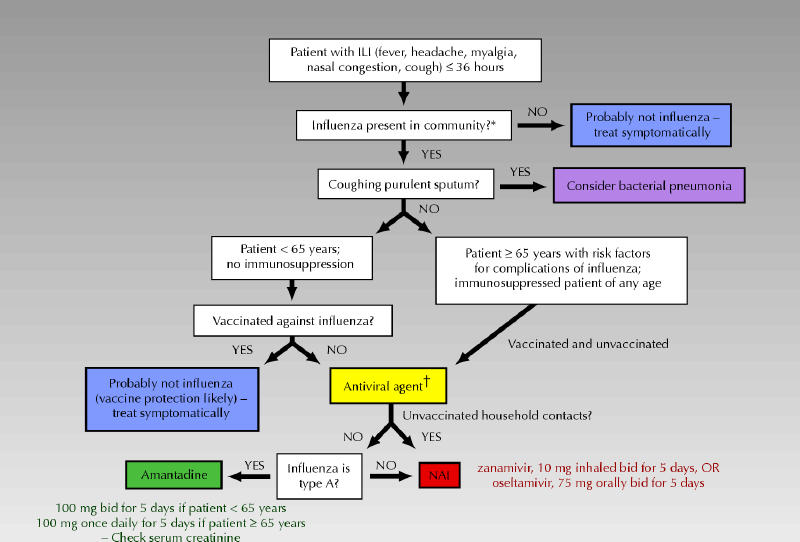
Influenza vaccination with current inactivated vaccines homologous to the prevalent wild-type virus can reduce influenza illness in 75%-80% of healthy adults. Vaccine is recommended for all individuals with chronic underlying diseases and for those aged 65 years or older. Although influenza vaccination is still advocated for patients with blunted immunity, protection rates are not as high, running at 40% for frail institutionalized elderly people. The influenza antiviral agents amantadine or rimantadine, zanamivir and oseltamivir can modify the severity of illness and reduce the duration of illness by about 1.5-2.5 days. Amantadine inhibits only influenza A. Resistant virus may emerge in up to 33% of amantadine-treated patients in the first 5 days of treatment and be transmitted to susceptible close contacts. Side effects are usually mild in short courses of treatment. The neuraminidase inhibitor drugs zanamivir and oseltamivir act on both influenza A and B. Treatment is most effective when given within 30-36 hours after the onset of illness, and the earlier the better. Influenza should be treated with antiviral drugs in unvaccinated and vaccinated high-risk patients, as well as immunosuppressed patients with influenza-like illness, in periods of confirmed influenza prevalence. These drugs may be of great value in the event of a major viral antigenic shift that causes pandemic influenza, if an adequate supply can be sustained.
Figures
References
-
- Selected leading causes of death, by sex, 1997. Ottawa: Statistics Canada; 2002. Available: www.statcan.ca/english/Pgdb/health36.htm (accessed 2002 Nov 20).
-
- Aoki FY. Amantadine and rimantadine. In: Nicholson KG, Webster RG, Hay AJ, editors. Textbook of influenza. London: Blackwell Science; 1998. p. 457-76.
-
- Laver WG, Bischofberger N, Webster RG. Disarming the flu viruses. Sci Am 1999;280:78-87. - PubMed
-
- Betakova T, Nermut MV, Hay AJ. The NB protein is an integral component of the membrane of influenza B virus. J Gen Virol 1996;77:21689-94. - PubMed
-
- Calfee DP, Hayden FG. New approaches to influenza chemotherapy: neuraminidase inhibitors. Drugs 1998;56:537-53. - PubMed
Publication types
MeSH terms
Substances
LinkOut - more resources
Full Text Sources
Other Literature Sources
Medical