


Simultaneous detection, subgrouping, and quantitation of respiratory syncytial virus A and B by real-time PCR
- PMID: 12517840
- PMCID: PMC149607
- DOI: 10.1128/JCM.41.1.149-154.2003
Simultaneous detection, subgrouping, and quantitation of respiratory syncytial virus A and B by real-time PCR
Abstract
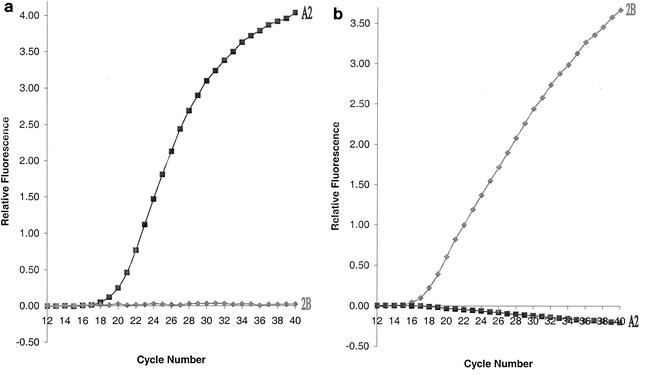
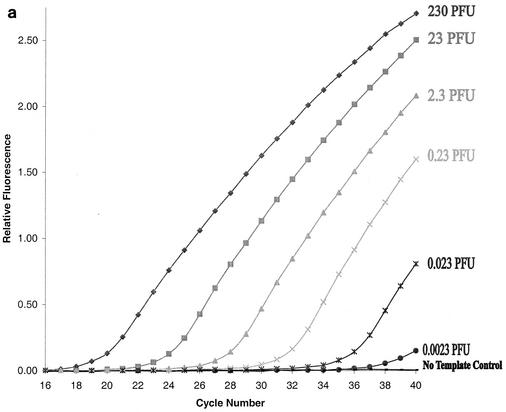
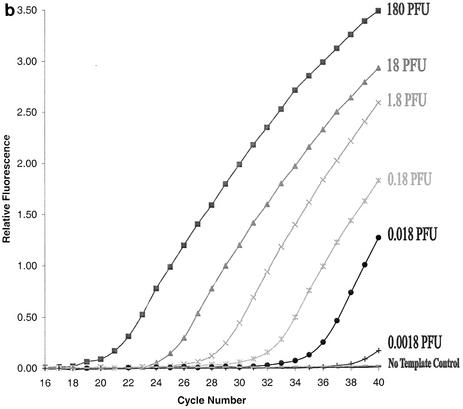
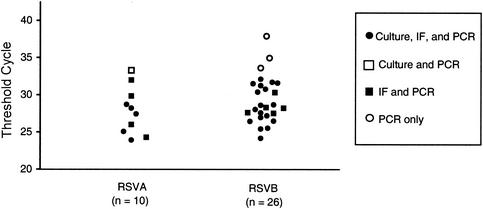
Timely diagnosis of respiratory syncytial virus (RSV) infection is critical for appropriate treatment of lower respiratory infection in young children. To facilitate diagnosis, we developed a rapid, specific, and sensitive TaqMan PCR method for detection of RSV A and RSV B. Two sets of primer-probe pairs were selected from the nucleotide sequences encoding the nucleocapsid protein--one targeting RSV A and the other targeting RSV B. The specificity of the TaqMan reverse transcription-PCR assay was evaluated by testing each primer-probe pair against various viruses derived from laboratory virus stocks, as well as clinical respiratory specimens. Fluorescent signals were observed only in the presence of RSV A and/or RSV B. The sensitivity of our quantitative PCR assay was determined on the basis of PFU and virus particle counts. The resulting assay sensitivity was found to be 0.023 PFU, or two copies of viral RNA, for RSV A and 0.018 PFU, or nine copies of viral RNA, for RSV B. This quantitative TaqMan PCR assay was utilized to diagnose 175 nasopharyngeal aspirates obtained from children in Hong Kong with respiratory symptoms during the winter of 2000 and 2001. Among these specimens, TaqMan PCR detected 36 RSV-positive samples, 10 of which were identified as RSV A and 26 of which were identified as RSV B, whereas culture confirmation identified 21 RSV-positive specimens and immunofluorescence identified 32 RSV-positive specimens, all of which were among those identified by PCR. The results confirmed the accuracy of our TaqMan PCR assay and demonstrated its improved sensitivity versus classical methods.
Figures
References
-
- American Academy of Pediatrics, Committee on Infectious Diseases. 1996. Reassessment of the indications for ribavirin therapy in respiratory syncytial virus infections. Pediatrics 97:137-140. - PubMed
-
- American Academy of Pediatrics, Committee on Infectious Diseases and Committee on Fetus and Newborn. 1998. Prevention of respiratory syncytial virus infections: indications for the use of palivizumab and update on the use of RSV-IGIV. Pediatrics 102:1211-1216. - PubMed
-
- Anderson, L. J., J. C. Hierholzer, C. Tsou, R. M. Hendry, B. F. Fernie, Y. Stone, and K. McIntosh. 1985. Antigenic characterization of respiratory syncytial virus strains with monoclonal antibodies. J. Infect. Dis. 151:626-633. - PubMed
-
- Buckingham, S. C., A. J. Bush, and J. P. Devincenzo. 2000. Nasal quantity of respiratory syncytial virus correlates with disease severity in hospitalized infants. Pediatr. Infect. Dis. J. 19:113-117. - PubMed
MeSH terms
LinkOut - more resources
Full Text Sources
Other Literature Sources
