


Computational analysis of core promoters in the Drosophila genome
- PMID: 12537576
- PMCID: PMC151189
- DOI: 10.1186/gb-2002-3-12-research0087
Computational analysis of core promoters in the Drosophila genome
Abstract
Background: The core promoter, a region of about 100 base-pairs flanking the transcription start site (TSS), serves as the recognition site for the basal transcription apparatus. Drosophila TSSs have generally been mapped by individual experiments; the low number of accurately mapped TSSs has limited analysis of promoter sequence motifs and the training of computational prediction tools.
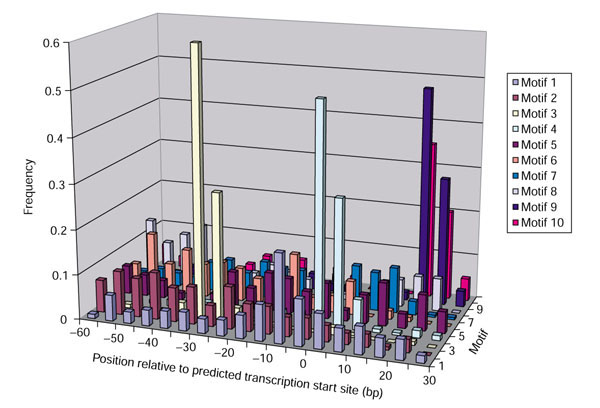
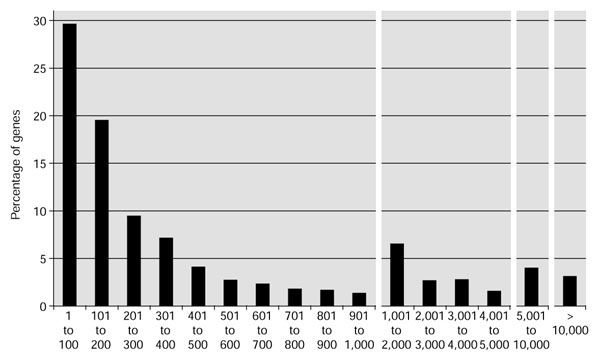
Results: We identified TSS candidates for about 2,000 Drosophila genes by aligning 5' expressed sequence tags (ESTs) from cap-trapped cDNA libraries to the genome, while applying stringent criteria concerning coverage and 5'-end distribution. Examination of the sequences flanking these TSSs revealed the presence of well-known core promoter motifs such as the TATA box, the initiator and the downstream promoter element (DPE). We also define, and assess the distribution of, several new motifs prevalent in core promoters, including what appears to be a variant DPE motif. Among the prevalent motifs is the DNA-replication-related element DRE, recently shown to be part of the recognition site for the TBP-related factor TRF2. Our TSS set was then used to retrain the computational promoter predictor McPromoter, allowing us to improve the recognition performance to over 50% sensitivity and 40% specificity. We compare these computational results to promoter prediction in vertebrates.
Conclusions: There are relatively few recognizable binding sites for previously known general transcription factors in Drosophila core promoters. However, we identified several new motifs enriched in promoter regions. We were also able to significantly improve the performance of computational TSS prediction in Drosophila.
Figures
References
-
- Latchman DS. Gene Regulation - A Eukaryotic Perspective. 4. Cheltenham, UK: Nelson Thornes; 2002.
-
- Lemon B, Tjian R. Orchestrated response: a symphony of transcription factors for gene control. Genes Dev. 2000;14:2551–2569. - PubMed
-
- Smale ST. Core promoters: active contributors to combinatorial gene expression. Genes Dev. 2001;15:2503–2508. - PubMed
-
- Butler JEF, Kadonaga JT. The RNA polymerase II core promoter: a key component in the regulation of gene expression. Genes Dev. 2002;16:2583–2592. - PubMed
Publication types
MeSH terms
Grants and funding
LinkOut - more resources
Full Text Sources
Other Literature Sources
Molecular Biology Databases
Research Materials
Miscellaneous
