


Economic evaluation of the benefits of reducing acute cardiorespiratory morbidity associated with air pollution
- PMID: 12537591
- PMCID: PMC149396
- DOI: 10.1186/1476-069x-1-7
Economic evaluation of the benefits of reducing acute cardiorespiratory morbidity associated with air pollution
Abstract
Background: Few assessments of the costs and benefits of reducing acute cardiorespiratory morbidity related to air pollution have employed a comprehensive, explicit approach to capturing the full societal value of reduced morbidity.
Methods: We used empirical data on the duration and severity of episodes of cardiorespiratory disease as inputs to complementary models of cost of treatment, lost productivity, and willingness to pay to avoid acute cardiorespiratory morbidity outcomes linked to air pollution in epidemiological studies. A Monte Carlo estimation procedure was utilized to propagate uncertainty in key inputs and model parameters.
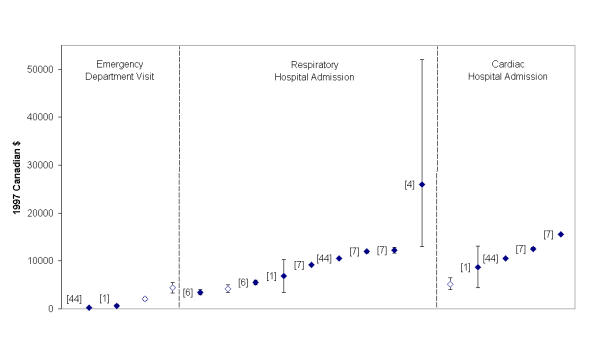
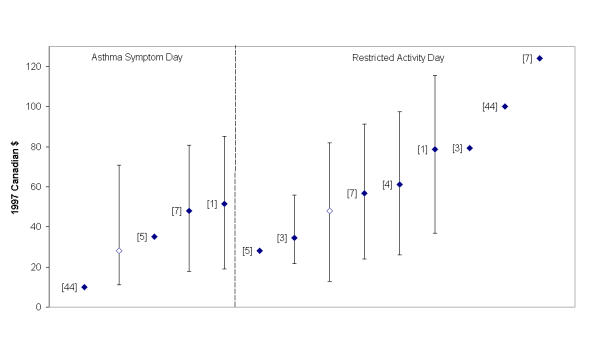
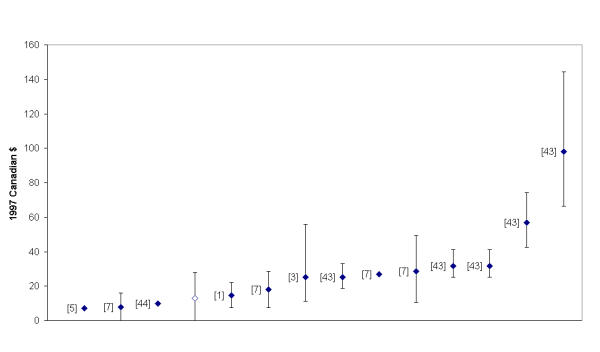
Results: Valuation estimates ranged from 13 dollars (1997, Canadian) (95% confidence interval, 0-28 dollars) for avoidance of an acute respiratory symptom day to 5,200 dollars (4,000 dollars-6,400 dollars) for avoidance of a cardiac hospital admission. Cost of treatment accounted for the majority of the overall value of cardiac and respiratory hospital admissions as well as cardiac emergency department visits, while lost productivity generally represented a small proportion of overall value. Valuation estimates for days of restricted activity, asthma symptoms and acute respiratory symptoms were sensitive to alternative assumptions about level of activity restriction. As an example of the application of these values, we estimated that the observed decrease in particulate sulfate concentrations in Toronto between 1984 and 1999 resulted in annual benefits of 1.4 million dollars (95% confidence interval 0.91-1.8 million dollars) in relation to reduced emergency department visits and hospital admissions for cardiorespiratory disease.
Conclusion: Our approach to estimating the value of avoiding a range of acute morbidity effects of air pollution addresses a number of limitations of the current literature, and is applicable to future assessments of the benefits of improving air quality.
Figures
References
-
- Health and Environmental Impact Assessment Panel Report on Sulphur in Gasoline and Diesel Fuels. Ottawa, Canada, Joint Industry/Government Study. 1997.
-
- Desvousges WH, Johnson FR, Banzhaf HS, Russell RR, Fries EE, Dietz KJ, Helms SC, Keen D, Snyder J, Valentine H, et al. Assessing environmental externality costs for electricity generation. Durham, NC, Triangle Economic Research. 1995.
-
- Hall JV, Winer WM, Kleinman MT, Lurmann FW, Brajer V, Colome SD. Valuing the Health Benefits of Clean Air. Science. 1992;255:812–817. - PubMed
-
- Krupnick AJ, Portney PR. Controlling Urban Air Pollution: A Benefit-Cost Assessment. Science. 1991;252:522–528. - PubMed
Publication types
MeSH terms
Substances
LinkOut - more resources
Full Text Sources
Medical
Research Materials
