


PPARdelta is a very low-density lipoprotein sensor in macrophages
- PMID: 12540828
- PMCID: PMC298762
- DOI: 10.1073/pnas.0337331100
PPARdelta is a very low-density lipoprotein sensor in macrophages
Abstract
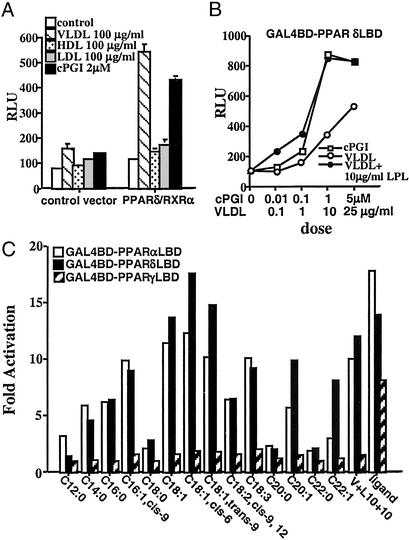
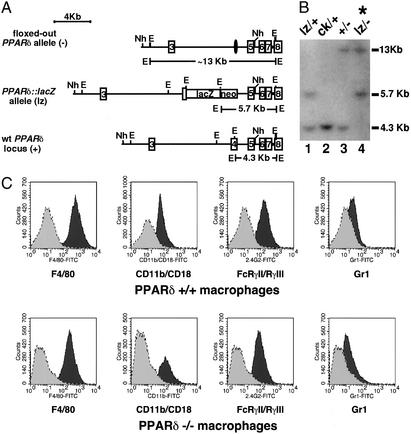
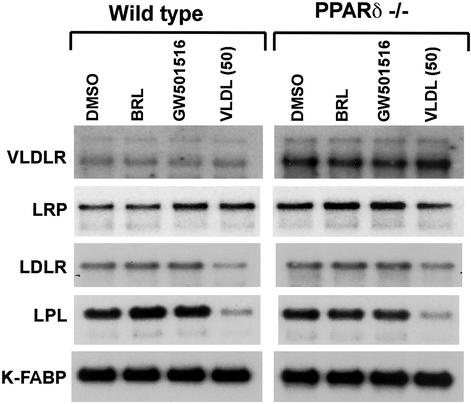
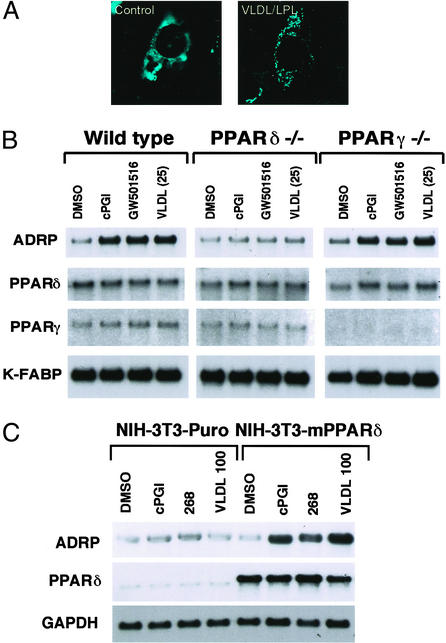
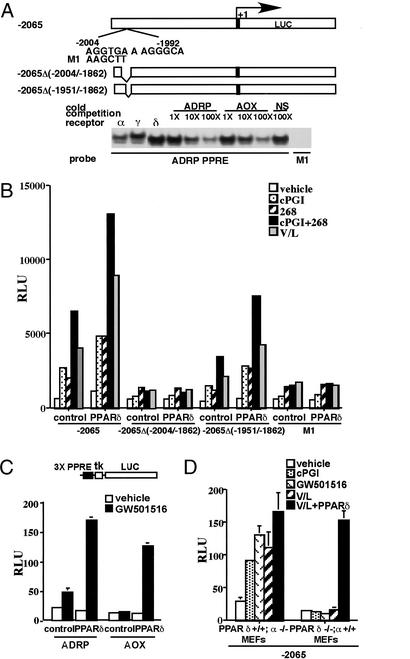
Although triglyceride-rich particles, such as very low-density lipoprotein (VLDL), contribute significantly to human atherogenesis, the molecular basis for lipoprotein-driven pathogenicity is poorly understood. We demonstrate that in macrophages, VLDL functions as a transcriptional regulator via the activation of the nuclear receptor peroxisome proliferator-activated receptor delta. The signaling components of native VLDL are its triglycerides, whose activity is enhanced by lipoprotein lipase. Generation of peroxisome proliferator-activated receptor delta null macrophages verifies the absolute requirement of this transcription factor in mediating the VLDL response. Thus, our data reveal a pathway through which dietary triglycerides and VLDL can directly regulate gene expression in atherosclerotic lesions.
Figures
References
-
- Spiegelman B M, Flier J S. Cell. 2001;104:531–543. - PubMed
-
- Ross R. Am Heart J. 1999;138:419–420. - PubMed
-
- Glass C K, Witztum J L. Cell. 2001;104:503–516. - PubMed
-
- Nagy L, Tontonoz P, Alvarez J G, Chen H, Evans R M. Cell. 1998;93:229–240. - PubMed
-
- Janowski B A, Willy P J, Devi T R, Falck J R, Mangelsdorf D J. Nature. 1996;383:728–731. - PubMed
Publication types
MeSH terms
Substances
LinkOut - more resources
Full Text Sources
Other Literature Sources
Molecular Biology Databases
