


Disruption of vitellogenin gene function in adult honeybees by intra-abdominal injection of double-stranded RNA
- PMID: 12546706
- PMCID: PMC149360
- DOI: 10.1186/1472-6750-3-1
Disruption of vitellogenin gene function in adult honeybees by intra-abdominal injection of double-stranded RNA
Abstract
Background: The ability to manipulate the genetic networks underlying the physiological and behavioural repertoires of the adult honeybee worker (Apis mellifera) is likely to deepen our understanding of issues such as learning and memory generation, ageing, and the regulatory anatomy of social systems in proximate as well as evolutionary terms. Here we assess two methods for probing gene function by RNA interference (RNAi) in adult honeybees.
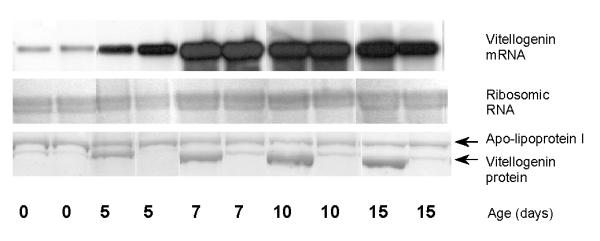
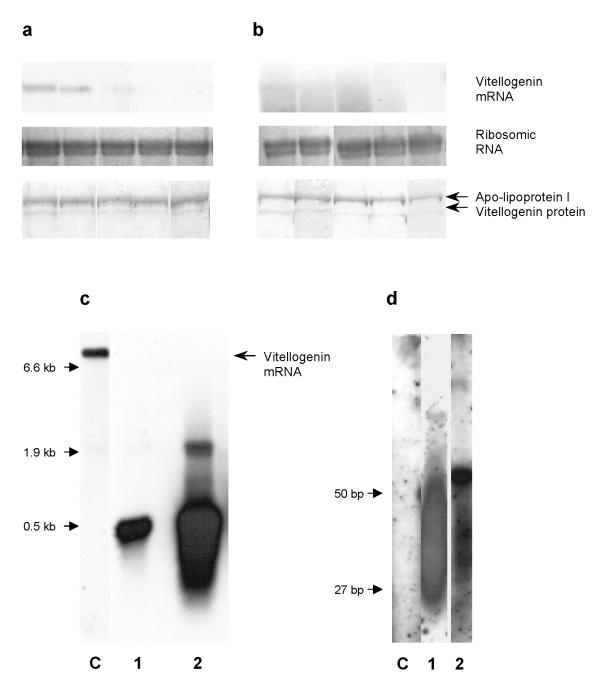
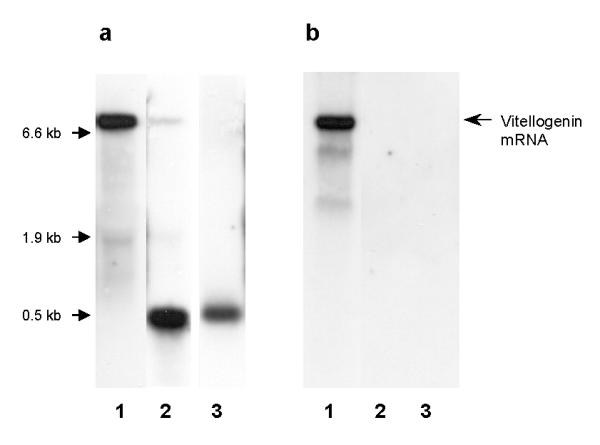
Results: The vitellogenin gene was chosen as target because its expression is unlikely to have a phenotypic effect until the adult stage in bees. This allowed us to introduce dsRNA in preblastoderm eggs without affecting gene function during development. Of workers reared from eggs injected with dsRNA derived from a 504 bp stretch of the vitellogenin coding sequence, 15% had strongly reduced levels of vitellogenin mRNA. When dsRNA was introduced by intra-abdominal injection in newly emerged bees, almost all individuals (96%) showed the mutant phenotype. An RNA-fragment with an apparent size similar to the template dsRNA was still present in this group after 15 days.
Conclusion: Injection of dsRNA in eggs at the preblastoderm stage seems to allow disruption of gene function in all developmental stages. To dissect gene function in the adult stage, the intra-abdominal injection technique seems superior to egg injection as it gives a much higher penetrance, it is much simpler, and it makes it possible to address genes that are also expressed in the embryonic, larval or pupal stages.
Figures
References
-
- RobinsonB GE, Aronstein K, Evans JE, Fahrbach SE, Johnston SK, Maleszka R, Page RE, Robertson HM, Weaverc DB. Proposal for the Sequencing of a New Target Genome: White Paper for a Honey Bee Genome Project. The Honey Bee Genome Sequencing Consortium. 2002. http://www.nhb.org/bee-r/HoneyBeeWhitePaper.pdf
-
- Seeley TD. The wisdom of the hive. The social physiology of honey bee colonies. Harvard, Harvard University Press. 1995.
Publication types
MeSH terms
Substances
LinkOut - more resources
Full Text Sources
Other Literature Sources
